
GovEagle vs. Generic Proposal Tools for GovCon Teams: Which to Choose in September 2026

Akash Mandavilli
CEO and Co-Founder of GovEagle
About the author
Akash is a 2x founder with previous experience in AI from Meta and federal sales from IBM. Akash holds a dual-degree from Johns Hopkins University in Economics and Computer Science.
GovEagle is not affiliated with, sponsored by, certified by, or otherwise associated with Shipley Associates.
Most capture and proposal tools work in silos until GovCon procurement demands Section L and M parsing, automated requirement extraction, and Excel-based compliance matrices commonly used and accepted by contracting officers. Many teams juggle one system for content libraries, another for AI drafting, and standalone spreadsheets to manage compliance, creating friction as proposal volume grows. Purpose-built solutions for federal acquisition workflows connect capture planning through submission in a single motion, and for teams reaching capacity limits, the difference often comes down to whether manual compliance work is hindering revenue growth or whether a specialized proposal system removes that bottleneck.
TLDR:
- Specialized GovCon tools parse Sections C, L, and M automatically and generate Excel-based compliance matrices in minutes versus 4-8 hours of manual work.
- Generic tools like ChatGPT and Copilot are not purpose-built for FAR-regulated procurement and require manual prompt engineering and human validation for each RFP section.
- GovCon teams handling 4+ annual proposals hit capacity limits where manual compliance work blocks concurrent opportunities.
- Some modern platforms compress proposal timelines from weeks to days by automating compliance workflows, while also supporting FedRAMP Moderate Equivalency and zero-retention AI that never trains on your data.
- Certain solutions support capture through submission in one system, preventing win themes and compliance intelligence from getting lost between tools.
Why Government Contractors Are Rethinking Proposal Tools in 2026
Government contractors in 2026 face compressed RFP timelines with evaluation criteria that have become more stringent. RFP responses consume 20 to 30 hours on average, while a considerable share of rejected bids fail due to preventable compliance and submission errors instead of capability gaps. This capacity constraint limits how many opportunities teams can pursue, directly impacting revenue growth. The central decision now: specialized GovCon tools or generic commercial solutions.
What Specialized GovCon Tools Do Differently Than Generic Solutions
Generic proposal tools treat all RFPs the same way, whether you're responding to a commercial software request or a federal defense contract. They lack embedded, workflow-level knowledge of FAR Part 15, don't recognize that Section L contains proposal instructions while Section M holds evaluation criteria, and can't automatically distinguish between a Performance Work Statement requirement and a submission format rule.
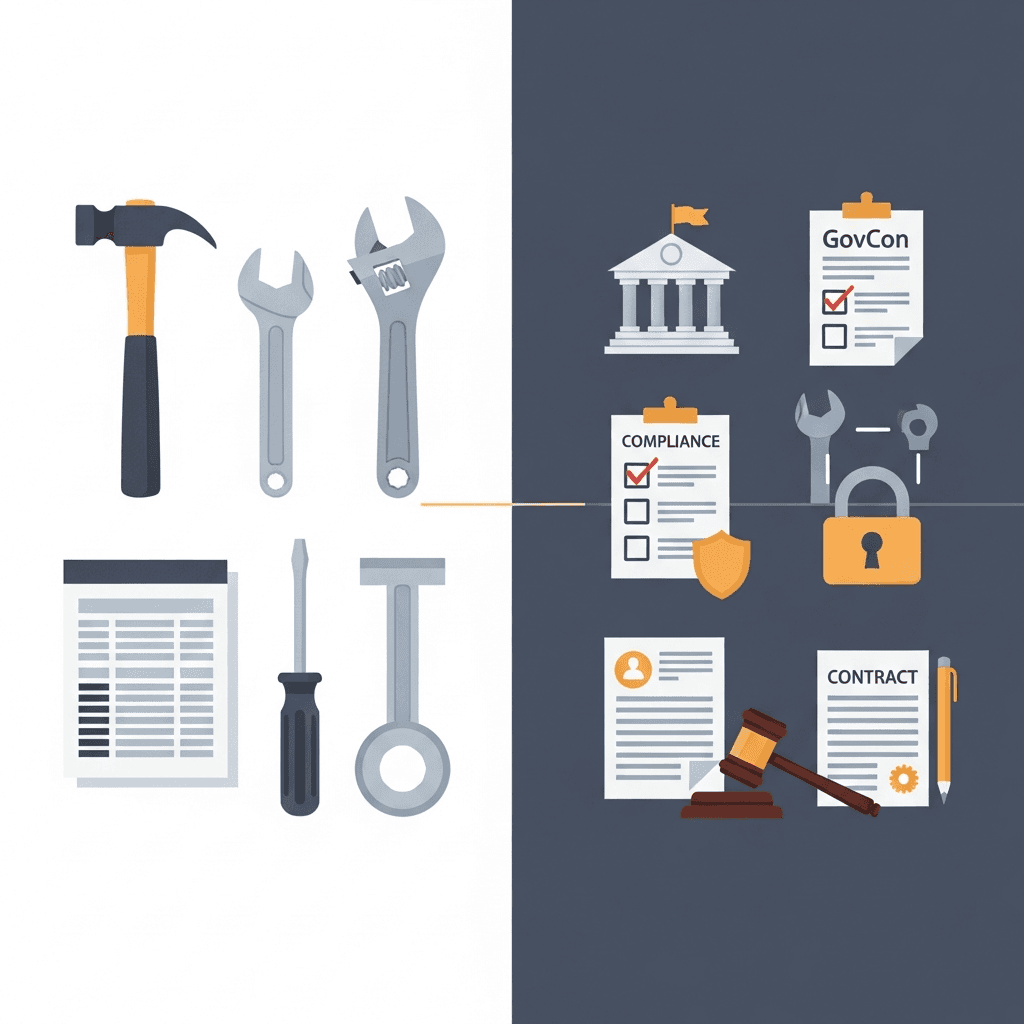
Purpose-built GovCon tools embed this regulatory and structural knowledge directly into their workflows. When you upload an RFP, the system parses Sections C, L, and M automatically, extracting requirements line by line without manual tagging. The compliance matrix generates in Excel format matching industry standard workflows, not trapped in a proprietary web interface. Amendment tracking runs automatic delta analysis instead of requiring manual comparison.
How Generic Tools Fall Short for Government Procurement
Generic tools like ChatGPT and Microsoft Copilot weren't built for FAR-regulated procurement. They require manual prompt engineering for each RFP section and introduce hallucination risks when handling CUI. Responsive and Loopio manage content libraries for commercial RFPs but lack Section L/M parsing or automated requirement extraction. Teams manually tag clauses, build compliance matrices in separate spreadsheets, and cross-reference requirements without validation.
The critical gap: these tools don't produce Excel-based compliance matrices. Government contracting requires matrices that map requirements to responses, but generic tools skip this deliverable or lock data inside their interface. When your contracting officer expects an Excel output, you're rebuilding everything manually.
The Hidden Costs of Manual Compliance Work
Manual compliance matrix creation takes 4 to 8 hours per RFP. Cross-referencing requirements to proposal sections adds another 3 to 6 hours during reviews. For teams submitting 12 bids annually, that's 84 to 168 hours spent on administrative tasks before writing any proposal content.
The real impact shows in missed opportunities. Proposal managers building matrices can't refine win themes. SMEs verifying coverage can't improve technical approaches. Teams pursuing concurrent proposals often decline opportunities because compliance overhead consumes available bandwidth.
Security and Compliance Requirements That Matter for GovCon
Government contractors handling CUI face strict security requirements that many commercial tools can't meet. FedRAMP Moderate Equivalency, NIST 800-171, and CMMC compliance determine which systems you can legally use for proposal development.
Generic AI tools approach security reactively, adding government controls after initial development to access federal markets. Very few commercial tools offer FedRAMP-authorized environments suitable for handling CUI, while many remain unsuitable for regulated proposal content entirely.
Specialized GovCon tools build security from the ground up. GovEagle supports AWS GovCloud deployment, air-gapped SCIF environments, and maintains a zero-retention policy so your proposal content never trains shared models. Defense contractors needing GCC High environments find most commercial solutions immediately eliminated.
Integration with Existing GovCon Workflows
Government contractors spend the majority of proposal development time in Microsoft Word. Tools that force exports to separate systems or require rebuilding templates create friction that kills adoption.
Native Microsoft Office integration determines whether teams actually use capture and proposal tools. Word add-ins let writers access AI capabilities and run compliance checks without leaving the document. Excel add-ons handle compliance matrices in the format contracting officers expect.
Content repository connections matter because proposal libraries already exist in SharePoint, Box, or Egnyte. Specialized GovCon tools index these repositories directly, pulling relevant past performance without manual file migration. Generic tools require uploading content into separate libraries.
CRM integration ties capture intelligence to proposal execution. When opportunity data flows from Salesforce into proposal tools, teams avoid re-entering information.
Capture through Submission: Full Lifecycle Support
Generic tools handle isolated proposal tasks. Content libraries answer individual questions. AI writing assistants draft sections. Project management software tracks deadlines. Teams manually transfer data between bid spreadsheets, capture decks, compliance matrices, and drafting tools.
Purpose-built GovCon solutions cover bid/no-bid analysis through final submission. Capture deck automation populates planning documents with win themes that feed directly into proposal development. Compliance matrices sync with annotated Word outlines. Color team reviews run automated compliance checks against requirements extracted during capture.
When tools don't talk to each other, capture intelligence gets lost. A win theme identified during planning should appear in outlines, inform drafting, and get verified during reviews.
Real Time Savings: What Government Contractors Are Seeing
GovCon-specific tools cut compliance matrix creation from 4-8 hours to minutes. Contractors report 80% reduction in SME time on early proposals and 30-40% faster RFI turnaround.

Proposal timelines compress from weeks to days. The Building People increased proposal volume pursued per quarter by 50% without adding headcount and cut task order response time by roughly 75%. Manual review cycles that took 3-6 hours complete in under an hour through automated Section L/M parsing and requirement extraction.
Choosing the Right Tool for Your Team's Stage and Needs
Your annual RFP count determines tool requirements. Occasional bidders pursuing 1-3 proposals yearly can manage with generic tools and manual compliance checks. Growing contractors at 4-12 annual proposals face capacity limits where manual work blocks concurrent opportunities, making specialized GovCon tools necessary. High-volume bidders submitting 12+ proposals annually require GovCon-specific automation for compliance coverage and FAR knowledge that generic tools can't provide at scale.
How GovEagle Tackles Government Contracting Workflows
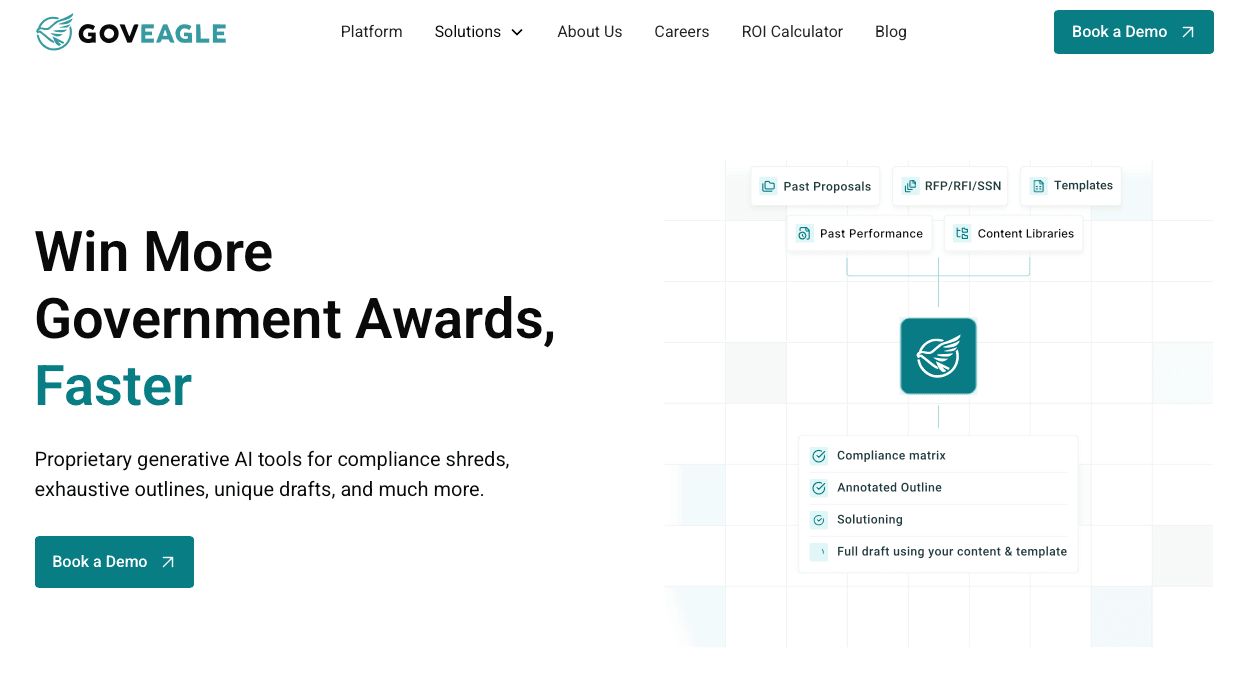
GovEagle was built for the exact breakdowns GovCon teams experience when generic proposal tools collide with federal procurement requirements. Designed for government contractors delivering professional and technical services, GovEagle supports the full capture-to-submission lifecycle by embedding knowledge of FAR-driven RFP structures directly into the workflow. Its team of Shipley-trained engineers and proposal leaders from Red Team Consulting, GDIT, and Magellan Federal have lived the same Section C, L, and M challenges they now automate, which shows up in how naturally the tool mirrors real proposal processes instead of forcing teams into rigid systems.
At the core of GovEagle is compliance-first automation that removes the most time-consuming manual work. RFPs are shredded to extract requirements, instructions, and evaluation criteria the way a proposal manager would, producing Excel-based compliance matrices that match existing templates and review habits. Capture intelligence flows forward into annotated outlines, win themes surface early, and amendments trigger automated delta analysis so teams are never guessing what changed. Writers stay in Microsoft Word, reviewers run structured color team checks, and proposal managers track coverage without rebuilding spreadsheets or chasing gaps across disconnected tools.
GovEagle supports organizations at different stages of GovCon procurement maturity, from growing small firms blocked by SME bandwidth to large contractors managing high-volume, multi-division pursuits. Security and deployment options meet federal expectations, including AWS GovCloud support, FedRAMP Moderate Equivalency, GCC High compatibility, and zero-retention AI that never trains on client data. By combining domain-tuned AI, deep Office integration, and compliance workflows that scale with bid volume, GovEagle gives GovCon teams a practical way to pursue more opportunities without sacrificing rigor, consistency, or review quality.
FAQs
How do specialized GovCon tools handle compliance matrices differently than generic solutions?
Purpose-built GovCon tools automatically generate compliance matrices in Excel format by parsing Sections C, L, and M from RFPs, extracting requirements line by line without manual tagging. Generic tools either skip this deliverable entirely or lock data inside proprietary web interfaces, forcing teams to rebuild matrices manually in spreadsheets.
What security certifications should I look for in a GovCon proposal tool?
Look for FedRAMP Moderate Equivalency, NIST 800-171, and CMMC compliance as baseline requirements. If your team handles CUI or works in defense contracting, verify the tool supports AWS GovCloud deployment, GCC High environments, and maintains a zero-retention policy so your proposal content never trains shared AI models.
When does it make sense to switch from generic tools to specialized GovCon software?
Switch when you're submitting 4-12 proposals annually and manual compliance work blocks your team from pursuing concurrent opportunities. If you're spending 4-8 hours per RFP building compliance matrices or declining bids because administrative overhead consumes available bandwidth, specialized tools will remove those capacity constraints.
How long does it take to implement a GovCon-specific proposal tool?
Teams typically reach full adoption within one week when the tool integrates with existing Microsoft Office workflows and content repositories like SharePoint or Box. Implementation speed depends on whether the tool requires rebuilding templates, migrating content libraries, or learning new interfaces versus working within familiar systems like Word and Excel.
Can proposal tools actually reduce SME time on early-stage responses?
Yes. Contractors report 80% reduction in SME time on early proposals when tools automate opportunity qualification, capability gap analysis, and initial content assembly. SMEs shift from spending hours on research and drafting to reviewing AI-generated first drafts, freeing them for billable work and customer delivery.
Final Thoughts on Selecting Proposal Tools for GovCon Teams
Choosing between generic software and specialized GovCon tools directly affects how many bids your team can pursue as GovCon procurement cycles tighten and concurrency becomes unavoidable. As proposal volume increases, manual compliance work pulls time away from win themes, solution shaping, and review quality, creating hard limits on growth. Generic tools can support low-volume teams, but once multiple pursuits run in parallel, capacity breaks first. GovEagle was built for this stage of GovCon procurement, giving teams a way to manage compliance, security, and submission requirements at scale while keeping proposal staff focused on winning work instead of rebuilding spreadsheets.