
CUI for Government Contractors: Complete Compliance Guide (September 2026)

Akash Mandavilli
CEO and Co-Founder of GovEagle
About the author
Akash is a 2x founder with previous experience in AI from Meta and federal sales from IBM. Akash holds a dual-degree from Johns Hopkins University in Economics and Computer Science.

GovEagle is not affiliated with, sponsored by, certified by, or otherwise associated with Shipley Associates.
Most CUI GovCon compliance gaps show up during third-party assessments because marking instructions weren't enforced at document creation, subcontractor agreements lack required flow-down clauses, or incident reporting timelines got buried across multiple contract clauses. This guide covers the compliance mechanics that hold up when a C3PAO runs the assessment or DCSA schedules a review.
TLDR:
- CUI spans over 20 NARA categories; DoD CMMC Level 2 currently maps to the 110 security requirements in NIST SP 800-171 Rev. 2, while NIST SP 800-171 Rev. 3 reorganizes the baseline into 17 control families.
- DFARS 252.204-7012 mandates 72-hour DoD incident reporting; GSA requires 1-hour reporting.
- CMMC Level 2 can require either a triennial C3PAO certification assessment or a self-assessment, depending on the DoD program’s requirement; missing or insufficient required CMMC assessment results and affirmations in SPRS can block awards when CMMC requirements apply.
- Marking failures trigger compliance findings during audits.
- Proposal management software can connect CUI compliance tracking to the capture-to-submission workflow, reducing late-stage findings.
What Is CUI and Why Government Contractors Must Understand It?
Controlled Unclassified Information (CUI) is government information requiring safeguarding under law or policy, but below the classified threshold. NARA manages the CUI Registry, which catalogs over 20 approved categories spanning defense, privacy, law enforcement, and critical infrastructure. For DoD CMMC Level 2, requirements currently map to the 110 security requirements in NIST SP 800-171 Rev. 2; broader CUI obligations depend on the contract, agency, and applicable CUI authority.
CUI Categories and the NARA Registry
The NARA CUI Registry is the authoritative source for every approved CUI category and subcategory. Contractors working across multiple agency contracts will encounter a wide range of these designations, and knowing which ones appear in your work shapes your safeguarding and handling requirements.
Key Registry Categories for GovCon
The Registry also distinguishes between Basic and Specified CUI. Basic CUI requires handling per the standard NIST SP 800-171 controls. Specified CUI carries additional or alternate handling requirements drawn from the authorizing law, regulation, or Government-wide policy that governs that particular category. Contractors must check the Registry entry for each category to confirm which handling tier applies before writing policies or training staff.
| CUI Category | Definition and Scope | Primary Compliance Framework |
|---|---|---|
| Controlled Technical Information (CTI) | Technical data with military or space application under defense contracts | DFARS 252.204-7012 and NIST SP 800-171 for all defense contractors handling this data |
| Privacy Data | Personally identifiable information requiring safeguarding under federal privacy law across civilian and defense agency contracts | Privacy Act of 1974 and agency-specific handling procedures, with overlapping NIST SP 800-171 requirements |
| Export Controlled Information | Technical data and defense services restricted under ITAR and EAR, applicable to contractors performing DoD and State Department work involving controlled hardware, software, or technical specifications | DFARS 252.204-7012 and ITAR/EAR registration and licensing requirements as they apply to defense contractors handling export-controlled data under federal contracts |
| Law Enforcement Sensitive (LES) | Information from DHS and DOJ contracts requiring restricted sharing within contractor organizations | Agency-specific handling procedures that limit internal distribution even among cleared personnel |
DFARS 252.204-7012: The Foundation for Defense Contractors
DFARS 252.204-7012 is the bedrock cybersecurity clause for defense contractors, and its reach extends well beyond IT departments. Any contractor or subcontractor that processes, stores, or transmits Covered Defense Information (CDI) on a non-federal information system must comply.
What the Clause Requires
- Covered contractor information systems must implement the applicable NIST SP 800-171 requirements in effect for the solicitation or as authorized by the Contracting Officer.
- Cyber incidents must be reported to DoD within 72 hours of discovery.
- Cloud providers handling CDI must meet FedRAMP Moderate baseline or equivalent.
Covered Defense Information vs. CUI
CDI is the DoD-specific subset of CUI, collected, developed, or retained under a DoD program. All CDI is CUI, but not all CUI triggers DFARS 252.204-7012, which applies to defense contracts only. Prime contractors must flow down the clause to any subcontractor handling CDI.
NIST SP 800-171: The Technical Compliance Baseline
NIST SP 800-171 sets the technical floor for CUI protection in non-federal systems. The standard's 110 security requirements span 14 control families, from access control and audit logging to system and communications protection.
Contractors operating under DoD contracts referencing DFARS 252.204-7012 must meet these requirements in full. Non-compliance can trigger withholding of contract payments or termination.

The 14 Control Families
Under NIST SP 800-171 Rev. 2, the 14 families cover access control, awareness and training, audit and accountability, configuration management, identification and authentication, incident response, maintenance, media protection, personnel security, physical protection, risk assessment, security assessment, system and communications protection, and system and information integrity.
Scoring and POA&Ms
DoD requires contractors to self-assess against these 110 requirements and submit a score to the Supplier Performance Risk System (SPRS). Each unmet requirement carries a point deduction from a baseline of 110. A Plan of Action and Milestones (POA&M) documents deficiencies and remediation timelines, but a low SPRS score can affect contract award decisions before remediation is complete.
CMMC 2.0 and Third-Party Verification for DoD Contractors
CMMC 2.0 reshaped DoD contractor compliance by collapsing the original five-level model into three tiers and replacing all third-party assessments at Level 1 with annual self-attestation. Level 2, which covers the majority of defense contractors handling CUI, can require either a triennial C3PAO assessment or a self-assessment at Level 2, depending on the DoD program’s requirement.
What the Three Levels Mean for CUI Holders
Most contractors handling CUI fall squarely into Level 2, which maps to all 110 NIST SP 800-171 Rev. 2 security requirements. Level 3 applies to contractors supporting critical programs and adds NIST SP 800-172 requirements on top of the 800-171 baseline.
The C3PAO assessment process is not a checkbox exercise. Assessors review whether controls are actually implemented and functioning. Under CMMC, POA&Ms are allowed only in limited circumstances; a contractor may receive Conditional CMMC status for eligible unmet requirements, but the POA&M must be closed out within 180 days or the conditional status expires.
CUI Marking Requirements: Identifying and Labeling Sensitive Information
Proper CUI marking is where many contractors run into compliance trouble, and the rules are more specific than a simple "CONFIDENTIAL" stamp.
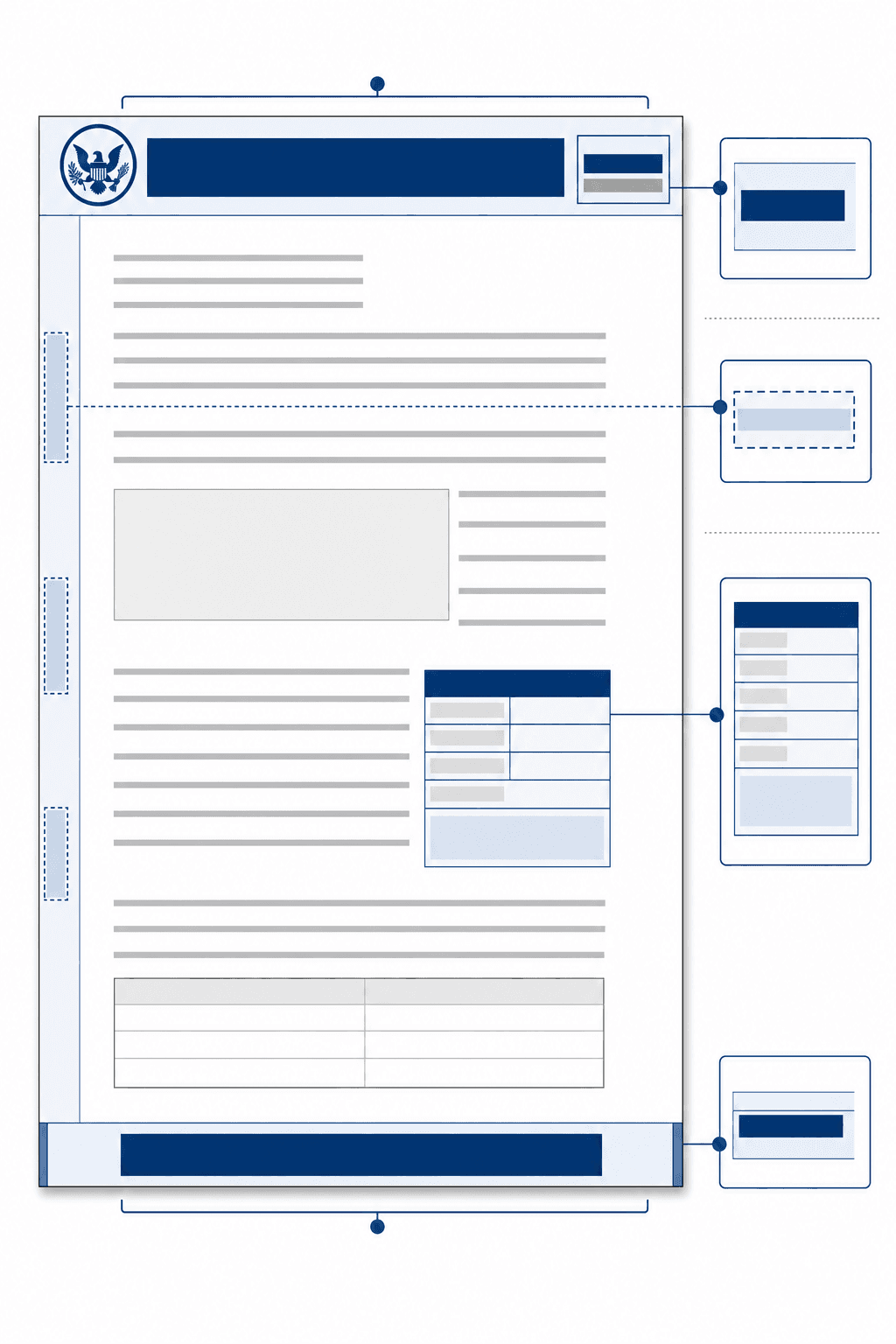
Banner Markings
CUI documents generally require banner markings, and agencies may provide specific marking instructions for placement, portion marking, and category markings. The standard marking is simply "CUI," though some categories require a more specific designation like "CUI//SP-PRVCY" for privacy-related information or "CUI//CTI" for Controlled Technical Information.
Portion Markings
When a document contains a mix of CUI and non-CUI content, portion markings identify which specific sections, paragraphs, or data elements carry the designation. This is common in technical proposals where only certain performance specs or subcontractor details qualify as CUI.
Get GovCon capture and proposal insights in your inbox.
Incident Reporting Obligations: 8-Hour, 72-Hour, and 1-Hour Timelines
Three different reporting timelines can apply to the same contractor depending on which clause governs a given contract. GSA's January 2026 procedural guide imposes a one-hour GSA cyber reporting window for cyber incidents on GSA contracts. The proposed FAR CUI rule would set an 8-hour reporting deadline for suspected or confirmed CUI incidents unless a different reporting period applies.
Subcontractor Flow-Down and Supply Chain Obligations
Prime contractors cannot disclaim liability when a subcontractor mishandles CUI. Flow-down language must appear in every applicable subcontract across all tiers that touch CUI, and primes must verify that each subcontractor has the controls in place before any data changes hands.
Penalties for CUI Noncompliance: Contract Loss, False Claims Act, and Civil Cyber-Fraud Initiative
Noncompliance with CUI requirements carries real contractual and legal exposure. Contracting Officers can terminate contracts for default when a contractor fails to meet DFARS 252.204-7012 obligations, and cure notices often precede full termination when CUI handling deficiencies surface during audits or incident reviews.
Beyond contract loss, the False Claims Act creates liability when contractors certify NIST SP 800-171 compliance on System Security Plans while known gaps remain unresolved. DOJ settlements under the Civil Cyber-Fraud Initiative have reached into the tens of millions.
Debarment is a separate exposure. A contractor found to have repeatedly or willfully mishandled CUI may face suspension or debarment proceedings, effectively removing them from federal contracting eligibility. Agencies are not waiting for breaches to act. DCSA assessments and CMMC audits generate findings proactively, and paper-only compliance programs are the most common source of cure notices.
Practical Compliance Steps: Gap Assessment, Remediation, and Assessment Readiness
Most CUI compliance gaps trace back to three structural failures: inconsistent marking at the point of creation, access controls that were never scoped to CUI categories, and incident response procedures that reference NIST 800-171 without mapping to actual data flows.
A gap assessment should audit these three areas against your System Security Plan before any external assessment. Remediation without that baseline typically produces documentation that passes review but doesn't reflect actual practice.
How GovEagle Accelerates CUI Compliance in Proposal Operations
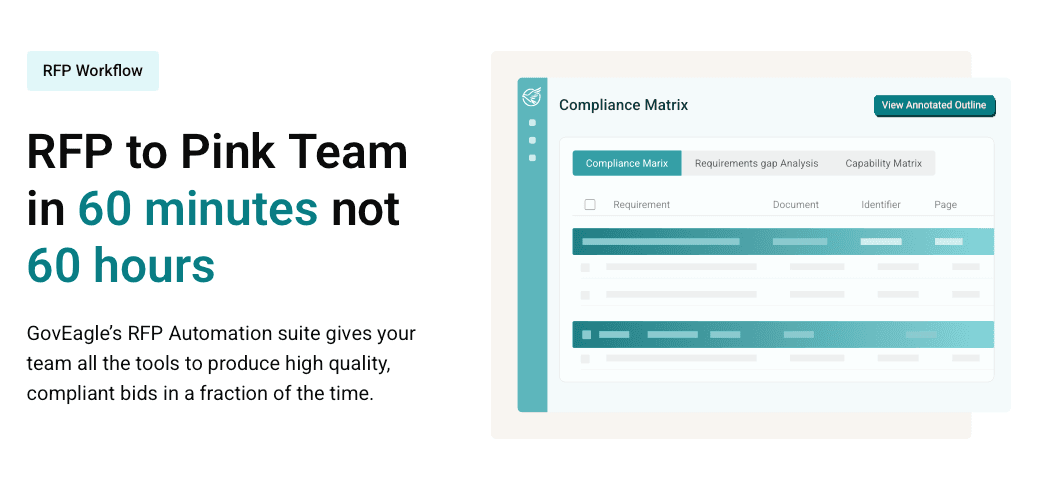
Proposal teams handling CUI face a structural bottleneck that shows up well before submission: tracking which sections touch controlled information, which subcontractors need access agreements, and whether the SP 800-171 controls documented in the SSP actually match what the proposal narrative claims. When those threads aren't connected, the compliance review catches it late, and late CUI findings are expensive to fix.
GovEagle is built around the capture-to-submission workflow, so CUI compliance isn't a bolt-on check at the end. The requirement traceability that runs through Section L and Section M mapping also flags where CUI handling language needs to appear, which subcontractor flow-down clauses apply under DFARS 252.204-7012, and where the proposal's security posture claims need to align with documented controls. That alignment happens during drafting, not during Red Team. The environment runs on AWS GovCloud at FedRAMP Moderate Equivalency, so content you're working with stays inside a compliant boundary when the proposal itself contains CUI.
The practical result is fewer late-stage compliance rewrites, cleaner handoffs to the Contracts team, and a proposal record that reflects accurate CUI handling from the first draft forward.
FAQs
Can I handle CUI without achieving CMMC Level 2 certification?
Not always. When a DoD solicitation requires CMMC Level 2 certification, the contractor must have the required current assessment result and affirmation in SPRS before award; however, some Level 2 programs may allow self-assessment instead of C3PAO certification.
What's the fastest way to identify which RFP sections touch CUI categories?
Cross-reference Section C task areas and Section L submission requirements against the NARA CUI Registry categories your contract vehicle typically encounters (CTI, Privacy, LES, or Export Controlled for most defense and civilian work). Flag any task requiring technical data with military application, PII processing, or law-enforcement coordination, then map those sections to the corresponding POA&M controls in your SSP before drafting begins.
How do I prove NIST SP 800-171 compliance during proposal development?
Your System Security Plan maps each of the 110 controls to actual implementation, and your POA&M documents open gaps with remediation timelines. Proposal narratives reference those documents when describing your security posture, and your SPRS records DoD assessment results and affirmations, but a Basic Assessment is self-generated and has a Low confidence level. Assessors score whether your SSP shows functioning controls that match your proposal claims, not whether the proposal includes security language.
Final Thoughts on CUI Requirements for Defense and Civilian Contractors
CUI GovCon compliance breaks down when documentation diverges from actual practice, and that gap most often surfaces during a C3PAO assessment or a DCSA review, not during internal review. The structural fix is connecting proposal drafting to the compliance baseline from the first draft forward. GovEagle is built around that connection. The capture-to-submission workflow flags where CUI handling language belongs, which DFARS 252.204-7012 flow-down clauses apply at each subcontract tier, and where proposal security posture claims need to align with documented NIST SP 800-171 controls. The result is fewer late-stage compliance rewrites and a proposal record that reflects accurate CUI handling from day one.