
Gold Team Review in GovCon: Best Practices and Process Guide (September 2026)

GovEagle is not affiliated with, sponsored by, certified by, or otherwise associated with Shipley Associates.
Your executives walk into Gold Team expecting to confirm a compliant, competitive proposal, but instead they’re uncovering gaps and second-guessing the win strategy with only 48 hours left. In Gold Team GovCon reviews, that kind of friction rarely starts at the end; it points back to breakdowns earlier in the process. By the time leadership steps in, priority Red Team issues should already be resolved, pricing should align with the technical approach, and the document should read like a final submission, not a work in progress. When teams rely on late-stage fixes instead of structured validation earlier on, Gold Team turns into damage control instead of a true go or no-go decision.
TLDR:
- Gold Team review typically happens 48-72 hours before submission as your final executive sign-off gate.
- Focus on compliance verification, win theme consistency, and fatal flaw checks, not content rewrites.
- Schedule backwards from deadline: lock Gold Team 72 hours out, freeze content 24 hours before review.
- Some AI-driven proposal review solutions can generate compliance reports and cross-reference matrices so reviewers focus on decision-making, not manual checks.
- Leadership should read as evaluators would, scoring against RFP criteria instead of defending past decisions.
What Is a Gold Team Review in Government Contracting?
The Gold Team review is the final quality control gate in a GovCon proposal before it goes out the door. Often held 48 to 72 hours before submission, it functions as an executive-level checkpoint where leadership signs off that the proposal is compliant, competitive, and ready for evaluation.
Unlike earlier color team reviews that focus on shaping content or catching structural issues, Gold Team is about submission readiness. The core question is simple: does this proposal win? If the answer is not clearly yes, the team needs to know before the government sees it.
The Gold Team review is less about finding problems and more about confirming the proposal is ready to win and ready to submit.
Think of it as a go/no-go decision point with real stakes. At this stage, leadership aligns on final messaging, confirms that requirements are covered, and gives the submission a green light.
The Gold Team's Role in the Color Review Process
Most GovCon proposals use color-coded reviews before submission. Each stage has a distinct purpose, and understanding where Gold Team sits in that sequence matters.
Here's how the reviews typically stack up:
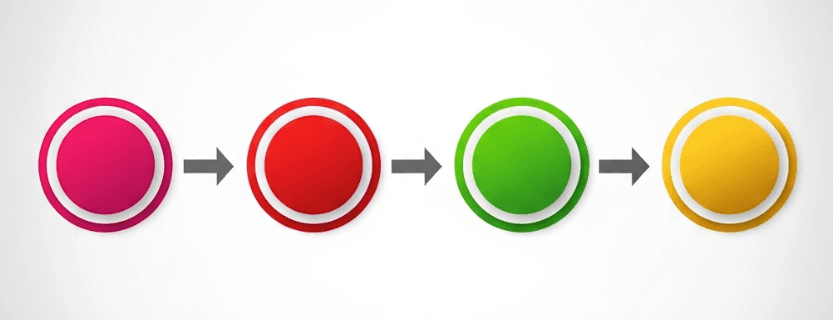
- Pink Team: Early draft review focused on strategy, outline, and win themes
- Red Team: Full draft evaluation against RFP requirements and scoring criteria
- Green Team: Pricing review and cost volume alignment
- Gold Team: Final executive sign-off before submission
| Review Stage | Timing | Primary Focus | Key Participants | Expected Deliverables |
|---|---|---|---|---|
| Pink Team | 30-50% draft complete | Validate win strategy, solution approach, and outline structure against capture plan | Capture manager, proposal manager, solution architects, BD leadership | Annotated outline, win theme validation, go/no-go recommendation on approach |
| Red Team | 90-95% draft complete | Validate compliance against RFP requirements, score content against evaluation criteria, and identify weaknesses | Independent reviewers unfamiliar with proposal, compliance specialists, technical evaluators | Compliance matrix verification, scored evaluation against RFP criteria, ranked revision list |
| Green Team | Often conducted in parallel with Red Team and revisited as needed | Verify pricing alignment with technical approach, validate cost realism and assumptions | Pricing lead, finance team, contracts manager, program manager | Aligned cost volume, pricing narrative alignment verification, risk-adjusted pricing model |
| Gold Team | 48-72 hours before submission | Executive validation of submission readiness, final compliance verification, fatal flaw detection | Senior executives with sign-off authority, capture manager, proposal manager, select SMEs | Go/no-go decision, executive sign-off documentation, final findings log with assigned owners |
Gold Team sits at the end of that chain. By this point, the Red Team has already flagged compliance gaps, the writers have revised, and the proposal should reflect all prior feedback. Gold Team confirms that it does.
Where teams go wrong is treating Gold Team like a second Red Team. At 48 hours out, there's rarely time to recover from major rewrites. Leadership should be scanning for fatal flaws and final alignment, not restructuring sections or revisiting win themes. If Gold Team is uncovering those kinds of issues, the earlier reviews didn't do their job.
Gold Team Timing and Submission Readiness
Scheduling Gold Team too late is one of the most common proposal mistakes. The 48 to 72 hour window before submission is a common target, and it exists for a reason: you need enough time to act on what the review surfaces without cutting into production time.
That buffer matters. Final formatting, volume assembly, graphics checks, compliance matrix cross-referencing, and upload logistics all happen in those last hours. If Gold Team bleeds into that window, something gets rushed.
What "Submission Ready" Actually Means
When Gold Team convenes, the proposal should be near-final and functionally complete. Reviewers need to read what the government will read. That means:
- All sections drafted and revised post-Red Team
- Pricing volume aligned with technical approach
- Graphics and callouts finalized
- Compliance matrix current with the latest amendment
If the document still has placeholders or unresolved Red Team comments, reviewers end up judging assumptions instead of the actual proposal.
Scheduling Backwards From the Deadline
Work the calendar in reverse. Lock the submission deadline first, then block Gold Team 72 hours out. From there, set a hard content freeze 24 hours before Gold Team begins. Writers need to stop revising so reviewers see a stable document. Any edits surfaced during Gold Team should be tracked and assigned immediately so corrections clear with time to spare.
Who Should Participate in Gold Team Review
Gold Team is not an all-hands review. The people in that room need authority beyond familiarity with the proposal.
The Core Review Panel
- Senior executive or program sponsor with sign-off authority who can make binding decisions on scope, risk, and pricing without needing further approval
- Proposal manager who owns the compliance baseline and can flag any gaps against the RFP requirements in real time
- Capture manager who can speak to win strategy and competitive positioning with the full context of the pursuit history
- One or two SMEs to confirm the technical approach is credible at a high level
That last role is worth qualifying. SMEs at Gold Team are there to validate the approach, not drive major rewrites. If a SME arrives ready to restructure the technical volume, the review derails quickly.
Who Should Not Be in the Room

Writers, section owners, and coordinators generally should not participate as reviewers. They are too close to the content to read it objectively, and their presence tends to shift the conversation toward defending past decisions instead of making clear-eyed go/no-go calls.
The goal is a panel that reads the proposal the way a source selection evaluator would: fresh, critical, and focused on whether it wins.
Get GovCon capture and proposal insights in your inbox.
Gold Team Focus Areas and Evaluation Criteria
Gold Team reviewers are not copy editors. By this stage, the content has been written, revised, and revised again. What leadership is scanning for now is different in kind and in degree.
There are five areas where Gold Team attention tends to matter most:
- Compliance verification: every RFP requirement maps to a clear response, with no orphaned sections or missing deliverables
- Win theme consistency: the core differentiators appear throughout all volumes, including beyond the executive summary
- Pricing alignment: the cost volume matches what the technical approach actually proposes
- Contractual terms: any teaming agreements, certifications, or representations are current and attached
- Fatal flaw check: anything that could trigger a non-compliant rating or disqualify the bid outright
What Gold Team Should Not Revisit
The strategic framing, section structure, and core messaging were settled at Red Team. Gold Team is not the place to reopen those calls. If a reviewer wants to rethink the solution approach at 48 hours out, that conversation needs to be documented and deliberately escalated, not treated as a routine edit.
The most useful mental model here: Gold Team reviewers should read as evaluators, scoring the proposal against RFP criteria. If a section would score poorly against a specific evaluation factor, that is a finding worth flagging. If it holds up, move on.
Common Gold Team Review Mistakes to Avoid
These mistakes surface repeatedly across GovCon proposals, and naming them directly is the first step to avoiding them.
- Starting with an incomplete document. Reviewers cannot assess what they cannot read. Placeholders and tracked changes left in the file force reviewers to judge intent instead of execution, which produces feedback that misses the actual weaknesses.
- No defined exit criteria. What does a passing Gold Team actually look like? If no one answers that before the review starts, the session drifts. Set the bar in advance: compliance verified, pricing aligned, fatal flaws resolved.
- Letting feedback become a wish list. Gold Team comments should be limited to what is fixable within the remaining window and what would materially affect the evaluation. Style preferences and minor wordsmithing have no place here.
- Skipping a formal debrief. Every finding should be logged, assigned, and tracked to resolution before the document goes to production. Without that accountability layer, items fall through the cracks under submission pressure.
How AI and Automation Support Gold Team Reviews
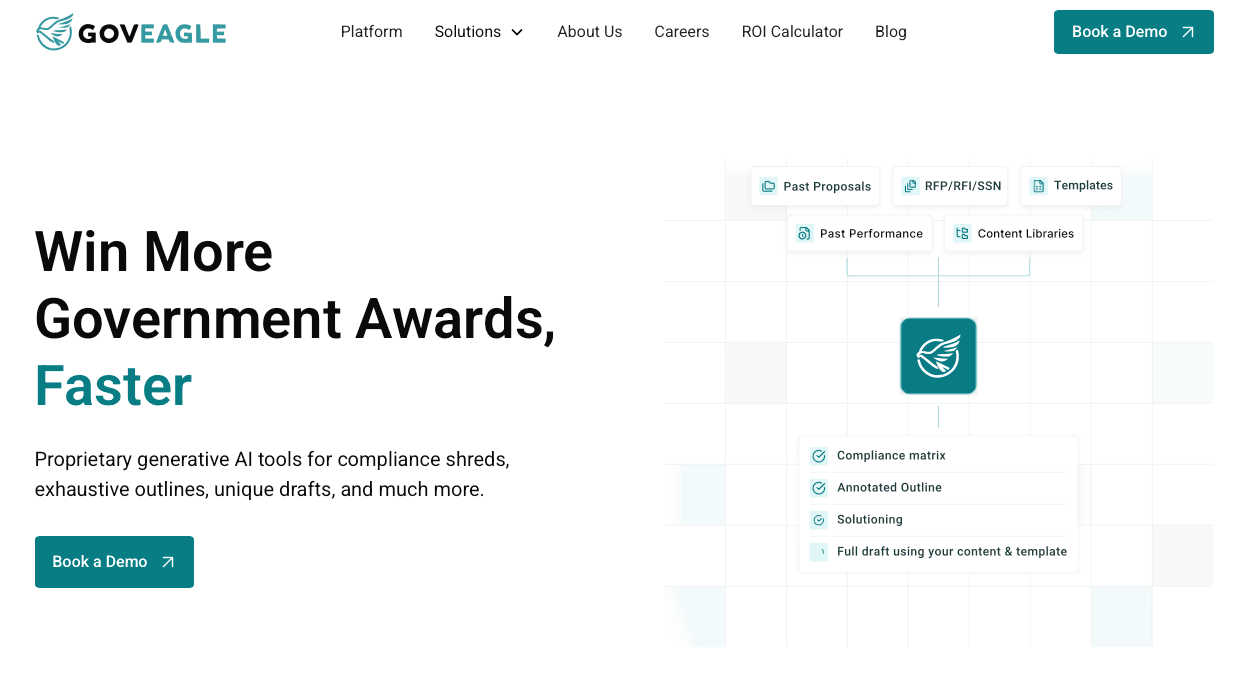
By the time Gold Team convenes, the margin for error is narrow and the time to fix anything is narrower. GovEagle is built for exactly this stage. As an AI-assisted review tool purpose-built for GovCon, it generates compliance, win theme, and quality reports against the live proposal document to support reviewer analysis, so reviewers walk into Gold Team with findings already in hand instead of reading cold.
GovEagle's GovCon-specific workflow produces a cross-reference matrix that maps every RFP requirement to the exact proposal section where it's covered, reducing compliance verification time from hours of manual cross-checking to a fraction of the time. If the government issued a late amendment, GovEagle flags what changed and updates the compliance matrix to reflect those changes, so Gold Team reviewers confirm coverage without hunting through modification documents one by one.
The result is a review session focused on judgment calls, not administrative checks. GovEagle gives leadership a real-time view of compliance and alignment before they step in, so the go/no-go decision is based on a complete, defensible submission, not a best guess.
FAQs
What is the purpose of a Gold Team review in GovCon?
Gold Team is the final executive sign-off before proposal submission, confirming the document is compliant, competitive, and ready to win. Often held 48 to 72 hours before the deadline, it functions as a go/no-go decision point where leadership validates submission readiness, not catches structural problems.
Can I run Gold Team without a formal compliance matrix?
Running Gold Team without a current compliance matrix risks missing critical requirements and creates time-consuming manual cross-checks during the review. A cross-reference matrix that maps every RFP requirement to specific proposal sections turns compliance verification from hours of work into a quick confirmation step.
When should I schedule Gold Team if my submission deadline is tight?
Schedule Gold Team 72 hours before your deadline and freeze all content 24 hours before the review begins. This buffer gives you time to act on findings without cutting into final production tasks like formatting, volume assembly, and upload logistics that must happen in the final hours.
Final Thoughts on Gold Team and Proposal Readiness
If your Gold Team GovCon review is still surfacing major issues days before submission, the problem sits upstream in how the proposal is built and validated. Gold Team should be a moment of confirmation, not a scramble to fix what earlier reviews missed. When compliance tracking, requirement mapping, and amendment updates are handled in a structured way, leadership can focus on the one question that matters: does this proposal win? GovEagle brings that clarity into the final review stage by giving teams a real-time view of compliance and alignment before executives step in, so the last decision is based on a complete, defensible submission.