
OTAs and Task Orders: A Complete Guide for Federal Contractors (September 2026)

Federal task orders flow through IDIQ vehicles under FAR 16.505, while OTAs operate outside the FAR entirely. That distinction changes eligibility rules, teaming requirements, and competition timelines before any solicitation appears. For capture teams pursuing work across both vehicle types, the differences are not cosmetic. They affect which opportunities are even visible and how early positioning needs to start. This guide covers how procurement mechanics differ across FAR-based task orders and OTA prototype agreements.
TLDR:
- OTAs bypass FAR, letting agencies negotiate IP rights and award follow-on production without recompeting.
- Prototype OTAs generally must meet one of several statutory conditions, such as significant participation by a nontraditional defense contractor or nonprofit research institution, participation only by small businesses/nontraditional contractors, one-third cost sharing, or an exceptional-circumstances determination.
- Consortium membership can gate access to consortium-issued OTA opportunities, but agencies may also issue OTAs outside a consortium model.
- IDIQ task order proposals follow the ordering procedures in the underlying contract, with response windows set by the agency based on a reasonable response period.
- Some modern solutions can map requirements to evaluation criteria across IDIQ, GWAC, and OTA vehicles.
What Other Transaction Authority Means for Federal Contractors
Other Transaction Authority (OTA) is a procurement mechanism that lets certain federal agencies award agreements outside the standard FAR framework. Unlike traditional contracts, OTAs are governed by agency-specific statutes instead of FAR Part 15, which gives agencies substantial flexibility in how they structure, compete, and execute agreements.
OTAs were originally created to expand participation among nontraditional defense contractors and accelerate access to emerging capabilities that might not otherwise enter traditional federal acquisition channels. Over time, Congress expanded OTA authority to additional agencies and broadened the scope of what OTAs can cover, including prototype projects and follow-on production contracts.
For federal contractors, OTAs matter because they change the competitive and contractual environment in ways that affect BD strategy, teaming decisions, and proposal approach.
Key Characteristics of OTAs
A few structural features separate OTAs from standard federal contracts:
- OTAs are not subject to FAR, DFARS, or most standard procurement regulations, which means agencies can set their own terms for competition, IP rights, cost accounting, and data rights.
- Nontraditional contractors, defined under 10 U.S.C. § 3014 as companies that have not performed a contract or subcontract subject to full CAS coverage in the prior year, often play a required or preferred role in OTA consortia.
- Prototype OTAs can include a follow-on production award without a separate competitive procurement, provided the prototype successfully meets the agency's objectives.
- Many prototype OTAs are awarded through consortium managers, which serve as intermediaries between the agency and member companies.
How OTAs Differ from Traditional FAR-Based Contracts
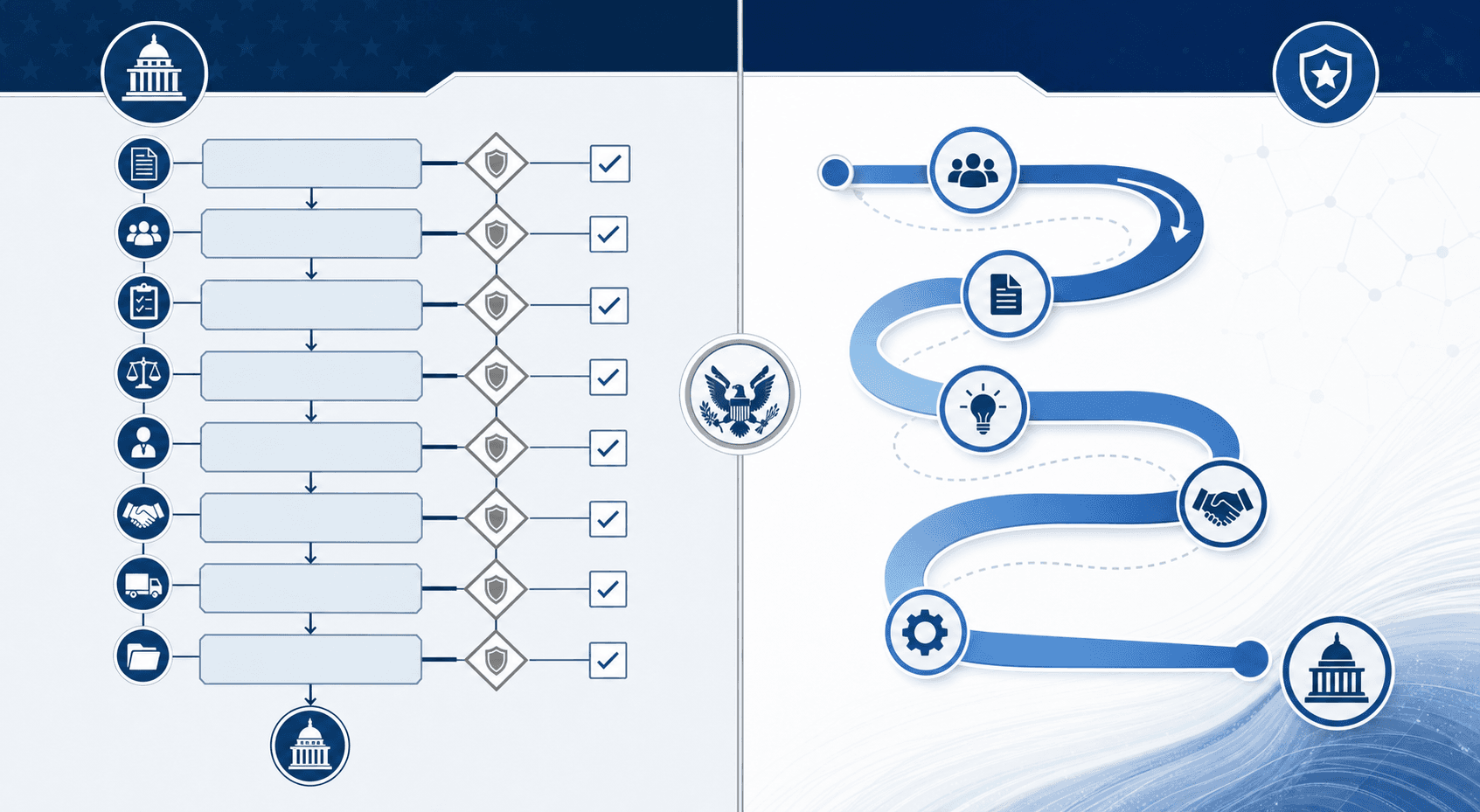
FAR-based contracts operate within a procurement framework built on competition, transparency, and cost accountability. OTAs sit outside that framework entirely, and the difference has real implications for how contractors structure their approach.
Under the FAR, agencies follow prescribed acquisition procedures: solicitations, defined evaluation criteria, protests, and audit rights. DoD research OT authority is dealt with under 10 U.S.C. § 4021 while DoD prototype OT authority is dealt with under 10 U.S.C. § 4022. Agencies can negotiate terms directly, skip the Federal Acquisition Regulation altogether, and move from agreement to prototype faster than many traditional FAR-based acquisition processes.
Key Structural Differences
The contracting mechanics diverge in several areas that matter for BD and capture teams:
- Competition requirements are flexible under OTAs. While agencies often issue a broad agency announcement or a competitive solicitation, they have discretion to engage nontraditional contractors or consortia without a full competitive process.
- Intellectual property and data rights are negotiable, not governed by DFARS clauses.
- Full CAS coverage is central to the nontraditional defense contractor definition, but OTA agreements can still include negotiated financial, audit, or accounting terms.
- Protest rights at GAO are limited for OTA awards, meaning competitors have fewer formal recourse options once an agreement is executed.
Task orders issued under OTAs follow similar flexibility. Once a prototype OTA transitions to a production OTA, task orders can be awarded directly to the original awardee without re-competing, provided the transition conditions are met. That pathway is one of the more consequential features for contractors thinking about long-term program capture.
Eligibility Requirements for OTA Awards
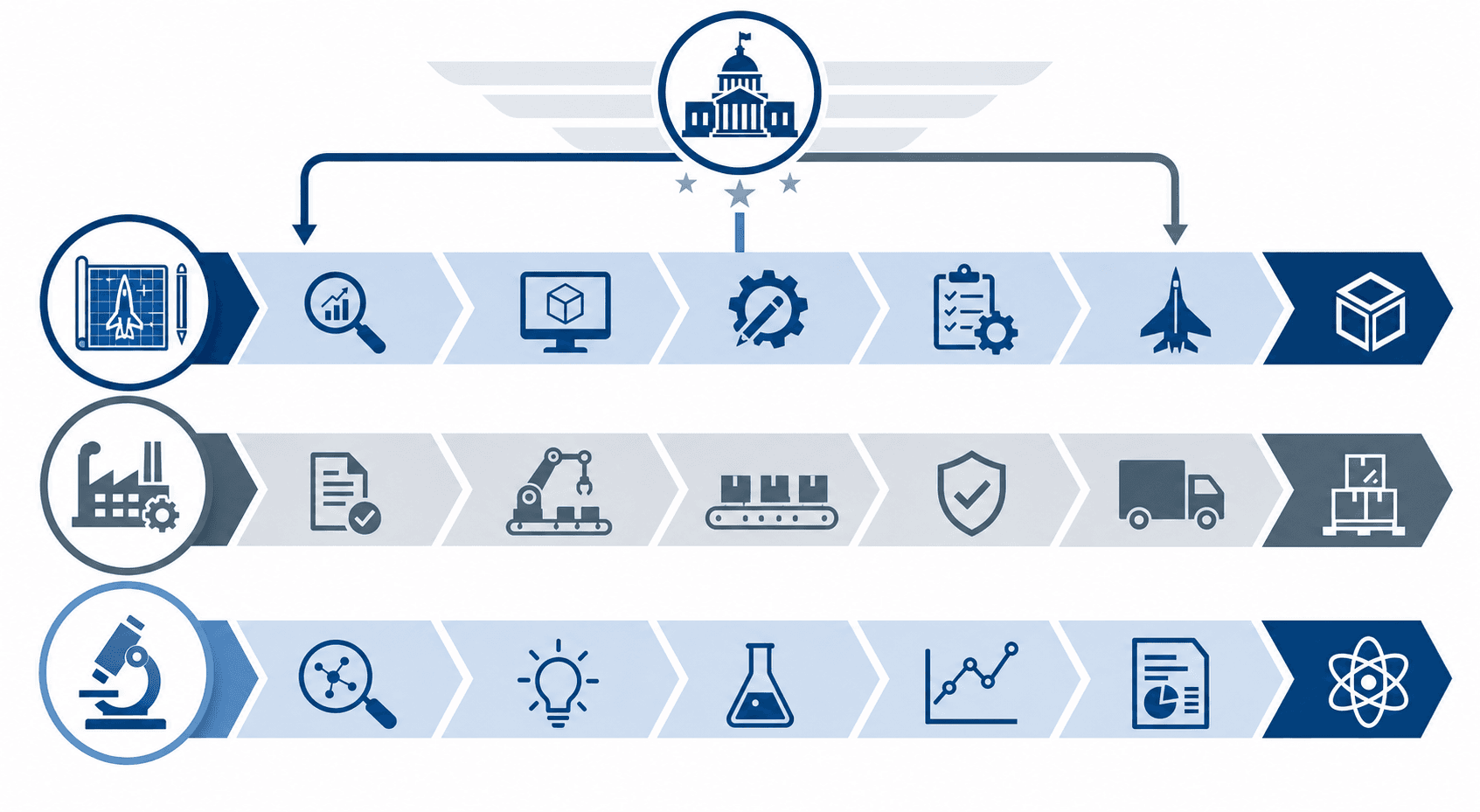
OTA awards carry strict eligibility rules that differ meaningfully from traditional FAR-based contracts, and understanding who qualifies is the first step before pursuing this acquisition path.
Who Can Receive an OTA Award
OTAs are not open to the full contractor universe. Awards flow through a narrower set of entity types:
- Traditional defense contractors can participate in prototype OTAs, but statutory conditions generally require participation by a nontraditional defense contractor or nonprofit research institution, all significant non-government participants to be small businesses or nontraditional defense contractors, one-third cost sharing, or an exceptional-circumstances determination.
- Nontraditional defense contractors, defined under 10 U.S.C. § 3014 as entities not currently performing and not having performed any contract or subcontract subject to full CAS coverage in the preceding year, can qualify independently.
- Consortia are the most common vehicle, typically managed by a nonprofit consortium management organization (CMO) that handles agreement administration on behalf of member companies.
The Nontraditional Contractor Rule
The nontraditional requirement is where many pursuit teams get tripped up. At least one nontraditional defense contractor must be performing a "substantial" portion of the prototype work. DoD has not published a hard percentage threshold for "substantial," so agencies retain discretion in making that determination. In practice, the nontraditional contributor needs a substantive technical role, not a nominal one included to satisfy the requirement on paper.
If no nontraditional contractor is involved, an OTA can still proceed under an "exceptional circumstances" waiver, but the requiring activity must document why the award is nonetheless in the government's interest. These waivers are granted selectively.
OTA Consortia and How They Work
Most OTA agreements don't get executed directly between an agency and a single company. Instead, agencies work through OTA consortia, which are pre-formed membership organizations that absorb much of the administrative overhead involved in getting nontraditional contractors and research institutions into federal work.
How Consortia Are Structured
A consortium is typically managed by a nonprofit or university that holds the master OTA agreement with the agency. Member companies apply to join, and once accepted, they can compete for individual project agreements issued under that master vehicle. This structure lets agencies tap a curated pool of vetted performers without re-competing eligibility each time.
Common OTA ecosystem participants include consortium managers such as NSTXL and ATI, which administer consortium-based opportunities on behalf of participating agencies. Member companies range from large prime contractors to small businesses and nontraditional defense contractors, creating teaming opportunities across the defense industrial base.
How This Affects Contractors
- Joining a consortium is the entry point, not winning a specific project. Membership fees and application requirements vary by organization, so contractors should assess fit before committing.
- Once inside, members receive solicitations for prototype project agreements that are not publicly posted on SAM.gov, making consortium membership a direct competitive advantage for visibility.
Get GovCon capture and proposal insights in your inbox.
Understanding IDIQ Contracts and Task Orders
Indefinite Delivery, Indefinite Quantity (IDIQ) contracts are multi-award vehicles where the government commits to purchasing a minimum quantity of supplies or services over a set period, with the actual work delivered through individual task orders. The government is not obligated to buy beyond that minimum, which means contractors win a spot on the vehicle but have no revenue guarantee until task orders flow.
Task orders are the binding delivery instruments within an IDIQ. Each one specifies scope, period of performance, deliverables, and ceiling value. Winning the IDIQ gets you to the table; winning task orders is where revenue is made.
How Task Order Competition Works
Most IDIQ vehicles require fair opportunity among all awardees before a task order is issued, as directed under FAR 16.505. Agencies circulate a task order request to all eligible holders, and contractors submit proposals against that specific scope. Task order proposal strategy differs from full-and-open RFP strategy: evaluation criteria are compressed, timelines are shorter, and the government often has incumbent knowledge baked into its expectations.
Comparing Task Order Vehicles: IDIQ, GWAC, and OTA Consortia
Three procurement vehicles dominate the federal task order space, and each carries a distinct risk profile, competitive posture, and ceiling structure that shapes how contractors pursue work.
Here is how the primary vehicles compare across the dimensions that matter most for bid strategy:
| Vehicle | Contract Type | Competition Model | Ceiling / Scope | Speed to Award |
|---|---|---|---|---|
| Single-agency IDIQ | FAR-based | Full and open or set-aside | Agency-specific | Moderate |
| GWAC (e.g., OASIS+, Alliant 3) | FAR-based, multi-agency | Pre-competed pool | Government-wide, high ceiling | Moderate to slow |
| OTA Consortium | Non-FAR | Consortium membership gate | Prototype-focused, flexible | Typically faster |
Single-Agency IDIQs
Agencies award multiple IDIQ contracts to a pool of qualified vendors, then compete individual task orders within that pool.
GWACs
Vehicles like OASIS+ and the forthcoming Alliant 3 carry high ceiling values and broad scope, making them attractive for large contractors pursuing cross-agency work.
OTA Consortia
Other Transaction Authority agreements sit outside the FAR entirely. Consortium-based OTAs give member companies access to prototype and follow-on production awards without traditional sealed-bid competition. Agencies value the speed and flexibility; contractors value reduced compliance overhead and the ability to team with non-traditional defense companies. The catch is that consortium membership typically requires investment and active relationship management before any solicitation appears.
How GovEagle Supports Pursuit Teams Across Contract Vehicles
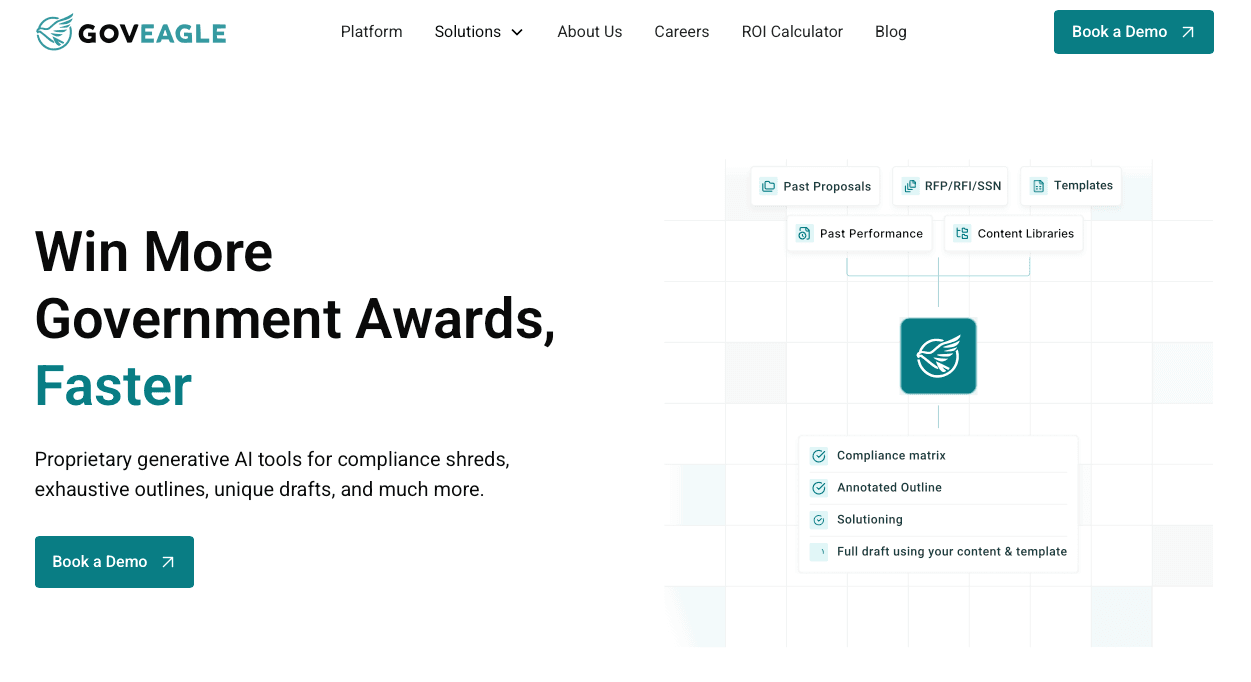
GovEagle connects BD pipeline tracking, RFP analysis, and proposal development into a single workflow so capture teams aren't rebuilding context as an opportunity moves from pre-solicitation to award.
For IDIQ task orders, it parses Section L and M requirements and maps past performance to published evaluation criteria; for OTA opportunities, it helps teams work through unstructured solicitation documents and build response frameworks without a standard Section L to anchor against.
Capture leads can assess bid/no-bid earlier with actual requirement data, regardless of which vehicle the opportunity sits under.
FAQs
Can I compete for OTA prototype projects without joining a consortium?
Sometimes. Many OTA opportunities are issued through consortia, but agencies can also award OTAs outside a consortium model depending on the authority, agency, and solicitation structure.
How do OTAs handle intellectual property and data rights differently than FAR contracts?
OTAs allow negotiated IP and data rights instead of applying standardized DFARS clauses. The agreement terms define ownership and usage rights, which creates flexibility but also means contractors must negotiate these provisions upfront instead of relying on default FAR framework protections.
When does an OTA prototype lead to production without recompeting?
A prototype OTA can include a follow-on production award without separate competition if the original agreement included that option and the prototype successfully met the agency's objectives. The production pathway must be included in the base prototype agreement, not added later.
Final Thoughts on OTAs, Task Orders, and Federal Acquisition Strategy
OTA prototype agreements and IDIQ task orders sit at opposite ends of the federal acquisition range: one built for speed and flexibility outside the FAR, the other structured around competition and defined evaluation criteria. Pursuing work across both vehicle types requires capture teams to hold different eligibility rules, teaming structures, and proposal frameworks at once. Task orders under multi-award IDIQs demand tight alignment to Section L and M requirements, while OTA opportunities reward early consortium positioning before any solicitation drops. GovEagle connects pipeline tracking, requirement analysis, and proposal development across both environments so capture leads can assess bid/no-bid with actual requirement data, regardless of which vehicle the opportunity sits under.