
Build a Defensible PTW Position in GovCon Sep 2026

Akash Mandavilli
CEO and Co-Founder of GovEagle
About the author
Akash is a 2x founder with previous experience in AI from Meta and federal sales from IBM. Akash holds a dual-degree from Johns Hopkins University in Economics and Computer Science.
There's a gap that shows up on a lot of federal pursuits: competitive pricing intelligence developed during capture never reaches the team building the cost volume. The capture lead's competitor rate models and black hat findings are sitting in a CRM note while the pricing section gets built from scratch. A solid PTW analysis closes that gap before it costs you the award, and it starts with understanding how your evaluation method restructures the entire pricing logic. That's where we'll begin.
TLDR:
- PTW is a pricing range, not a number; your target sits above your cost floor, inside the competitive window, and within the agency's reasonableness threshold.
- Your source selection method (LPTA, best value, or Highest Technically Rated) restructures your PTW logic entirely. Apply the wrong framework and you either compress margin or price into a risk signal.
- Triangulate SAM.gov Data Bank, USASpending.gov, and GSA CALC to build your competitor model; each source answers a different question and no single source is sufficient.
- PTW analysis belongs in capture, not the cost volume. By the time the RFP drops, the competitive intelligence window has largely closed.
- GovEagle connects capture-stage PTW findings directly to the proposal workspace via CRM integrations, keeping competitor rate models and black hat analysis accessible when the cost volume is being built.
What Price-to-Win Actually Means in Federal Contracting
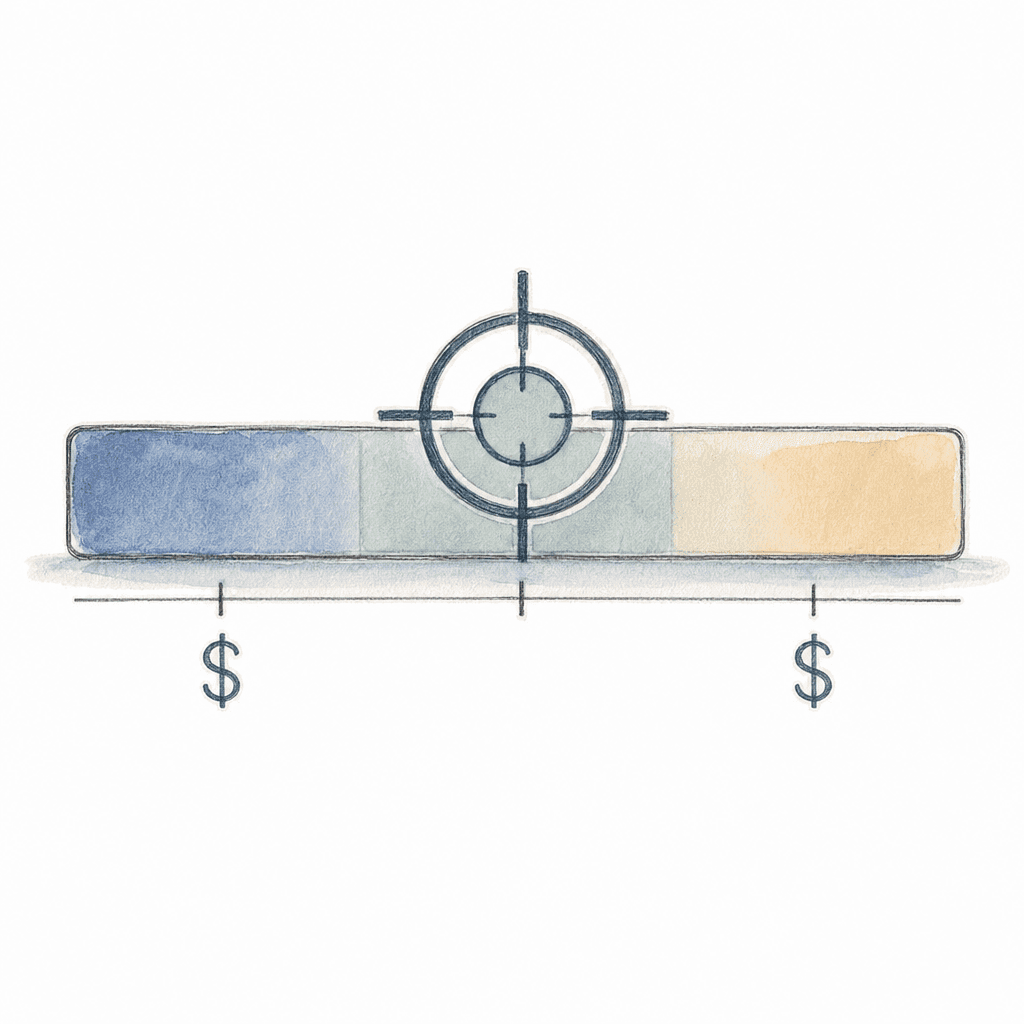
Price-to-win is a pricing range, not a number. It represents the window where your offer reads as credible to evaluators, competitive against likely rivals, and aligned with how the solicitation scores cost or price. Fall below that floor and you risk a cost realism flag. Exceed the ceiling and you hand the award to a competitor who priced tighter.
The inputs that shape this range include competitor labor rates, historical award data, the government's independent cost estimate, and the evaluation method specified in Section M evaluation factors. PTW analysis in federal contracting is fundamentally a triangulation exercise: you are drawing from multiple data sources toward a defensible position, not reverse-engineering the lowest number you can survive on.
How Evaluation Method Determines Your PTW Approach
The solicitation's source selection method restructures your PTW logic from the ground up. Under FAR 15.101-2, Lowest Price Technically Acceptable awards go to the lowest-priced offeror who clears the technical threshold. Your PTW target is the floor of technical acceptability, priced as tightly as your cost model allows. Competing as if this were a best value pursuit wastes margin you cannot recover.
Best value tradeoffs under FAR Part 15 proposal strategy work differently. Evaluators weigh technical merit against price, which means pricing too low can signal risk, not sound cost management. Your PTW range has a credible floor as well as a ceiling.
A third method, Highest Technically Rated with Fair and Reasonable Price, removes price from the ranking equation almost entirely. PTW work here moves toward confirming your price clears a reasonableness threshold without optimizing for competitive position.
Where LPTA Still Appears and Why It Matters
Congress has progressively narrowed LPTA proposal strategy use through successive NDAAs, restricting it for IT services, cybersecurity, and knowledge-based work where low price tracks poorly with performance quality. If you are pursuing those categories and the solicitation still applies LPTA, that is worth flagging in your bid/no-bid decision assessment before your team builds a pricing model around the wrong competitive framework entirely.
The FAR Framework Governing Price Evaluation
Under FAR 15.404-1, the government applies different analytical tools depending on contract type. Price analysis compares your offered price against market benchmarks, historical awards, or competing offers. Cost analysis goes deeper, assessing the reasonableness of individual cost elements when certified cost or pricing data are required. Cost realism analysis applies to cost-reimbursement contracts, where the agency adjusts probable cost upward if your proposed costs appear unrealistically low.
That last point carries a direct PTW implication on cost-plus vehicles. Pricing below what evaluators believe the work actually costs often hurts your competitive position. Evaluators will typically restate your probable cost to reflect what they think performance will require, and that adjusted figure is what gets scored. A price that looks lean can read as a poor understanding of scope, which creates a technical risk flag alongside the pricing adjustment.
Fixed-price contracts have no realism adjustment mechanism, so your PTW floor is largely a commercial judgment about margin. Knowing which contract type governs the solicitation before you build your pricing model is a foundational step, not an afterthought.
Building a Competitor Pricing Model
Identifying probable bidders is the first structural move. Incumbent contracts, agency relationship patterns, and past performance records on USASpending.gov can surface the likely field. Once you have a working competitor list, pull historical award values on comparable vehicles and scope profiles to estimate each firm's labor rate posture and indirect cost structure.
From there, model each competitor's probable wrap rate using public contract data, any disclosed GSA Schedule pricing, and labor category benchmarks from the Bureau of Labor Statistics or comparable IDIQ awards. Staffing mix matters here: a competitor leaning heavily on senior labor carries a different cost profile than one who pyramids junior staff into the same scope.
There are a few pressure points where this analysis tends to break down:
- Wrap rate estimates from public data often lag by one to two fiscal years, so a competitor who has restructured fringe or overhead recently may price lower than historical awards suggest.
- Staffing mix signals can be inferred from submitted resumes on prior awards, but only when you have access to source selection documentation or debrief records that include reviewed staffing plans.
- GSA Schedule pricing, where disclosed, sets a ceiling, not a floor. Many firms negotiate task-order pricing below their published rates on competitive vehicles.
The output of this exercise should be a probable price range for each competitor, not a single point estimate. That range becomes the competitive window you are working to enter, exit, or straddle, depending on your cost structure and the evaluation weighting between price and technical factors. A defensible PTW position accounts for where that window sits before you finalize your own cost build.
Mining Historical Award Data for Pricing Intelligence
Three public sources form the core of most PTW data efforts. SAM.gov's Data Bank, which absorbed FPDS ezSearch, gives you contract action histories and award values searchable by agency, NAICS code, and contractor. USASpending.gov layers in obligation trends over time, useful for reading how an agency's spend on a given capability has grown or contracted. GSA's CALC tool provides labor category rate benchmarks pulled from awarded Schedule contracts, giving you a rough ceiling on what agencies have historically accepted for specific roles.
No single source tells the full story. CALC rates reflect Schedule pricing, not task-order negotiated rates, and SAM.gov award values include ceiling figures on IDIQs that can overstate actual obligation levels. Triangulating across all three narrows the uncertainty range enough to build a defensible pricing model.
How to Read Each Source
Each database answers a different question, and conflating them is where many pricing analysts run into trouble.
| Source | Best For | Key Limitation |
|---|---|---|
| SAM.gov Data Bank | Competitive mapping: who has been winning work in this space, at what ceiling values, and under which contract vehicles | Ceiling figures on IDIQs can overstate actual obligation levels |
| USASpending.gov | Trend analysis: whether agency spend on a given capability is growing, flattening, or declining | Obligation trends lag current spend; a declining trend may not yet reflect recent program investments |
| GSA CALC | Labor rate benchmarking: what rates agencies have accepted on awarded Schedule contracts for specific labor categories | Reflects Schedule pricing, not negotiated task-order rates; use as a ceiling check, not a target |
Bottom-Up Cost Modeling and Basis of Estimate
The competitor pricing model tells you where the window sits. Your bottom-up cost build tells you whether you can actually fit through it.
Start with the PWS. Break it into discrete task areas and assign labor categories and hours to each. The staffing model has to reflect what performance actually requires, not what fits a target price. Understaffed task areas on cost-reimbursable vehicles create probable cost adjustments at evaluation; understaffed task areas on firm-fixed-price contracts create delivery exposure after award.
Once your labor mix is defined, load each category through your indirect rate structure: fringe on direct labor, overhead where applicable to your accounting system, G&A applied to the total cost input base, and fee on top. Keep travel, materials, subcontractor costs, and other direct costs separate from labor. Blending them into a single line makes the BOE harder to defend and harder to adjust when scope assumptions shift.
The resulting number is your internal cost floor. A defensible PTW position sits above that floor, within the competitive window your competitor model identified, and inside whatever reasonableness threshold the agency will apply. When those three constraints don't overlap, you have a pricing problem worth surfacing at bid/no-bid review and not absorbing into an optimistic BOE.
Aligning PTW with Your Internal Cost Reality
When the competitive window sits below your internal cost floor, you have a real decision to make, and making it late is far more expensive than making it early.
The options are limited: restructure the staffing model with a leaner labor mix or more junior categories, pursue a subcontractor role under a prime whose cost structure fits the window better, or no-bid. Each path is legitimate. What is not is forcing a below-floor price through the BOE by shaving hours from task areas that actually need coverage, then hoping performance holds after award.
Late-stage price cutting creates a specific failure pattern worth recognizing. By the time a Red Team surfaces a pricing gap, the technical volume has often been written around a staffing model that no longer matches the proposed price. Revising the price without revising the staffing narrative produces internal inconsistencies that evaluators flag during cost analysis or, on cost-plus vehicles, correct through a probable cost adjustment anyway.
PTW analysis is most useful as a probability of win input, not a final-step pricing fix. When the gap between your cost floor and the probable competitive window is clear at the start of pursuit, that finding belongs in the Gate review, not in the pricing volume on day thirty.
Integrating PTW into the Capture Lifecycle
When an opportunity first enters your pipeline, you have the best conditions for PTW research: time to pull historical awards, map likely bidders, and build an early competitor rate model without deadline pressure. That initial model will be rough, but it gives capture leads a pricing reference point before win themes are set and teaming decisions are made.
As pre-RFP activity progresses, each touchpoint adds fidelity to that model:
- RFI responses from competitors can signal their technical posture and staffing approach, giving you early reads on how they are likely to structure labor.
- Industry day rosters confirm who showed up, which narrows your probable bidder list to a workable set of named competitors.
- Draft RFP sections, when released, reveal scope boundaries and labor category definitions that your staffing model needs to reflect before the final solicitation locks them in.
Each of these inputs should trigger a PTW model update, not a separate analysis running in parallel.
Once the RFP drops, the competitor model gets stress-tested against confirmed Section M evaluation factors weights. A solicitation that weights price at 40 percent demands tighter competitive positioning than one where PWin factor scoring places price last among several factors. If your model was built assuming a best value tradeoff and the final RFP runs LPTA, that is a material change to your pricing logic, not a minor adjustment.
The firms that treat PTW as a capture activity tend to arrive at final pricing with far fewer surprises. The competitive window is visible earlier, the bid/no-bid call is better informed, and the cost build reflects a staffing model designed around a defensible price from the start.
Common PTW Mistakes That Cost Contractors Awards
Each failure below is correctable at the process level, which makes them worth naming before they surface in an award decision.
- Treating PTW as a cost-volume task instead of a capture input means your staffing model is already locked by the time anyone checks the competitive window. The fix is earlier engagement, not more precise arithmetic at proposal close.
- Building the competitor model from a single data source produces a point estimate with false precision. Triangulate SAM.gov, USASpending, and CALC before settling on a range.
- Pricing to the IGCE instead of the competitive field confuses "fair and reasonable" with "winning." The government's estimate sets a reasonableness ceiling, not your target.
- Ignoring incumbent pricing signals is a common gap. Incumbents' loaded rates are often visible through historical award values and prior BOE documentation released in debriefs, and that data can narrow your uncertainty range considerably.
- Applying LPTA price logic to a best value tradeoff opportunity compresses your margin without improving your competitive position. On best value solicitations, the evaluation panel scores technical merit against price, and a price that reads as thin can register as a risk signal, not an advantage.
How GovEagle Supports the PTW Workflow
Shared PTW vocabulary across BD and capture is necessary but not sufficient. The gap that actually costs contractors awards is structural: competitive pricing intelligence developed during capture rarely reaches the team building the cost volume. By the time the pricing section is being written, the black hat review findings, competitor rate models, and staffing mix assumptions are sitting in a CRM record or a capture lead's notes.
GovEagle's Price-to-Win workflow closes that continuity gap directly. The workflow supports BD and capture teams in developing defensible pricing positions before the proposal is written, then connects those PTW findings to the cost volume and technical approach instead of leaving them in a parallel track. CRM integrations with Salesforce and HubSpot pull capture intelligence, including competitive insights from black hat analysis, directly into the proposal workspace. That means the pricing assumptions your capture lead developed six weeks before RFP release are accessible to the team drafting Section B, not buried in a deal record no one checks at proposal time.
Integrity Defense Solutions documented 3-4x faster proposal throughput after tightening capture-to-proposal continuity with GovEagle, a result that reflects what happens when pricing strategy, competitive intelligence, and proposal execution run in the same workflow instead of as sequential handoffs.
Readers who want to see how PTW fits into GovEagle's full pursuit lifecycle can review the capture management software page.
Final Thoughts on Developing a Competitive Price to Win for Government Contracts
The gap between a winning price and a losing one rarely comes down to arithmetic. It comes down to when your team built the competitor model, how many data sources it drew from, and whether that intelligence actually reached the people writing Section B. Getting PTW analysis into the capture lifecycle early is what keeps those three things from running on separate tracks, and that is the difference between a pricing strategy built from competitive intelligence and one rebuilt from scratch at proposal close.
FAQ
What's the difference between pricing to the IGCE versus pricing to the competitive field in a federal bid?
Pricing to the government's independent cost estimate targets "fair and reasonable," which is a reasonableness ceiling, not a winning position. Your PTW target is the competitive window formed by probable bidders' labor rates, indirect cost structures, and historical award patterns, which may sit meaningfully below or above the IGCE depending on market conditions and evaluation method.
How do I reduce the time my team spends building a bottom-up cost model for a government contract price-to-win?
Start by separating the competitor intelligence phase from your internal cost build. The competitor rate model (from SAM.gov Data Bank, USASpending.gov, and GSA CALC) answers where the window sits, while your PWS-based labor-category build answers whether your cost structure fits inside it. GovEagle's Price-to-Win workflow connects both phases to the proposal workspace so the staffing assumptions your capture lead developed weeks before RFP release are accessible when the cost volume is being written, not buried in a CRM record.
When should PTW analysis feed into bid/no-bid review instead of the pricing volume?
PTW findings belong in the Gate review when the gap between your internal cost floor and the probable competitive window is visible early in pursuit. By the time a pricing team opens the final RFP, the competitive intelligence window has largely closed, and a staffing model built to fit a late-stage price adjustment often produces internal inconsistencies that evaluators flag during cost analysis or correct through a probable cost adjustment on cost-plus vehicles.
How does the FAR source selection method change your price-to-win approach on a federal contract?
The evaluation method restructures PTW logic from the ground up. Under FAR 15.101-2 LPTA, your target is the technical acceptability floor priced as tightly as your cost model allows. Under FAR 15.101-1 best value tradeoffs, pricing too low can register as a performance risk signal and not an advantage, so your competitive window has a credible floor as well as a ceiling. Misreading the method (applying LPTA price logic to a best value solicitation) compresses margin without improving your competitive position.
How does GovEagle connect capture-stage PTW intelligence to the proposal cost volume?
GovEagle's Price-to-Win workflow pulls competitive pricing intelligence, black hat findings, and capture notes from Salesforce and HubSpot directly into the proposal workspace, so the rate models and staffing assumptions developed during capture are accessible to the team drafting the cost volume.