
What Is FedRAMP? Complete Guide to Compliance and Authorization (September 2026)

The RFP dropped with a hard requirement for FedRAMP authorized infrastructure, and your teaming partner just told you they're "almost there" with their authorization. You pull up the Marketplace and see "FedRAMP Ready," which sounds close but isn't the same as "FedRAMP Authorized." That distinction matters because evaluators will check, and if your compliance matrix claims authorized services but the Marketplace shows otherwise, your proposal may lose evaluation points or be found non-compliant. This guide walks through the three FedRAMP impact levels, the four-phase process from readiness to ATO, and how to vet cloud service providers so your technical approach stays compliant from capture through contract award.
TLDR:
- FedRAMP standardizes security authorization for federal cloud services across three impact levels (Low, Moderate, and High).
- Authorization costs $250K-$3M upfront plus $100K-$300K annually for continuous monitoring.
- FedRAMP 20x aims to reduce authorization timelines through increased automation and standardized validation processes.
- Verify CSP authorization status in the FedRAMP Marketplace before citing vendors in proposals.
- Purpose-built proposal software automates FedRAMP compliance matrix generation and validates cloud partnerships against RFP requirements.
What FedRAMP Is and Why Does It Matter
FedRAMP, the Federal Risk and Authorization Management Program, is a U.S. government program that standardizes security assessment, authorization, and continuous monitoring for cloud services used by federal agencies.
For federal contractors, FedRAMP authorization directly impacts eligibility for cloud-related opportunities. Agencies increasingly require offerors to identify FedRAMP-authorized environments during proposal submission, especially for SaaS, hosting, AI, and managed service solutions tied to federal data handling.
For GovCon professionals, understanding FedRAMP matters because federal contracts increasingly require cloud services to carry FedRAMP authorization before procurement.
FedRAMP Authorization Levels and Impact Classifications
In GovCon, the required FedRAMP impact level is usually dictated by the solicitation, agency security posture, or data sensitivity requirements. Proposal teams must verify that every proposed cloud environment aligns with the required authorization level before submission.

- Low: Systems where a breach would have limited adverse effects. This baseline covers around 125 security controls.
- Moderate: The most common authorization level, covering systems where a breach could cause serious adverse effects. Moderate requires approximately 325 controls and applies to roughly 80% of federal cloud use cases.
- High: Reserved for systems handling the most sensitive unclassified data, such as law enforcement or financial records, with around 421 controls required.
FedRAMP 20x: The Authorization Overhaul Reshaping Cloud Compliance
FedRAMP 20x is expected to shorten authorization timelines and accelerate agency adoption of cloud technologies. For GovCon teams, this may expand the pool of eligible cloud partners and create faster pathways for compliant solutions entering federal procurements.
FedRAMP 20x Phase 1 ran from April 2025 through September 2025 and focused on Low pilot authorizations, with later work expanding toward Moderate. Early participants submit packages via the FedRAMP 20x GitHub repository, where KSI validation scripts and schema definitions are publicly available.
For BD and capture teams, this shift matters because agencies are expected to pay close attention to providers participating in FedRAMP 20x initiatives as the program develops through 2025 and 2026.
Understanding the FedRAMP Authorization Process and Timeline
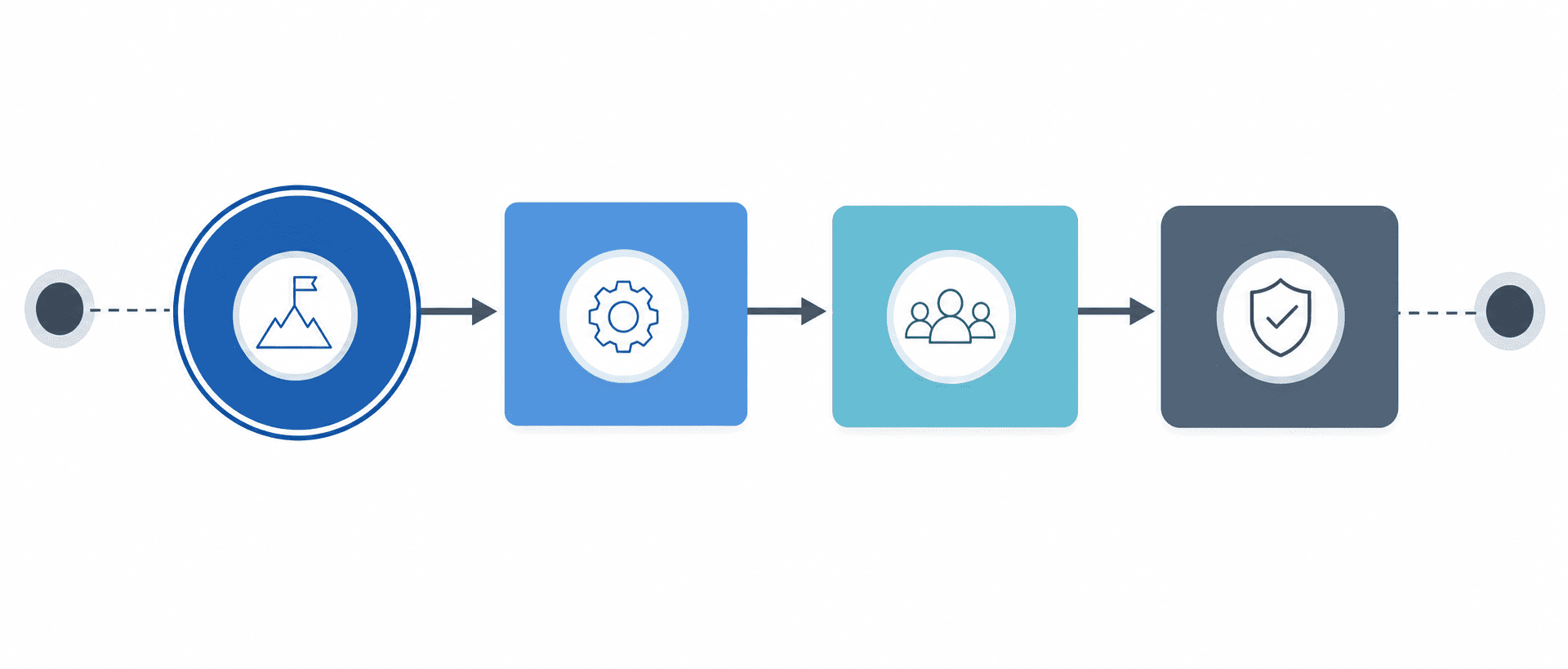
The authorization journey runs through four phases: Readiness Assessment, Pre-Authorization (documentation prep and 3PAO engagement), Assessment (3PAO testing and Security Assessment Report production), and Authorization, where an agency authorization official grants an ATO or a cloud service offering receives a FedRAMP authorization designation. FedRAMP authorization timelines often extend beyond a year, depending on system complexity, agency sponsorship, and assessment readiness.
For proposal managers and capture leads, that timeline has a direct capture implication. When a solicitation requires FedRAMP-authorized cloud services, a teaming partner's status in the FedRAMP Marketplace becomes a go/no-go factor. "FedRAMP Ready" is not the same as "FedRAMP Authorized." That distinction can invalidate a compliance matrix if you miss it during teaming vetting.
If your capture strategy includes a CSP currently in-process, verify their projected ATO date against the contract period of performance before finalizing the teaming arrangement. Building that risk into your compliance roadmap early is far easier than handling it post-award.
FedRAMP Authorization Costs: Investment and ROI Considerations
FedRAMP authorization represents a real financial commitment. FedRAMP authorization costs vary widely based on system scope, authorization level, architecture complexity, and assessment requirements. Annual continuous monitoring adds another $100,000 to $300,000 per year.
For vendors targeting federal contracts, the ROI case is straightforward: FedRAMP authorization unlocks access to hundreds of federal agencies and reduces per-agency sales cycles, since authorized status is reusable across the government instead of requiring repeated security reviews.
The FedRAMP Marketplace: Finding and Vetting Authorized Cloud Services
The FedRAMP Marketplace is the authoritative directory for searching cloud offerings by impact level, service category, and authorization status. Each listing carries one of three designations:
| Status | What It Means |
|---|---|
| FedRAMP Authorized | Fully authorized and available for agency use |
| FedRAMP Ready | Has a FedRAMP Readiness Assessment Report reviewed and accepted by FedRAMP, but does not yet hold a FedRAMP Authorization |
| FedRAMP In Process | Actively pursuing authorization with a sponsoring agency or JAB |
For capture managers and BD directors vetting a subcontractor or tech stack, the Marketplace is the first place to check. Filter by impact level (Low, Moderate, or High) and service model to confirm a vendor's authorization scope before citing them in a proposal.
FedRAMP vs. FISMA: Understanding the Relationship Between Frameworks
FISMA, the Federal Information Security Modernization Act, is federal law requiring every agency to protect its information systems and report security posture to OMB. Each agency-owned system needs an Authority to Operate assessed against NIST 800-53 controls. FedRAMP sits within that structure as a specialized implementation: when agencies acquire cloud services, FedRAMP replaces the agency-by-agency assessment with a single reusable authorization.
The control sets overlap heavily. Both frameworks reference NIST 800-53, but FedRAMP adds cloud-focused requirements related to continuous monitoring, incident reporting, and authorization boundary documentation.
The practical distinction for contractors is that government systems and cloud environments may involve both FISMA and FedRAMP requirements depending on the contract structure and hosting model. On federal IT modernization engagements, both often apply simultaneously. The underlying agency infrastructure follows FISMA; the SaaS or IaaS layers those systems depend on require FedRAMP authorization. Knowing which framework applies to which layer keeps your compliance strategy clean and your proposals accurate.
FedRAMP Documentation Requirements: SSPs, SARs, and POA&Ms
FedRAMP requires three core documents that together tell the full security story of a cloud service.
The System Security Plan (SSP) serves as the foundation and describes how every applicable control is implemented across your system. It routinely runs 300+ pages for Moderate systems. The Security Assessment Report (SAR) captures findings from your 3PAO's independent audit. The Plan of Action and Milestones (POA&M) tracks any open vulnerabilities and your remediation timeline.
Supporting these are the Security Assessment Plan (SAP), incident response procedures, and continuous monitoring deliverables submitted monthly to the FedRAMP PMO.
Continuous Monitoring and Maintaining FedRAMP Authorization
Obtaining authorization is only the beginning. Maintaining FedRAMP status requires ongoing compliance discipline across three recurring obligations:
- Monthly vulnerability scans submitted to the FedRAMP PMO
- Annual 3PAO security assessments
- Rapid incident reporting timelines for certain security events
For contractors whose delivery models involve managing an authorized environment, these obligations carry direct pricing implications. Your staffing plan needs to account for continuous monitoring resources throughout the period of performance. Under-staffing these functions creates authorization gaps that can trigger corrective action or, in severe cases, revocation of the ATO itself.
Major Cloud Providers and FedRAMP: AWS, Azure, and GCP Authorizations
Major cloud providers maintain separate authorization boundaries across commercial and government cloud environments. Authorization status also varies by individual service beyond the overall environment, so knowing which specific services fall within scope before you propose them matters.
| Provider | Environment | Max FedRAMP Level |
|---|---|---|
| AWS | GovCloud (US) | High |
| AWS | Commercial | Moderate |
| Azure | Azure Government | High |
| Azure | Commercial | Moderate |
| Google Cloud | GCP / GCP for Government | High |
Each provider publishes a services-in-scope list. Citing an out-of-scope service as FedRAMP-covered in a technical proposal is a compliance error evaluators will flag. Before finalizing your proposed tech stack, cross-reference those lists and confirm the authorization level matches what the solicitation requires.
Accelerating FedRAMP Proposals with GovEagle
FedRAMP requirements show up in proposals in predictable ways: authorization status confirmations, cloud boundary diagrams, security control crosswalks. Mapping and validating these requirements under deadline pressure is where teams often lose time and miss requirements.
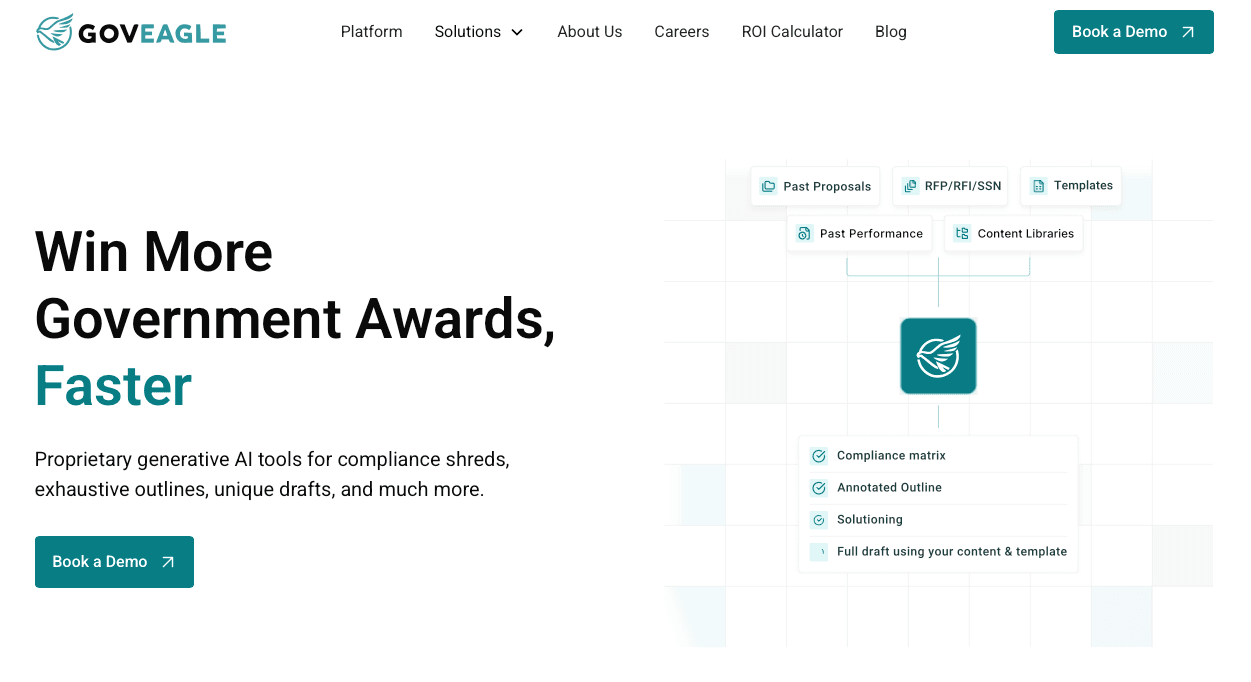
GovEagle's compliance matrix generation pulls every FedRAMP-related requirement from the RFP and maps it to the right proposal section automatically. The capability and gap analysis then checks your team's existing authorizations and cloud partnerships against what the solicitation actually demands, turning manual vetting into a faster bid/no-bid process.
When drafting begins, the Word integration lets writers pull past performance examples of FedRAMP-compliant implementations directly into the document, with citations back to the source, so proposal teams can avoid missing requirements.
FAQs
How long does FedRAMP authorization take?
FedRAMP authorization often takes 12 to 18 months from initiation to ATO, though your existing security posture can shorten or extend that timeline. The process includes Readiness Assessment, Pre-Authorization, 3PAO Assessment, and final Authorization phases, each with distinct deliverables and review cycles.
Can I use AWS Commercial for a FedRAMP High contract?
No. Many AWS Commercial services operate under FedRAMP Moderate authorizations, while AWS GovCloud (US) supports High baselines for eligible services. AWS GovCloud (US) is commonly used for High baseline workloads, but teams should confirm the exact services and authorization boundary before proposing them. Before finalizing your proposed tech stack, cross-reference the provider's services-in-scope list to confirm both the environment and individual services match the solicitation's authorization level requirements.
What is FedRAMP 20x and when should I care about it?
FedRAMP 20x is a PMO modernization effort aimed at reducing authorization timelines through machine-readable OSCAL artifacts and key security indicators. Agencies are monitoring FedRAMP 20x developments as the program evolves, so track your teaming partners' 20x pilot status during capture if the solicitation indicates preference for accelerated authorization pathways.
Final Thoughts on FedRAMP in Government Proposals
Your proposal team's ability to validate FedRAMP compliance quickly and accurately directly affects win rates on federal cloud contracts. The FedRAMP Marketplace provides the authoritative source, but cross-referencing impact levels, checking service scope, and confirming authorization dates under deadline pressure is where teams lose time or make mistakes that cost evaluation points. FedRAMP guidance and authorization processes continue to evolve as modernization efforts move forward, so staying current on provider authorization statuses and impact levels keeps your compliance strategy accurate. See how GovEagle automates this verification process so your team can focus on win strategy instead of manual spreadsheet tracking.