
6 Best RFP Response Software Solutions for Government Proposals in September 2026
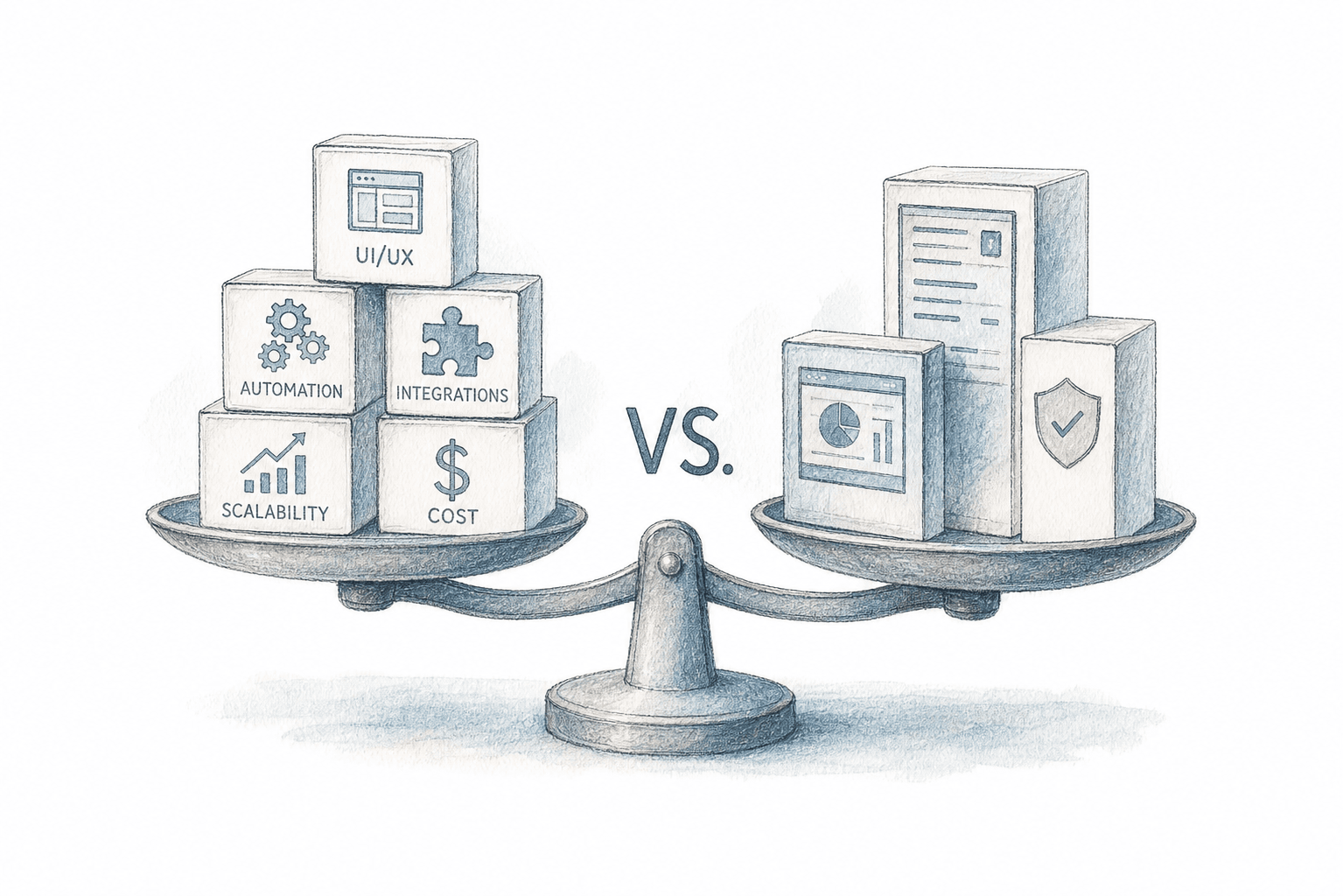
Compliance gaps, disconnected capture data, and last-minute reformatting are usually symptoms of the wrong tool, not the wrong team. General-purpose RFP response software tends to show its limits fast when you're working against Section L/M requirements and a hard submission deadline. Here's how six purpose-built and GovCon-adjacent tools stack up across the dimensions that actually matter for federal proposals.
TLDR:
- Purpose-built GovCon RFP response software handles Section L/M traceability, content reuse, and compliance verification where general tools fall short.
- Automated compliance matrix generation in Excel separates tools built for federal work from those adapted to it.
- Native Word integration matters: web-centric tools create version control risk when your final deliverable lives in a Word proposal shell.
- FedRAMP Moderate Authorized and FedRAMP Moderate Equivalent are not the same designation; the difference affects CUI handling depending on agency and contract type.
- One purpose-built federal proposal tool in this comparison covers the full capture-to-submission lifecycle with automated compliance matrix generation, AI-assisted drafting, and native Microsoft Suite integration.
What Is RFP Response Software?
RFP response software manages the full response lifecycle within the structure federal procurements demand: Section L drives what you submit, Section M drives how it scores, and FAR clauses and page limits govern the rest. General tools handle three things poorly: requirement extraction and traceability, content reuse from past proposals, and compliance verification. A missed requirement shows up as a gap at Red Team review or in an evaluation panel's scoring notes.
How We Ranked These RFP Response Software Solutions
The following criteria separate purpose-built RFP response software from tools that cover only part of the federal proposal workflow:
-
End-to-end lifecycle coverage, from bid/no-bid analysis through color team review, without stitching together disconnected point tools.
-
Microsoft Word and Excel integration depth, since most federal proposal workflows live in those environments regardless of what sits alongside them.
-
Compliance matrix output format: whether Section L/M extraction outputs to Excel natively without manual reformatting.
-
CUI handling and security posture, including FedRAMP status and GCC/GCC High support, which vary across tools and affect which contracts a solution can support.
-
Capture-to-proposal continuity: whether capture intelligence reaches the proposal workspace or stays siloed in a CRM.
A Leading RFP Response Software for Federal Proposals: GovEagle

GovEagle is built exclusively for government contractors, covering the full capture-to-submission workflow. The compliance matrix generation alone separates it from the broader category: GovEagle reads the RFP, extracts every Section L requirement, and produces the matrix in Excel automatically, eliminating the manual extraction work that typically consumes the first day of any pursuit.
What GovEagle Does
GovEagle operates across the full proposal lifecycle, from pre-RFP opportunity intelligence through final submission. Key capabilities include:
- Automated compliance matrix generation in Excel, cross-referenced against Section L and Section M evaluation factors so nothing gets missed in the shred process.
- AI-assisted first drafts generated from your past performance library, prior proposals, and uploaded source materials, writers refine from a populated draft, not a blank document.
- Native Sharepoint, Microsoft Word and Excel integration, with built-in color team review workflows, so the tool fits into how proposal teams already work.
Security and Compliance Posture
GovEagle runs on AWS GovCloud with FedRAMP Moderate Equivalent controls, CMMC Level 2 support, and NIST 800-171 alignment, with GCC/GCC High deployment options for teams handling CUI. Teams handling CUI should verify their tool's deployment environment aligns with applicable security requirements for their contract and agency context.
Documented Results
Precise Software used GovEagle on early-stage proposals and cut SME time by 80 percent, freeing subject matter experts for technical solutioning instead of document assembly.
GovDash
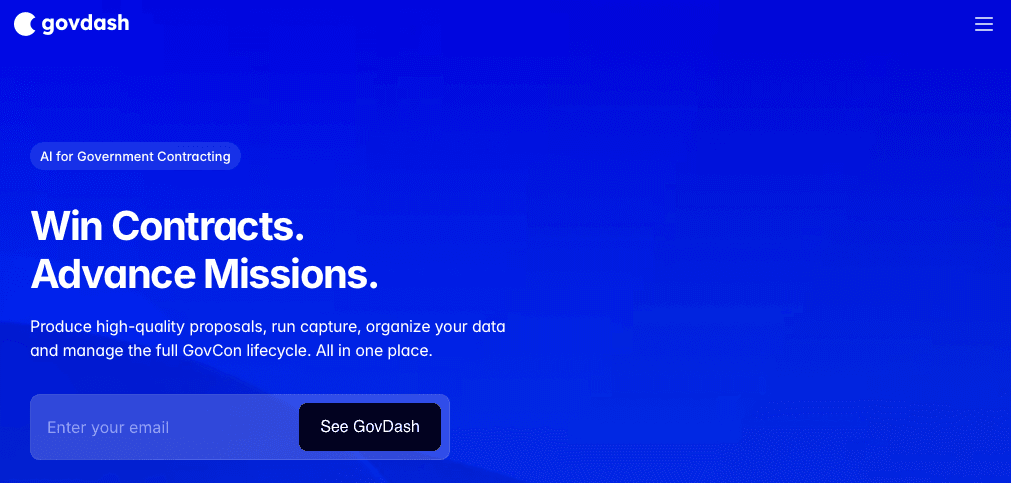
GovDash combines AI-assisted proposal drafting, opportunity tracking, compliance matrices, content management, and pursuit tracking in one platform. It reports FedRAMP Moderate Equivalency and FedRAMP Ready status; organizations handling CUI should confirm alignment with contract requirements. Best suited for mid-size GovCon firms seeking a unified BD and proposal management workflow.
Trade-offs to Consider
GovDash supports a Microsoft Word add-in and integrations with Excel and PowerPoint, although teams should compare the depth of its in-document workflow, content governance, and repository controls against their specific requirements.
GovSignals
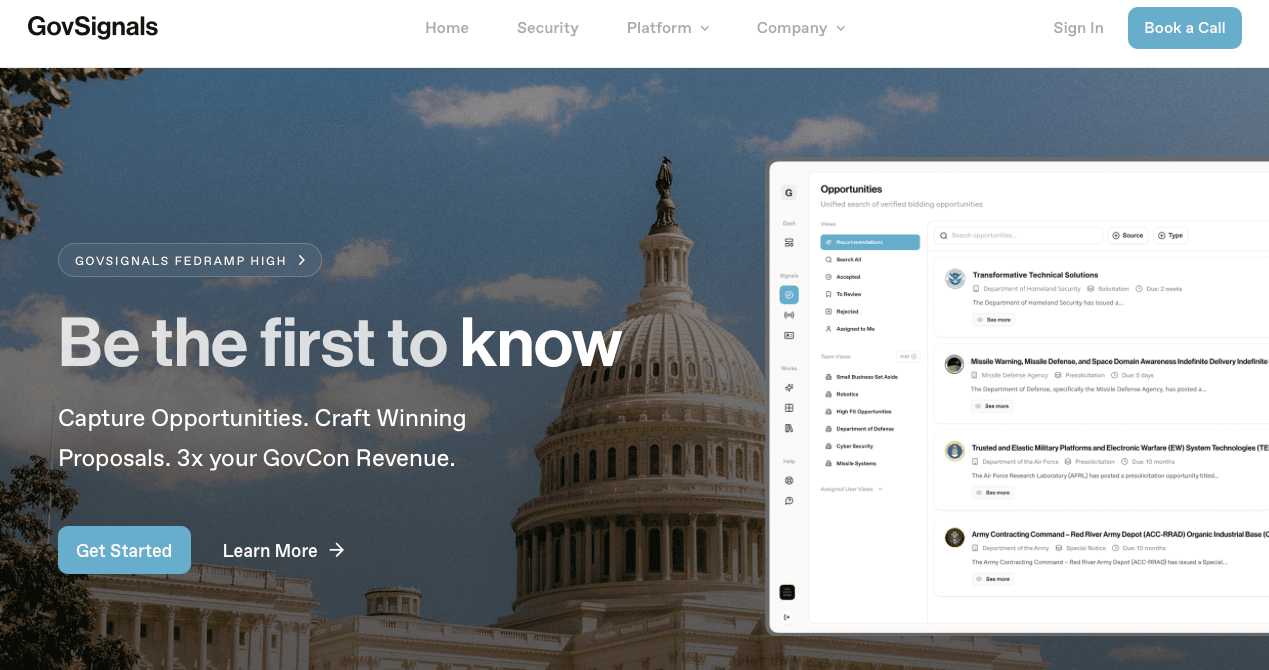
GovSignals is an intelligence and proposal generation tool for government contractors, pulling opportunity data from SAM.gov contract opportunities and other federal sources to help teams draft proposal sections, build compliance matrices, and track pursuit pipelines.
Where Teams Run Into Friction
The workflow narrows once a pursuit moves into active proposal development:
- GovSignals is primarily browser-based, which creates friction for teams whose drafting workflows live in Microsoft Word and Excel. Moving content between the tool and familiar proposal artifacts adds steps to an already compressed timeline.
- Compliance matrix generation exists within the tool, but teams working across large, multi-volume RFPs often find they need to export and reformat outputs to match agency-specified deliverable structures.
pWin.ai

pWin.ai targets capture managers and proposal teams with automated bid/no-bid scoring, compliance tracking, and draft generation. Its scoring models pull from federal procurement data to help BD shops triage opportunities. Proposal generation leans on templated outputs that often require substantial manual rework to meet Section L/M requirements, making it better suited as a capture intelligence layer than a full response engine for complex, multi-volume submissions.
- pWin.ai states that it integrates with Microsoft Word, Excel, and SharePoint, allowing teams to fold the platform into existing Microsoft-based proposal workflows. Buyers should compare the depth and usability of those integrations against their specific workflow requirements.
AskSage
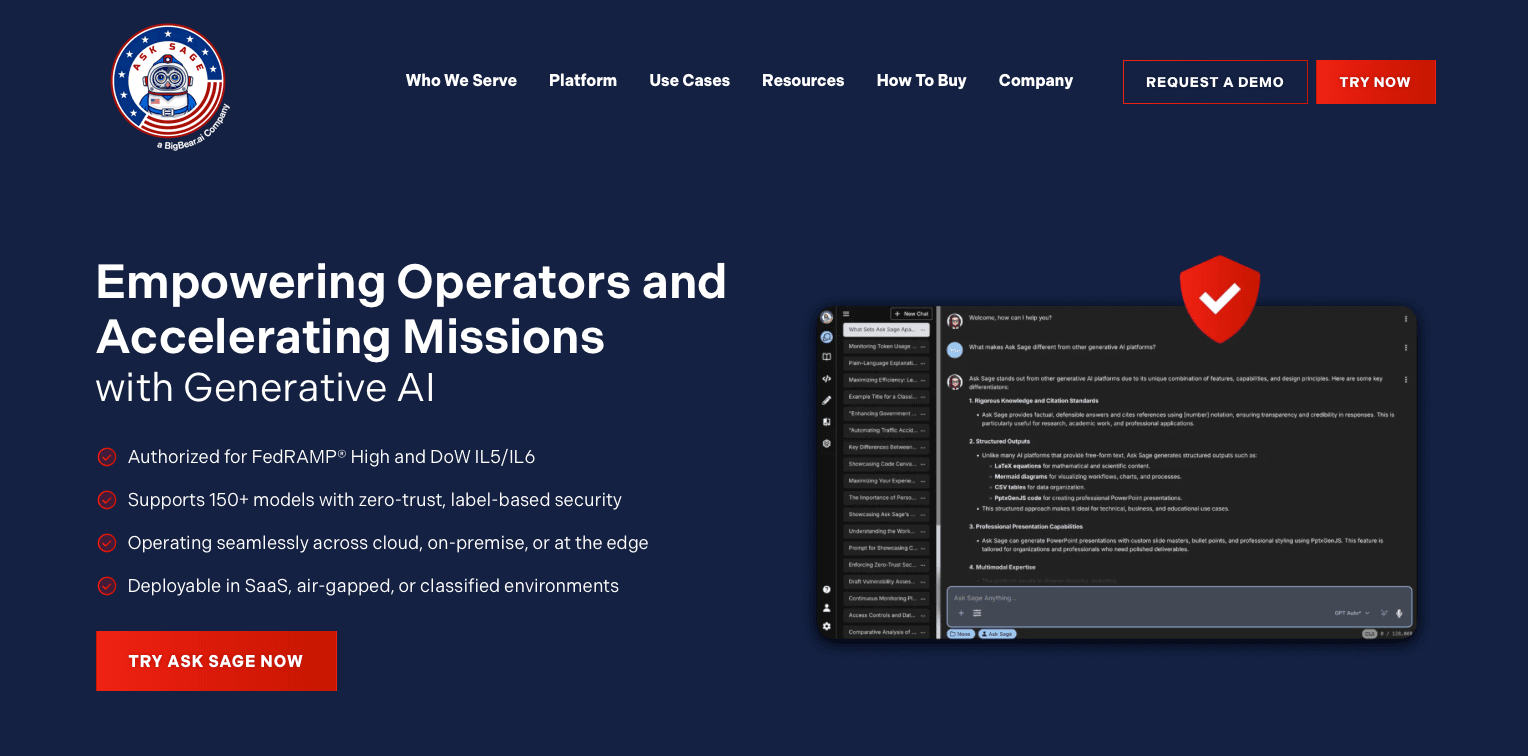
AskSage is a cloud-based AI assistant for federal agencies and cleared contractors, with deployments across classification levels including SECRET and TOP SECRET. It is built around secure AI access, not proposal workflow automation. For teams on highly classified programs where standard SaaS tools are off the table, AskSage fills a real gap, supporting document analysis, content drafting, and solicitation querying against uploaded materials within secure environments.
Where AskSage Fits in the Proposal Context
AskSage handles general document interaction and content generation, but it was not purpose-built around federal proposal mechanics. Teams looking for compliance matrix generation, Section L/M traceability, or structured RFP response workflows will likely need to build those processes around the tool; those workflows do not come ready to use.
VisibleThread
VisibleThread combines deterministic compliance analysis with generative AI capabilities for proposal drafting, document refinement, readability review, and requirement traceability. Its current platform includes automated compliance-matrix generation, Microsoft Word-based drafting support, and proposal-management workflows alongside its proven document-analysis capabilities.
What VisibleThread Does Well
Proposal managers working under tight pink, red, and gold team review timelines often find value in VisibleThread's document analysis capabilities. The tool can parse Section L and Section M requirements, cross-reference them against draft content, and surface where responses fall short before a color team review catches the gap.
- Compliance gap analysis against solicitation requirements, with traceable line-by-line cross-referencing that gives reviewers a clear audit trail in place of a subjective read
- Readability scoring calibrated to federal evaluation standards, which matters when evaluators are scoring under time pressure and dense prose creates unnecessary risk
Trade-offs to Consider
Its workflow positioning remains the primary trade-off. Although the platform has expanded beyond post-draft review to include AI-assisted drafting, automated compliance-matrix creation, Microsoft Word integration, and broader proposal-management capabilities. Teams should still compare its pre-RFP capture functionality and end-to-end workflow coverage with platforms built squarely around the full capture-to-submission lifecycle. For teams looking for a single tool that covers capture through submission, it is a meaningful constraint.
RFP Response Software Feature Comparison Table
Choosing the right RFP response software comes down to how well a tool fits into your actual proposal workflow, beyond its feature count. The table below maps the six solutions covered in this post across the dimensions that matter most to GovCon pursuit teams: AI drafting capability, compliance matrix generation, Microsoft Word integration, security posture, and pricing structure.
Feature Comparison at a Glance
Feature GovEagle GovDash GovSignals pWin.ai AskSage VisibleThread AI Drafting Yes Yes Yes Yes (templated) Yes (general AI assistant) Yes Compliance Matrix Generation Automated (Excel) Automated (Excel) Automated compliance matrix generation Limited No Automated (Excel) Microsoft Word Integration Native Native Limited Native Limited Native Security Posture FedRAMP Moderate Equivalent FedRAMP Moderate Equivalent FedRAMP High posture; verify the applicable environment directly Verify directly Supports SECRET / TOP SECRET environments Verify directly Deployment Options Cloud / Self-hosted Cloud Cloud Cloud (browser-based) Cloud (multiple classification tiers) Cloud Primary Use Case End-to-end proposal automation Proposal drafting + pipeline Opportunity intelligence + drafting Capture intelligence + AI drafting Secure AI access at classification level Proposal writing, compliance, analysis, and readability Pricing Model Contact for quote Contact for quote Contact for quote Seat-based Usage-based (varies by deployment tier) Contact for quote Why GovEagle Is a Leading RFP Response Software for Government Proposals
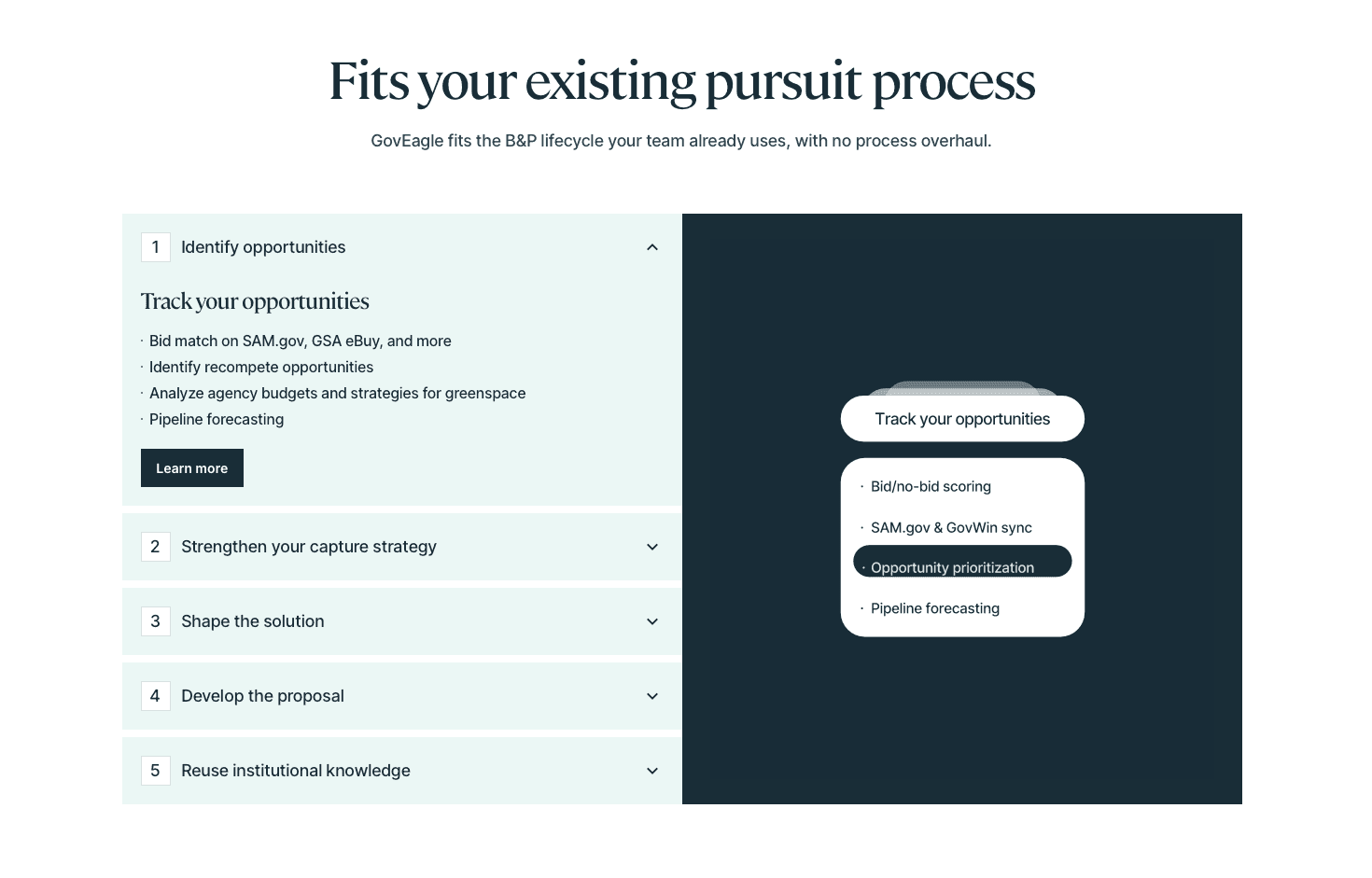
GovEagle's approach to RFP response starts upstream, where most tools don't go. Before a single section is drafted, GovEagle generates the compliance matrix in Excel and the annotated outline in Word, giving proposal managers a requirement-mapped structure tied directly to Section L and Section M. GovEagle stands apart by generating both an Excel compliance matrix and a Word annotated outline before drafting begins.From there, coverage runs the full pursuit lifecycle: bid/no-bid analysis, AI-assisted drafting across technical, management, and past performance volumes, and automated color team review, all within the Microsoft Suite. Salesforce, Unanet CRM, SharePoint, and existing content repositories connect without data migration, so capture intelligence already in your CRM flows directly into the proposal workflow.For teams handling CUI, the security architecture holds up to GovCon scrutiny. GovEagle operates at FedRAMP Moderate Equivalent controls with NIST 800-171 alignment, CMMC support, and GCC/GCC High deployment options, giving security reviewers a documented posture without requiring a separate environment for sensitive content.
FAQs
How do I choose between GovEagle, GovDash, GovSignals, pWin.ai, and AskSage for my federal proposal workflow?
Start by identifying where your workflow breaks down most often: if compliance matrix generation and end-to-end lifecycle coverage are the bottleneck, GovEagle or GovDash are the strongest fits; if pre-solicitation intelligence and capture analysis are the priority, GovSignals or pWin.ai cover that ground; if your constraint is secure AI access at classification level, AskSage fills that specific gap. Teams pursuing complex, multi-volume federal RFPs with Section L/M requirements will find purpose-built GovCon tools outperform general-purpose or capture-only options at the drafting and compliance stages.
Is GovEagle better than GovDash for teams that draft proposals in Microsoft Word?
GovEagle offers a native Word add-in that keeps proposal teams inside their existing drafting environment, with compliance matrix output generated directly in Excel. GovDash's drafting workflow is more web-centric, which can introduce formatting and version control friction when the final deliverable needs to land in a Word-formatted proposal shell. Teams whose entire submission workflow lives in Microsoft Office documents will typically find GovEagle's integration depth reduces handoff steps that GovDash requires.
What security posture should I verify before deploying any RFP response software for CUI-handling proposals?
Security requirements such as FedRAMP authorization for applicable federal cloud use and NIST SP 800-171 controls for nonfederal systems that process, store, or transmit CUI may apply depending on the agency, contract, and deployment context. Verify the tool's environment against the specific contractual requirements before procurement. FedRAMP Moderate Authorized and FedRAMP Moderate Equivalent are distinct designations, and neither should be assumed interchangeable when your contract or agency context involves CUI.
Final Thoughts on Picking RFP Response Software That Fits Federal Work
The right RFP response software for federal work comes down to three filters: how well it handles Section L/M traceability, whether it fits your existing Microsoft Office workflow, and whether its security posture holds up under agency review. For teams pursuing structured federal RFPs at meaningful volume, GovEagle covers the full capture-to-submission lifecycle, from automated compliance matrix generation in Excel through AI-assisted drafting and color team review, without requiring teams to leave the Microsoft Suite.
Get GovCon capture and proposal insights in your inbox.