
Pink, Red, and Gold Team Reviews: A Practical Color Team Playbook for Federal Proposals (September 2026)
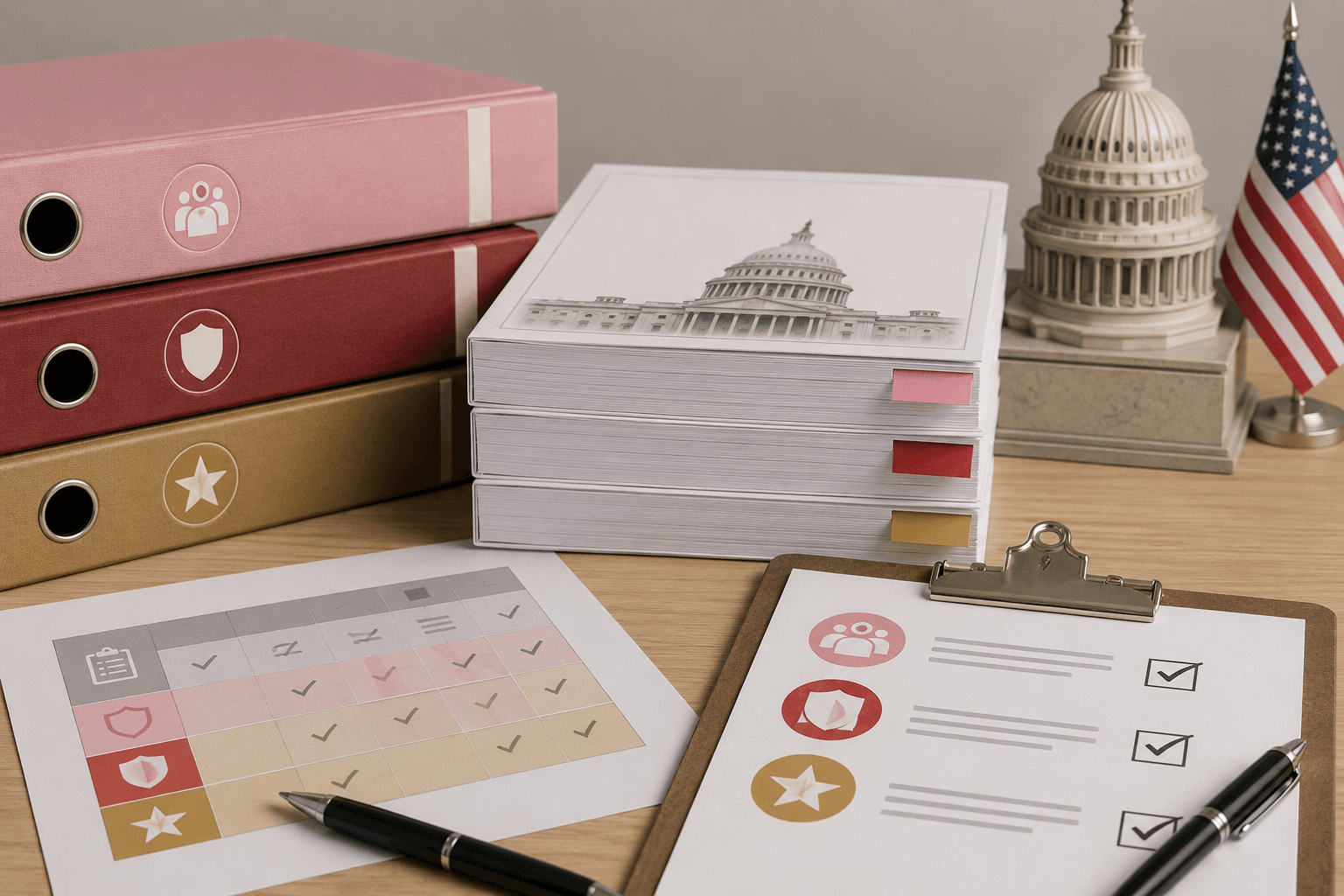
GovEagle is not affiliated with, sponsored by, certified by, or otherwise associated with Shipley Associates.
Your capture team scheduled the Pink Team review for Monday, but the draft is still 15 percent complete. Or your Red Team surfaced three non-compliant sections with 48 hours until submission. Color team reviews only work when each gate runs at the right draft threshold with a clear evaluative focus. When teams compress the schedule or conflate what Pink, Red, and Gold are actually checking, the process collapses into last-minute readouts that catch problems too late to fix.
TLDR:
- Color team reviews catch compliance gaps, weak win themes, and pricing disconnects before they surface at final submission.
- Pink Team runs at 20-40% draft completion to validate structure; Red Team at 80-90%+ to score against Section M criteria; Gold Team at 100% for final executive confirmation.
- Red Team is the floor; every other review can compress, but skipping evaluator-scoring simulation leaves the gaps most likely to cost you the award.
- Most teams lose review value by conflating roles: Pink reviewers who rewrite prose or Gold reviewers who re-litigate strategy collapse the sequencing logic the process depends on.
- Proposal software that ties each color team review to the compliance matrix keeps reviewer findings tied to Section L/M requirements instead of surfacing as non-criteria feedback.
What Color Team Reviews Are and Why They Matter
Color team reviews are structured quality-control checkpoints built into the proposal development lifecycle. Each review stage carries a distinct name, a defined timing relative to the RFP, and a specific evaluative focus. The Shipley Associates methodology popularized this framework, and many mature proposal organizations run some version of it today, following the Shipley color team guide.
The reviews exist because proposals written without staged feedback tend to accumulate compliance gaps, weak win themes, and disconnected pricing that only surface under deadline pressure. Catching those problems early, when rework is still feasible, is the core function the color team process serves.
The Three Reviews This Guide Covers
There are several color team stages across the full Shipley model, but three carry the most practical weight for most pursuit teams.
| Review | Timing | Primary Focus |
|---|---|---|
| Pink Team | Early draft, pre-Section L compliance check | Outline validation, win theme alignment, approach soundness |
| Red Team | Full draft, near-submission | Evaluator-scoring simulation, compliance gap identification, narrative strength |
| Gold Team | Final draft, post-Red Team revisions | Executive polish, pricing strategy alignment, final go/no-go read |
Each review builds on the last. Running them out of sequence or conflating their purposes erodes the value of each stage.
Pink Team Review: Early Draft Compliance Check
The Pink Team review is the earliest formal checkpoint in the color team sequence, typically occurring when storyboards, outlines, or early draft content are ready, often around 20 to 40 percent complete depending on the team’s process. The goal is not prose polish but structural compliance: does the draft respond to every Section L requirement, and does the developing narrative align with pre-RFP win themes?

What the Pink Team Actually Reviews
- Section L and M cross-reference: Every Section L requirement should map to a proposal section, and the proposal structure should account for each Section M evaluation criterion and planned response strategy. Gaps found here cost far less to fix than gaps at Red Team.
- Win theme integration: The capture team's discriminators and win themes should already appear in the proposal outline and section openers, not as afterthoughts added during final review.
- Compliance matrix alignment: Check draft content against the live compliance matrix and flag any sections where they have diverged.
- Assumptions and risks: Surface unstated assumptions about teaming, technical approach, or past performance coverage before they calcify into the proposal narrative.
Red Team Review: Simulating the Government Evaluator
The Red Team review is the closest most proposal teams get to sitting in the evaluator's chair before submission. Where the Pink Team focuses on responsiveness and structure, the Red Team scores the proposal against Section M criteria as a government evaluator would, exposing weaknesses in win themes, discriminators, and compliance before they cost you the award.

What the Red Team Scores
Red Team reviewers work from a scoring sheet that mirrors the RFP's evaluation factors and subfactors, assigning ratings the same way the Source Selection Evaluation Board would.
- Reviewers score each volume against Section M factors and note where strengths are claimed but not substantiated with specifics, past performance examples, or measurable outcomes.
- Win themes should appear early in each section and tie directly to the agency's stated requirements. If reviewers struggle to identify the win theme early in a section, evaluators may struggle as well.
- Compliance gaps flagged at Pink Team that weren't resolved before Red Team tend to carry higher risk at this stage, since the proposal is closer to final and rework is more costly.
Gold Team Review: Executive Approval and Final Quality Gate
The Gold Team sits one to two days before submission, and its mandate is confirmation, not correction. Senior leadership reads the proposal asking one question: does this reflect our strongest position? Win themes and discriminators should appear consistently across volumes, prior review findings should already be resolved, and pricing should align with what the technical volume promises.
Gold Team is not another full review cycle. Executives rewriting sections at this stage are absorbing the cost of earlier gates that didn't close properly.
When to Schedule Each Review: Timing and Completion Thresholds
Pink Team
Run the Pink Team when you have a structured outline and at least a partial draft, typically 20 to 40 percent complete. The goal is validating the approach before major writing investment locks in a flawed strategy. Scheduling it too early, before any draft exists, gives reviewers nothing concrete to react to. Scheduling it too late means costly rewrites.
Red Team
The Red Team requires a substantially complete draft, generally 80 to 90 percent or better. Sections should be written to near-final quality so reviewers can score against Section M criteria the way an evaluator would. A draft that is still missing executive summaries, past performance write-ups, or staffing rationale produces Red Team findings that are too foundational to be useful at that stage.
Gold Team
Gold Team review happens after Red Team and, where applicable, Green Team findings have been adjudicated and resolved. By this point, the proposal should be at or near 100 percent complete. Reviewers are checking final language, pricing alignment, and compliance, not reopening strategy debates. Many teams set a firm cutoff, often 48 to 72 hours before submission, to protect production time for formatting, final assembly, and hand-off to the contracting officer.
| Review | Draft Completion Threshold | Primary Focus |
|---|---|---|
| Pink Team | 20 to 40% | Strategy and approach validation |
| Red Team | 80 to 90%+ | Scoring risk and evaluator alignment |
| Gold Team | 100% (post-Red adjudication) | Final compliance and pricing check |
Who Should Review: Selecting the Right Participants
Each review works best when participants match its purpose. The wrong mix produces noise instead of actionable findings.
- Pink Team participants are typically proposal writers, the capture manager, and subject matter experts who can stress-test the win strategy and outline logic before full drafts exist.
- Red Team reviewers should mirror the actual source selection panel as closely as possible, meaning evaluators who have not written the proposal and can score it cold against Section M criteria.
- Gold Team participants are usually senior leadership, contracts staff, and pricing leads focused on approval authority and final risk acceptance, not editorial edits.
Common Mistakes That Undermine Review Effectiveness
The mistakes below recur across proposal shops of every size.
Missing or Misaligned Review Criteria
Reviewers without a scoring rubric tied to Section M fall back on personal preferences. One fixates on section formatting; another rewrites win themes. Neither improves evaluator alignment.
Starting the Review Too Late
A Pink Team run two days before submission is a Red Team in disguise, with no runway to act on findings. Whenever possible, review dates should be built into the master schedule early in the pursuit lifecycle.
Scaling Reviews for Compressed Timelines and Small Teams
Color team reviews scale down without losing their core logic, but the sequencing has to stay intentional even when time collapses.
For compressed timelines, Red Team is usually the review to protect first because it simulates evaluator scoring against the RFP criteria. Running a proposal through even a compressed evaluator-scoring pass catches the gaps most likely to cost you the award.
For smaller opportunities with tight timelines, Blue and Pink can be collapsed into a single early session focused on Section L/M alignment and win theme placement.
Automating Color Team Reviews in Federal Proposal Workflows
AI-assisted review tools can scan draft sections against Section L and Section M requirements, flag compliance gaps, and surface weak win theme execution before a human reviewer opens the document.
Where Automation Fits Each Review Stage
- Pink Team automation checks whether early draft content maps to RFP requirements and whether key sections are present and responsive.
- Red Team automation runs deeper compliance checks and scores sections against Section M evaluation factors, giving reviewers a baseline before they start.
- Gold Team automation catches formatting deviations, confirms action items were resolved, and verifies the package is complete before submission.
How GovEagle Supports Shipley Color Team Workflows

GovEagle integrates directly into the Shipley color team sequence, giving proposal teams a single workspace where pink, red, and gold review cycles actually connect to the compliance record instead of running parallel to it.
During the Pink Team, GovEagle's compliance matrix ties every reviewer comment back to a specific Section L or Section M requirement, so gaps surface against the evaluation standard instead of in the abstract.
Red Team reviewers work inside the same environment, scoring sections against the actual Section M evaluation criteria and flagging discriminators the writing team needs to sharpen before final production.
At Gold Team, proposal managers can pull a live compliance trace showing which requirements each section satisfies, giving the final review panel the traceability they need to approve submission with confidence instead of assumption.
FAQs
What's the main difference between Pink Team and Red Team reviews?
Pink Team validates your outline and win themes when the draft is 20-40% complete, before major writing investment locks in a flawed approach. Red Team scores a near-final draft (80-90%+ complete) against Section M criteria the way a government evaluator would, exposing weaknesses in discriminators and compliance before submission.
How complete should my draft be before scheduling a Red Team review?
Your draft should be 80-90% complete or better, with sections written to near-final quality so reviewers can score against Section M evaluation criteria. A draft missing executive summaries, past performance write-ups, or staffing rationale produces Red Team findings too foundational to be useful at that stage. Those gaps should have been caught at Pink Team.
Pink Team Red Team Gold Team reviews: who should actually sit on each review panel?
Pink Team participants are typically proposal writers, the capture manager, and SMEs who can validate win strategy before full drafts exist. Red Team reviewers should mirror the source selection panel: evaluators who have not written the proposal and can score it cold against Section M. Gold Team participants are senior leadership, contracts staff, and pricing leads focused on final approval and risk acceptance, not editorial rewrites.
Final Thoughts on Structuring Your Color Team Process
Color team reviews return the most value when the right gate runs at the right draft threshold with reviewers matched to its mandate. Pink validates structure before writing locks in a flawed approach, Red scores the proposal the way an evaluator would, and Gold confirms submission readiness without reopening settled questions. The differentiator is whether findings trace back to Section M criteria. GovEagle's compliance matrix ties every reviewer comment to a specific Section L or Section M requirement, so gaps surface against the evaluation standard instead of in isolation.