
Why Manual Amendment Tracking Fails: RFP Compliance

Akash Mandavilli
CEO and Co-Founder of GovEagle
About the author
Akash is a 2x founder with previous experience in AI from Meta and federal sales from IBM. Akash holds a dual-degree from Johns Hopkins University in Economics and Computer Science.
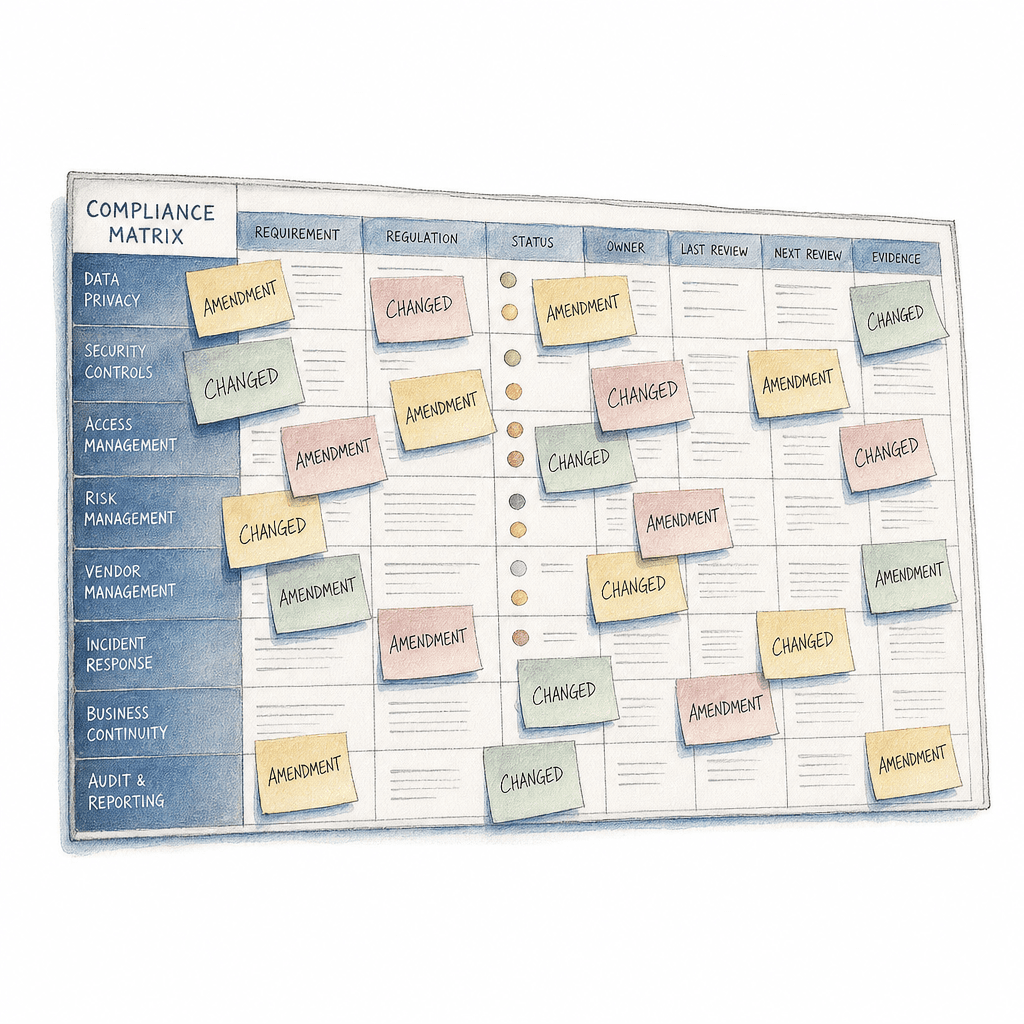
Government contractors who track amendments manually aren't doing it wrong, they're working with a process that has a built-in coverage gap. Someone has to be watching at the exact moment something changes, and pursuit timelines don't accommodate that assumption. Here's where that gap tends to open up, and what a more controlled workflow looks like instead.
TLDR:
- Under FAR 52.215-1, proposals that fail to acknowledge all amendments can be rendered unacceptable before evaluation begins.
- Manual SAM.gov monitoring fails structurally: an amendment posted Tuesday may not surface until Thursday, leaving writers drafting against a superseded solicitation.
- Logging an amendment without mapping it to affected compliance matrix rows creates a record, not a control. Mismatches typically surface at Red Team.
- Assign one named amendment owner per pursuit with daily SAM.gov checks during active drafting, and notify writers within 24 hours with specific section-level action items.
- GovEagle monitors tracked solicitations continuously and updates the compliance matrix and annotated outline automatically when an amendment posts.
What an RFP Amendment Is Under Federal Acquisition Rules
Under FAR 15.206, contracting officers are required to amend the solicitation whenever the government changes its requirements or terms and conditions, before or after proposals are received. Amendments are documented on Standard Form 30 and posted to SAM.gov, making them part of the official solicitation record.
Every substantial federal acquisition typically involves at least one amendment. Complex acquisitions often see five or more, each carrying the potential to shift scope, evaluation criteria, submission formats, or deadlines. Amendments are the mechanism the government uses to modify RFP scope, extend deadlines, respond to industry questions, and correct errors. Missing one is a compliance event, not a clerical oversight.
Types of Changes Amendments Can Introduce
Not all amendments carry equal weight, and conflating a Q&A release with a scope change is one of the more expensive misallocations a proposal team can make.
| Amendment Type | What Changes | Urgency for Proposal Team |
|---|---|---|
| Scope / deliverables | PWS or SOW requirements shift | High: may invalidate technical approach |
| Section L / M revisions | Proposal instructions or evaluation criteria update | High: compliance matrix requires rebuild |
| Contract type / ceiling | Vehicle structure or funding cap changes | High: pricing strategy affected |
| Q&A responses | Government answers bidder questions | Medium: clarifications may affect approach |
| Template updates | Required forms or formats change | Medium: submission may be rejected if old format used |
| Deadline extension | Submission date moves | Medium: replan schedule |
Scope and evaluation-criteria changes demand immediate action. A Q&A release still needs review, but the urgency differs. Treating every amendment as equally critical burns capacity; ignoring any one creates compliance exposure.
The Compliance Risk of a Missed Amendment
Under FAR 52.215-1, proposals that fail to acknowledge all amendments are rendered unacceptable before an evaluator reads a single page of technical content. The acknowledgment requirement is binary: all amendments must be cited in the cover letter, or the submission is at risk.
The content exposure runs parallel. A proposal volume written against superseded Section M evaluation criteria will be scored against criteria the agency no longer uses. As Hinz Consulting notes, unmanaged amendments can introduce RFP compliance gaps that reduce competitive standing even when a proposal clears the responsiveness bar. IBR, a small business supporting multiple federal agencies, built GovEagle into their compliance review workflow specifically to close this gap, keeping the compliance matrix current against every amendment instead of finding mismatches at Red Team. A missed deadline extension compounds the damage differently: the team compresses effort while competitors absorb the additional runway.
Why Manual Monitoring Fails in Practice
Manual monitoring typically means someone checks SAM.gov every few days, watches a shared inbox, and updates a spreadsheet when something changes. Under deadline pressure, with multiple active pursuits running in parallel and SMEs cycling in and out, that rhythm breaks quickly.
The gap is structural. An amendment posted Tuesday afternoon may not surface until Thursday's check-in. If a writer pulled the solicitation documents Monday, they are now drafting against a superseded version with no indication anything changed. Distributed teams compound this: the capture lead may know about an update that never reaches the proposal manager, and no audit trail exists to reconstruct who knew what or when. When a protest or debrief surfaces a compliance gap, "we didn't see the amendment" is not a recoverable position.
Where Manual Tracking Breaks Down Across the Pursuit Lifecycle
Manual tracking rarely fails visibly. It fails at predictable moments in the pursuit cycle.
- RFP release through bid/no-bid: Amendments during early qualification often go unlogged. If scope changes and no one updates the capture deck, win themes built on the original PWS carry forward into a proposal that no longer fits the solicitation.
- Compliance matrix build: A Section M revision issued after the matrix is finalized may require the entire shred to be redone. Teams rarely catch this until Red Team.
- Pink Team week: An amendment dropped during active drafting creates an immediate fork where writers are working against a version the agency has already superseded.
- Weekends and federal holidays: SAM.gov doesn't pause. An amendment posted Friday afternoon before a long weekend is the one most likely to be missed, and deadline extensions often land in exactly these windows.
Building a Repeatable Amendment Tracking Workflow
One person owns amendments on a pursuit. Without a named owner, monitoring defaults to whoever remembers to check, which means coverage is inconsistent at best.
The structure from there is straightforward:
- Designate one amendment owner per pursuit, typically the proposal manager, with explicit responsibility for SAM.gov checks on a defined schedule: daily during active drafting, at minimum.
- Document every check, even when nothing changes. An audit trail showing consistent monitoring is protection if a compliance gap surfaces during a debrief.
- Log each amendment in a change record that maps it to the affected compliance matrix rows and outline sections, capturing both what arrived and what it touched.
- Communicate changes to writers within 24 hours using a structured notification that names the amendment number, the sections affected, and the required action. "Amendment 003 revised Section M criteria 4.2, rewrite your management approach section" leaves no room for misinterpretation. A vague "there was an update" does.
The change log is where most teams cut corners. Logging the amendment without mapping it to the compliance matrix means the update exists in a vacuum, and no one knows which proposal sections need revision until Red Team flags the gap. That mapping step is what converts a tracking process into an actual control.
Get GovCon capture and proposal insights in your inbox.
How Automated Amendment Tracking Changes the Equation
Automated monitoring replaces the ad hoc manual check cycle with a structured one. Instead of someone remembering to verify SAM.gov, the tool runs scheduled checks against tracked solicitations and flags what changed as soon as that check runs, removing the guesswork of whether anyone looked recently.
The capabilities that matter here are specific:
- Timestamped version histories that show exactly what changed between solicitation versions, so the team isn't diffing PDFs by hand.
- Alert routing that reaches the right team members directly, not a generic inbox that may sit unread until morning standup.
- Direct linkage between a detected change and the affected compliance matrix rows, so the proposal team knows immediately which sections need revision.
The best compliance matrix automation tools trace amendment impact directly to proposal structure. A tool that only surfaces a new posting hasn't solved the problem; it has only moved the discovery step earlier.
Connecting Amendments to the Compliance Matrix
Detecting an amendment and updating the compliance matrix are separate actions, and the gap between them is where compliance failures actually originate. A team that logs an amendment without tracing it to affected matrix rows has created a record, not a control.
Every amendment should trigger a targeted matrix review: which rows reference the modified section, which requirements were added or removed, and which proposal sections map to those rows. That audit takes minutes when the matrix is well-structured and far longer when it isn't. Teams that treat the matrix as a static artifact built once at RFP release typically find the mismatch at Red Team, when the cost of correction is highest.
Amendment Acknowledgment and Proposal Submission Requirements
Acknowledging an amendment and integrating its substance are two distinct obligations, and conflating them creates procedural gaps on both ends.
Under FAR Part 15 15.206(b), agencies must issue amendments to all parties before the proposal deadline. Offerors must formally acknowledge receipt in the submission cover letter, citing each amendment by number. Non-acknowledgment can render a proposal non-responsive regardless of content quality.
A minimal acknowledgment checklist:
- Confirm the amendment number and date in the cover letter
- Verify the compliance matrix reflects any substantive changes from that amendment
- Confirm no submission requirements changed alongside it
Acknowledgment is a procedural box. Incorporation is the compliance work.
How GovEagle Handles Amendment Tracking in the Pursuit Workflow
GovEagle tracks solicitations on a defined monitoring schedule and flags what changed once a check runs, rather than requiring someone to remember to look. The gap between detecting an update and knowing which proposal sections it affects closes in a single step: when an amendment is added to the opportunity, GovEagle can be used to re-run the compliance matrix and annotated outline against the updated solicitation, flagging the specific rows and sections tied to modified requirements. Teams that want to see how that amendment-to-matrix traceability works in practice can Book a Demo to walk through the full pursuit workflow.The full amendment tracking workflow is part of GovEagle's proposal automation platform.
For teams running short-turnaround RFIs, that matters. When the same workflow that shredded the original solicitation handles the amendment, there is no manual handoff between monitoring and matrix revision. Writers see the impact inside the Word documents and Excel compliance matrices where they are already working, not in a separate portal they have to remember to check.
The capability also surfaces capture assumptions tied to modified requirements. If an agency revises scope after win themes were built against the original PWS, GovEagle flags that the affected sections need revisiting. That connection, from amendment to compliance matrix to capture strategy, converts tracking into an actual workflow control and away from a documentation exercise.
Final Thoughts on Federal RFP Amendment Tracking and Compliance
The proposals that get rejected on responsiveness grounds rarely fail because of weak technical content. They fail because amendment acknowledgment slipped through a manual process that wasn't designed to hold under deadline pressure. Your compliance matrix is only as good as its last update, and that update has to happen every time an amendment drops, on a consistent schedule instead of whenever someone remembers to check. Structured ownership, mapped change logs, and continuous monitoring are the difference between a documentation exercise and a real control. Teams that want to see that workflow in practice can see how GovEagle automates it, and keep their compliance matrix current from RFP release through final submission.
FAQ
What does FAR 15.206 require contractors to do when an RFP amendment is issued?
FAR 15.206 requires contracting officers to amend the solicitation whenever the government changes its requirements or terms before or after proposals are received. For contractors, the parallel obligation under FAR 52.215-1 is formal acknowledgment: every amendment must be cited by number in the submission cover letter, or the proposal risks being rendered unacceptable before an evaluator reads a single page of content.
What's the fastest way to keep a federal RFP amendment tracking process from breaking down mid-pursuit?
Assign one named amendment owner per pursuit (typically the proposal manager) with a defined daily check schedule during active drafting, and require that every detected change be mapped directly to affected compliance matrix rows and outline sections before writers are notified. The mapping step is what converts a monitoring log into a workflow control; logging the amendment without tracing its impact leaves writers drafting against superseded requirements until Red Team surfaces the gap.
How does GovEagle handle RFP amendment tracking compared to manual SAM.gov monitoring?
GovEagle tracks solicitations on a monitoring schedule and flags what changed once a check runs, then can be used to update the compliance matrix and annotated outline to reflect what changed, so the team sees which specific rows and proposal sections require revision without diffing PDFs by hand. Manual SAM.gov monitoring, by contrast, has no defined cadence at all: a multi-day lag between posting and discovery leaves writers drafting against a superseded version with no indication anything changed.
Can government RFP amendment tracking be automated without losing compliance traceability?
Yes. Automated government RFP amendment tracking tools can detect new postings, generate version histories showing exactly what changed between solicitation versions, and route alerts directly to the team members who own the affected sections, preserving a full audit trail that manual spreadsheet logs typically cannot reconstruct. The traceability requirement is met when the tool links each detected change to the compliance matrix rows it touches, beyond simply logging that an amendment arrived.
When does a missed RFP amendment become a disqualifying compliance failure versus a recoverable scoring gap?
Non-acknowledgment of an amendment in the cover letter can render a proposal unacceptable under FAR 52.215-1 before evaluation begins: that is a procedural disqualification, not a scoring penalty. A substantive gap, such as a technical volume written against superseded Section M evaluation criteria, may clear the responsiveness bar but reduce competitive standing during scoring, with the severity depending on how material the revised criteria are to the agency's evaluation.