
How to Work with SMEs in Capture and Proposal Strategy (September 2026)
GovEagle is not affiliated with, sponsored by, certified by, or otherwise associated with Shipley Associates.
When you schedule a subject matter expert interview for your capture GovCon pursuit or proposal, you're hoping for specific technical detail that maps to evaluation criteria. What you usually get is a 45-minute conversation that produces only a few usable insights and a list of follow-up questions. The issue isn't the SME's willingness to help. It's that most proposal teams walk into these sessions without a clear plan for what they need, when they need it, or how to structure the conversation so the session actually moves the pursuit forward.
TLDR:
- In most GovCon firms, senior technical staff split time between billable delivery and proposal support, and deadlines rarely align with their availability.
- Semantic search cuts early-stage SME time by 80% by making past performance instantly retrievable.
- Match SME type to capture phase: past performance experts for qualification, technical specialists for solution development.
- Keep SME interviews under 30 minutes with targeted questions tied directly to evaluation criteria.
- Some modern tools can reduce SME burden with AI-powered gap analysis and compliance matrices in familiar Microsoft Word.
Understanding the Critical Role of SMEs in Government Contracting
In federal contracting, the gap between a technically capable firm and a winning proposal often comes down to one thing: how well you translate expertise into compelling written responses. That's where subject matter experts come in.
SMEs carry the institutional knowledge that no boilerplate library can replicate. They know the mission, the customer's pain points, the technical nuances evaluators care about, and the past performance stories that actually prove capability. Without their input, proposals tend to read like generic brochures instead of targeted solutions.
"The proposal team writes the words, but SMEs provide the substance. Without them, you're just filling pages."
For capture managers and proposal leads, the challenge isn't whether to involve SMEs. It's figuring out how to extract their knowledge without burning them out or breaking the proposal schedule.
Common SME Challenges That Undermine Proposal Quality
Working with SMEs in a proposal cycle is one of the more predictable sources of friction in GovCon. They carry the technical depth evaluators want to see, but they operate under constraints that make consistent contribution difficult.
The bandwidth issue alone is telling. In most GovCon firms, senior technical staff split their time between billable delivery and internal knowledge-sharing, and proposal contributions rarely fit neatly into that window. Deadlines don't wait for a SME's schedule to open up, and when their input arrives late, the ripple effect touches every downstream review.
Beyond availability, a few recurring friction points show up across nearly every proposal cycle:
- SMEs write for technical peers, not evaluators, producing content that is accurate but hard to score against evaluation criteria
- Competing billable priorities make proposal tasks feel like an imposition instead of a shared pursuit
- Knowledge lives in heads, not documents, so capturing it requires structured interviews instead of simple written requests
- Inconsistent involvement across capture and proposal phases means context gets lost mid-pursuit
The result is often a proposal that undersells real capability. The firm has the experience and the SME has the story, but without a reliable process for extracting and translating that input, proposal teams end up writing around gaps or chasing information at the worst possible time.
Identifying the Right SMEs for Capture Activities
Not every SME belongs in every conversation. Pulling the wrong person into a capture discussion wastes their time and muddies the decision-making process. The better approach is matching expertise to the specific questions each capture phase is trying to answer.
Three broad SME categories tend to map cleanly to capture needs:
- Technical specialists who can assess feasibility, staffing models, and solution approach against the PWS
- Compliance and contract experts who flag regulatory requirements, certifications, or clearance needs early
- Past performance authorities who can speak to relevant project history and customer relationships
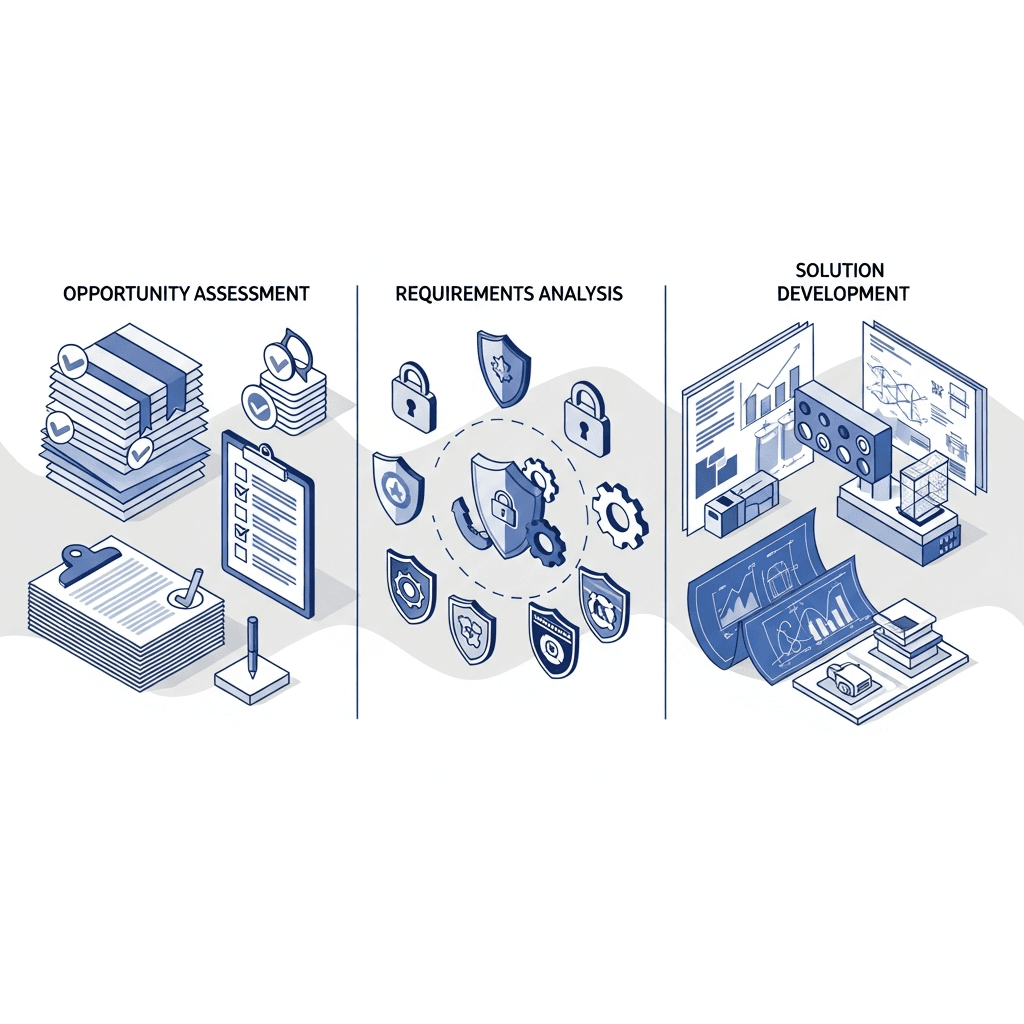
At early gate reviews, you want past performance and compliance voices. As the pursuit matures toward solution development, technical specialists take the lead. Bringing all three in at once rarely helps. Stagger their involvement based on what your team actually needs to decide at each stage.
Matching SME Involvement to Capture Phases
A simple way to think about SME sequencing is by the core question each phase is trying to answer.
| Capture Phase | Primary Question | SME Type to Engage |
|---|---|---|
| Opportunity Qualification | Have we won something like this before? | Past Performance Authorities |
| Requirements Analysis | Are there regulatory or clearance constraints? | Compliance and Contract Experts |
| Solution Development | Can we actually deliver this technically? | Technical Specialists |
| Price-to-Win | What staffing model is realistic? | Technical Specialists |
Treating SME involvement as a phased resource decision keeps your capture process focused and respects the time of contributors who have day jobs outside of business development.
Preparing SMEs for Maximum Impact during Interviews
The quality of a SME interview depends almost entirely on how well the proposal team prepares before the conversation starts. Walking in with vague questions wastes everyone's time and usually produces content that needs a follow-up session anyway.
Before any SME engagement, your team should complete three things:
- Review the relevant PWS sections and evaluation criteria so questions tie directly to what the government will score.
- Document what you already know about the SME's work so you are not asking them to repeat context they have already shared.
- Prepare specific, targeted questions that can be answered in 20 to 30 minutes total.
When SMEs see that you have done your homework, the conversation changes. Instead of explaining background, they go straight to insight. That is where the useful content lives.
Avoid open-ended prompts like "tell me about your approach." Narrow questions like "what would you do differently on this task area based on your work at Agency X?" surface the specific detail evaluators actually want to read.

Effective SME Interview Techniques for Proposal Writers
Structured questioning is only half the equation. How you listen and respond during the interview shapes whether you walk away with raw material or something close to proposal-ready content.
A few techniques that consistently produce better results:
- Ask SMEs to narrate outcomes instead of processes: "What changed for the customer after you delivered?" gets sharper answers than "Walk me through your methodology."
- Use the "so what" follow-up constantly. When an SME describes a technical approach, immediately ask why that matters to mission success.
- Record sessions with permission so writers can focus on listening instead of transcribing.
- Read back key points in plain language and ask the SME to confirm or correct. That back-and-forth surfaces the sharper version of the story.
Keep interviews under 30 minutes. Shorter sessions with tighter questions produce more usable content than open-ended conversations that run long and lose focus.
Structuring SME Contributions Within Color Team Reviews
Color team reviews are not the right moment to ask SMEs to create content. By Pink Team, your proposal draft is typically expected to exist. SME time in reviews belongs to one job: validating technical accuracy.
Assign each SME a specific section to review instead of the full document. A technical specialist reviewing the management approach wastes everyone's effort. Scope their feedback to what they can authoritatively confirm or correct.
A simple role split keeps reviews moving:
- Pink Team: SMEs flag factual gaps or misrepresented approaches before writers invest more time in those sections
- Red Team: SMEs confirm that technical claims hold up against the evaluation criteria the government will actually score
- Gold Team: SMEs do a final accuracy check on any sections revised since Red Team, not a full re-read of the document
Keep SME review windows tight, 24 to 48 hours maximum, with a clear feedback format. Track their comments separately from editorial feedback so proposal managers can triage technical corrections without losing overall document control.
Reducing SME Burden through Knowledge Management Systems
Repeated SME interviews on the same topics are one of the most common drains on capture and proposal teams. Every new pursuit restarts the same conversations, pulls the same people away from delivery, and accumulates real costs.
The core fix is capturing SME knowledge once and making it retrievable without needing repeated SME input for every pursuit. Semantic search can support this by letting proposal teams query a knowledge base in plain language instead of hunting through folder structures or file names. Relevant content surfaces from prior proposals, slide decks, or debrief documents regardless of how it was originally stored. Precise Software cut SME time 80% by giving their team access to organized, retrievable content instead of routing every question back to senior leadership.
Building the repository correctly is the upfront requirement. Content should be tagged by capability area, customer, and contract type so retrieval stays accurate as the library grows over time.
Optimizing SME Workflows with AI-Powered Proposal Tools
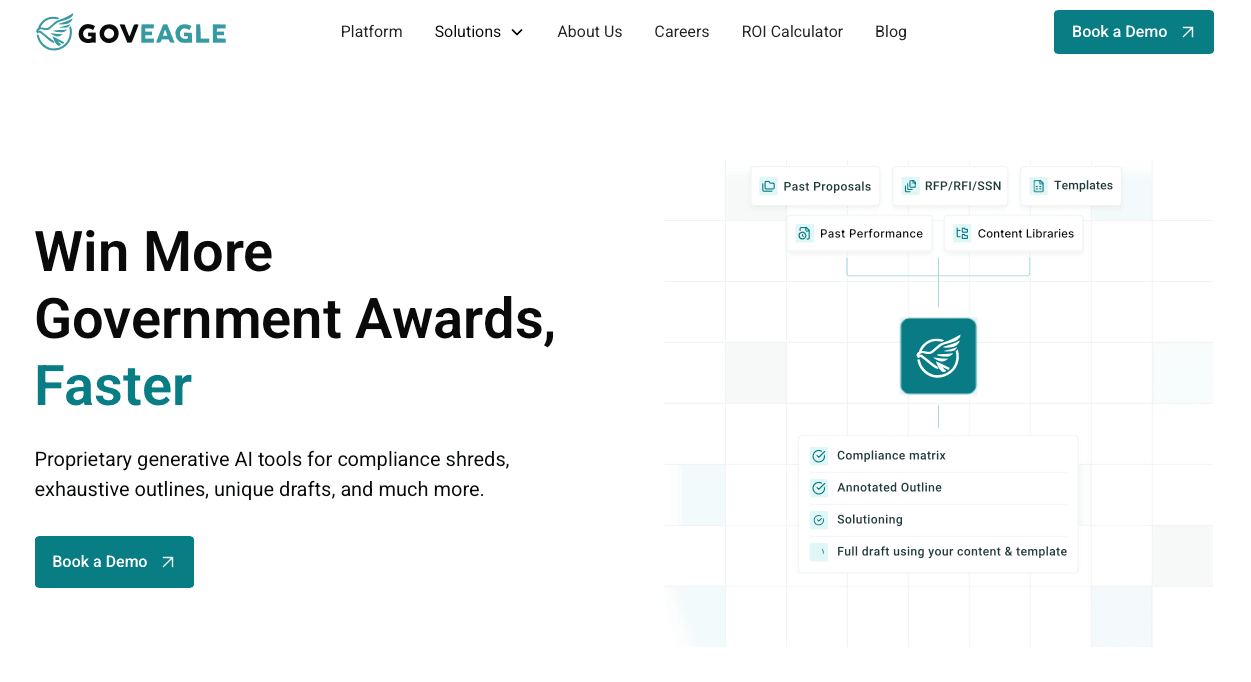
Purpose-built proposal AI changes the SME equation by reducing how often you need to go back to them at all. When your knowledge base holds tagged, retrievable content from prior pursuits, it can answer many repeat questions without needing direct SME involvement.
GovEagle's semantic search pulls relevant past performance, technical approaches, and solution content from SharePoint and connected repositories using plain language queries. SMEs who do need to review content work directly in Microsoft Word, skipping any learning curve on unfamiliar systems.
Two features narrow what SMEs need to contribute:
- Capability gap analysis identifies where your existing past performance covers the PWS and where it falls short, so SMEs only focus on real gaps instead of re-explaining known strengths
- Automated compliance matrices surface the specific technical sections that need expert input, replacing broad document reviews with targeted questions
The result is fewer interruptions, faster turnaround, and SME time spent where it actually moves the pursuit forward.
FAQs
What's the difference between involving SMEs in capture versus proposal phases?
Capture phase often focuses on past performance authorities and compliance experts answering "Have we done this before?" and "Can we meet requirements?" Proposal phase moves to technical specialists validating solution approaches and reviewing draft content for accuracy. Staggering SME involvement by what each phase needs to decide prevents wasting their time on questions outside their expertise.
Should I assign SMEs to review the entire proposal or specific sections?
Assign specific sections that match their expertise. A technical specialist reviewing management approach adds no value, and full-document reviews waste SME time on content they cannot authoritatively validate. Keep their Pink Team and Red Team reviews scoped to 24-48 hours on targeted sections only.
How do I get usable content from a 30-minute SME interview?
Ask narrow, outcome-focused questions tied directly to PWS sections and evaluation criteria instead of open-ended prompts. "What changed for the customer after you delivered?" produces sharper content than "Walk me through your methodology." Record sessions so you can listen instead of transcribe, and read back key points in plain language for the SME to confirm or correct.
Final Thoughts on SME Engagement in GovCon Proposals
Your capture GovCon process improves when you stop treating every pursuit like it starts from zero. The technical depth evaluators want to see already exists in your past performance write-ups, debrief notes, and prior proposal sections. GovEagle captures that content once and makes it retrievable without human intervention, so SME time becomes a targeted resource instead of a constant bottleneck. See how GovEagle routes proposal questions to your knowledge base before they reach your SMEs.