
NASA SEWP Contract: Complete Guide to the Government-Wide IT Acquisition Vehicle (September 2026)

Akash Mandavilli
CEO and Co-Founder of GovEagle
About the author
Akash is a 2x founder with previous experience in AI from Meta and federal sales from IBM. Akash holds a dual-degree from Johns Hopkins University in Economics and Computer Science.

NASA SEWP, Solutions for Enterprise-Wide Procurement, is one of the federal government's most widely used IT acquisition vehicles. Authorized by the Office of Management and Budget and managed by NASA Goddard Space Flight Center, it gives federal agencies a pre-competed path to IT products and technology-related services without running a full open-market solicitation. For contractors, it represents an important channel for federal IT spend: SEWP processed over $9 billion across 46,000 orders in FY20, with 83% flowing through small business contracts. This guide covers how SEWP works, what the current SEWP V structure looks like, where SEWP VI stands, and what contractors need to know to compete on the vehicle.
TLDR:
- SEWP processed $9B across 46,000 orders in FY20, with 83% flowing through small business contracts.
- SEWP VI carries a $60B ceiling and adds enterprise solutions and standalone IT services.
- SEWP's 0.34% fee sits below most GWACs, and the pre-competed structure cuts weeks off procurement timelines.
- Prime contract holders compete through five groups (A, B1, B2, C, D) organized by socioeconomic designation.
- Proposal automation platforms can help contractors accelerate compliance matrix creation and requirement mapping for SEWP task order responses.
The Evolution of SEWP: From SEWP I to SEWP VI
SEWP originally stood for "Scientific and Engineering Workstation Procurement" when NASA stood up the first GWAC in federal acquisition history in 1993. The scope was narrow: scientific and engineering workstations, with little beyond that.
The contract has run through five generations since:
- SEWP I: 1993 (original award)
- SEWP II: 1996
- SEWP III: 2001
- SEWP IV: May 2007
- SEWP V: May 2015
- SEWP VI: solicitation issued; proposals submitted; awards pending
By SEWP V, both the name and the scope had expanded well beyond workstations into the broad IT and tech services vehicle agencies rely on today.
SEWP V: Current Contract Structure and Key Details
SEWP V launched in May 2015 and has been extended multiple times while SEWP VI moves through development. Prime contract holders are organized into five groups, each defined by competition type and vendor profile.
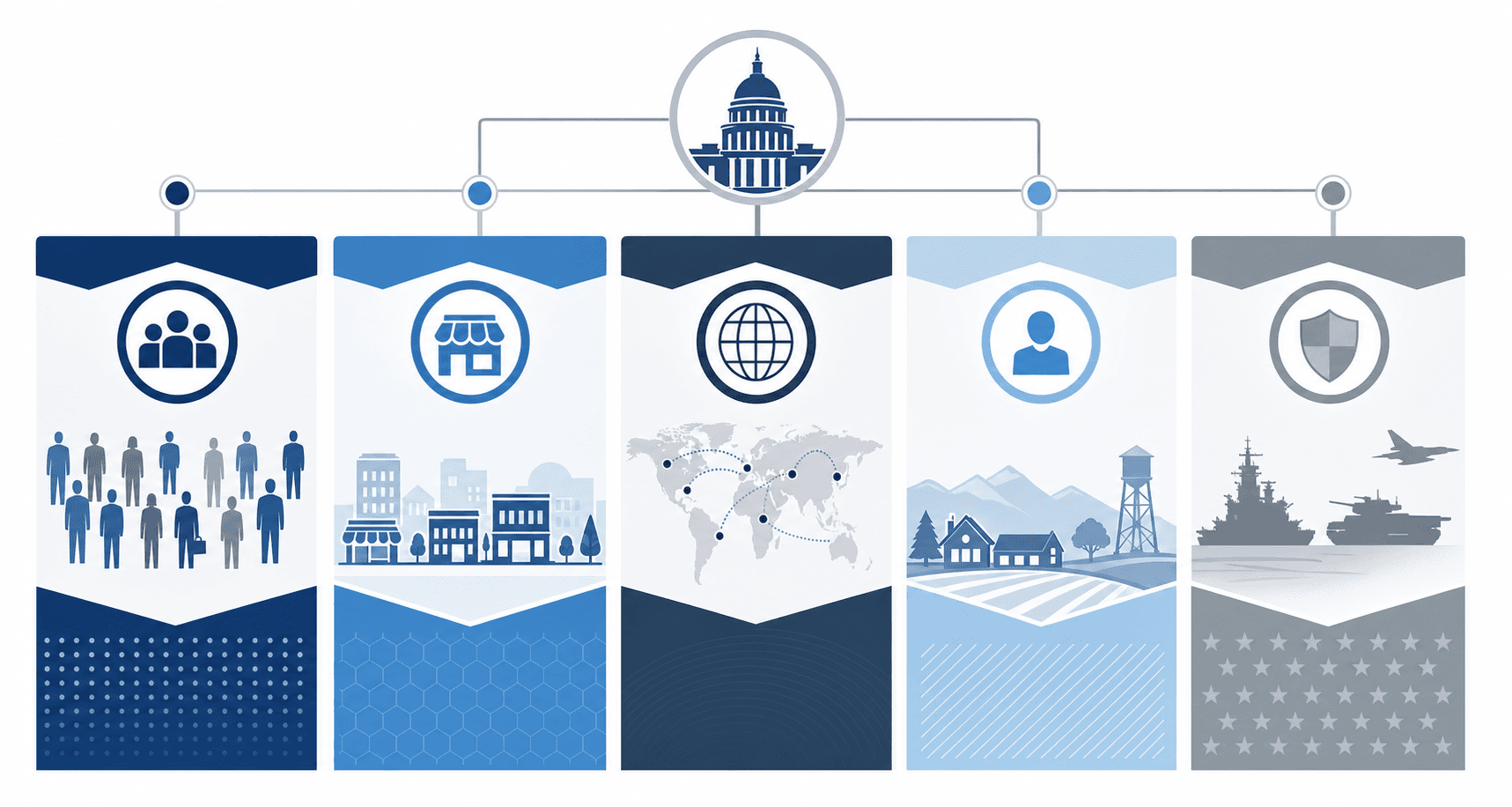
| Group | Competition Type | Primary Vendor Profile |
|---|---|---|
| A | Full and open | Large and small OEMs/manufacturers |
| B(1) | SB set-aside | HUBZone VARs |
| B(2) | SB set-aside | SDVOSB VARs |
| C | Small business set-aside | Small business VARs |
| D | Full and open | Large and small VARs |
Agencies can order across all groups, reaching both manufacturers and resellers with socioeconomic set-aside coverage built directly into the contract structure.
SEWP VI: Status Update and What Contractors Need to Know
SEWP VI carries a $60 billion ceiling and has faced multiple protests that pushed the award timeline back. NASA extended SEWP V through September 30, 2026 to keep the vehicle active during the transition.
The scope expands beyond SEWP V's IT products with associated services. SEWP VI adds two standalone categories:
- Enterprise solutions, expanding the contract's reach beyond traditional IT hardware and software procurement
- IT services, giving agencies a dedicated path for service-based acquisitions that were previously bundled under product categories
A larger pool of contract holders is also expected. The SEWP program office publishes award and protest status updates on the SEWP website.
How Contractors Compete for Work through SEWP
For contractors, SEWP creates a faster-moving task order environment than open-market federal procurements. Once vendors secure a prime position on the vehicle, they compete for agency-issued task orders through the SEWP portal instead of requalifying through a new full-and-open solicitation each time.

Because agencies generally must provide fair opportunity among eligible contract holders, SEWP primes operate in a highly competitive quote environment where response speed, pricing strategy, and proposal compliance directly influence win rates.
SEWP Contract Scope: Products, Services, and Solutions
SEWP V is divided into five contract groups (A, B(1), B(2), C, and D) based on competition type and vendor profile. Each competed group has the same scope, creating overlap across contracts and groups.
SEWP V’s five groups are contract competition groups, not product-category groups. Group A is full and open and consists primarily of OEMs/manufacturers. Group B(1) is a HUBZone small business set-aside. Group B(2) is an SDVOSB small business set-aside. Group C is a small business set-aside. Group D is full and open and includes both small and large businesses. Each competed group has the same contract scope.
Get GovCon capture and proposal insights in your inbox.
How to Become a NASA SEWP Contractor
Becoming a NASA SEWP contractor means winning a prime contract award on the vehicle itself, not simply registering as a subcontractor or reseller. SEWP V closed to new prime awards, so the path for most vendors now runs through the SEWP VI solicitation process.
Eligibility and Prerequisites
Before engaging the solicitation, vendors should confirm they meet the baseline requirements NASA typically sets for SEWP:
- Active SAM.gov registration with no exclusions and a current CAGE code in good standing.
- Proven technical capability to supply IT products and services within the scope categories targeted by the vendor's intended SEWP VI category.
- Past performance records reflecting relevant federal supply or services delivery.
- Small business designations, if applicable, verified against current SBA size standards for the relevant NAICS codes.
The SEWP VI Solicitation Path
SEWP VI was the primary on-ramp opportunity for new prime contractors. NASA issued the final SEWP VI RFP, published multiple amendments, and extended the proposal deadline to February 24, 2025. Key steps are:
- Monitor the SEWP VI solicitation through SAM.gov and the official NASA SEWP VI page for RFP releases, amendments, and Q&A postings.
- Review the final SEWP VI RFP, amendments, and Q&A materials to understand category requirements, evaluation factors, and any future reopening or award-related updates.
- Review SEWP VI industry day materials covering scope, group structures, and evaluation criteria.
- Prepare proposal volumes aligned to Section L instructions and Section M evaluation factors.
Teaming Considerations
Vendors without a strong past performance record often pursue teaming arrangements. SEWP primes can work with authorized resellers, so teaming with an existing SEWP V prime can provide market access while a vendor builds the record needed for a future prime bid.
Why SEWP Matters for Federal Contractors
SEWP's fee structure stands out across the GWAC market. The program charges a 0.34% fee on orders, one of the lowest rates among comparable vehicles, which helps make the vehicle attractive to agencies and contributes to consistent task order volume for contractors.
Speed is the other primary draw. Because contract holders are already awarded and vetted, contracting officers skip the open-market solicitation cycle entirely. Requirements can move from posting to award in days instead of weeks, a meaningful advantage for contractors competing in fast-moving federal IT acquisition cycles.
For contractors, the group structure creates recurring opportunities across both unrestricted and socioeconomic set-aside competitions. The group structure gives agencies competitive quotes from multiple vendors across each award category without running a separate competition, and the dedicated small business groups provide set-aside credit without sacrificing the breadth of a full-scope IT vehicle.
SEWP Terms, Fees, and Compliance Requirements
SEWP V operates under a standard set of contractual terms that govern how agencies order and how contractors perform. The contract fee structure is straightforward: NASA charges a 0.34% fee on all SEWP task orders, applied at the time of order placement. This fee is included in the quoted price and is not separately listed on quotes; the contract holder is responsible for paying the fee from its quoted product prices.
Contract holders responding to SEWP task orders must align with the SEWP ordering framework, which requires a fair opportunity process among contract holders within the appropriate product or service group. For SEWP orders, fair opportunity applies to contract holders within the relevant group or set-aside; FAR Part 16.505 requires each awardee to be given a fair opportunity for orders exceeding the micro-purchase threshold, unless an exception applies.
Contractors operating under SEWP must stay current on a few compliance requirements worth tracking:
- Contractors must maintain an active registration in SAM.gov and keep all representations and certifications current throughout the life of the contract.
- Pricing offered through SEWP task orders must be at or below the contractor's set SEWP ceiling prices, though lower pricing is always permitted and often expected in competitive task order environments.
- Large business prime contractors may need to maintain compliant subcontracting plans depending on task order value and applicable FAR requirements.
- All applicable FAR clauses flow down to task orders, including those related to labor standards, data rights, and cybersecurity reporting under DFARS 252.204-7012 where DoD agencies are the ordering entity.
Monitoring SEWP VI Transition: What Contract Holders Should Track
As SEWP V runs through its September 30, 2026 extension and SEWP VI works through its protest backlog, contract holders have a defined set of obligations to track. Contract holders should monitor the SEWP program office and SAM.gov for updates that affect proposal eligibility, scope interpretation, and future task order competition requirements. Contractors should keep SAM.gov registrations and representations current, watch for SEWP VI award notices that affect their group eligibility, and review any ordering guide updates the program office releases during the transition period.
Accelerating Capture and Proposal Development for SEWP Opportunities with GovEagle
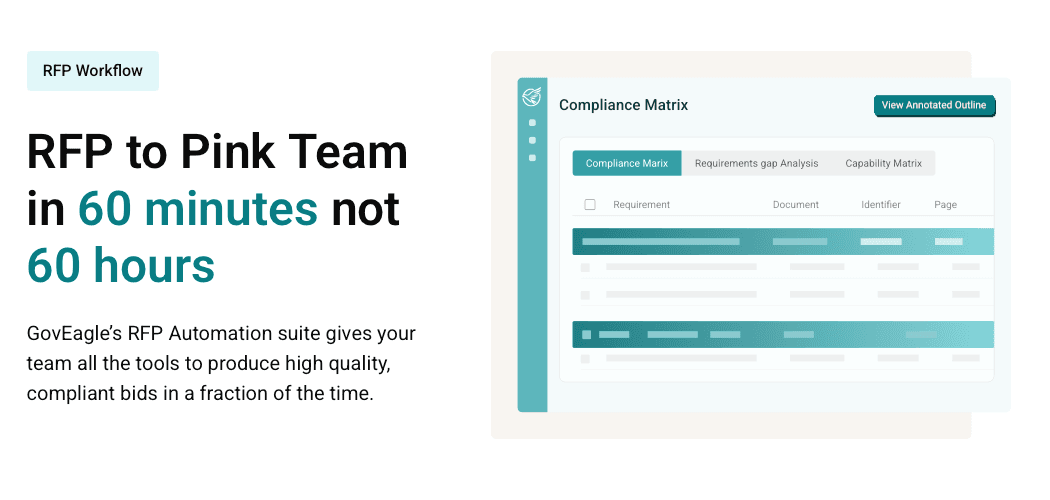
Winning a SEWP prime contract is only the beginning. Contractors must also compete effectively at the task order level. Agencies move quickly on SEWP, and contractors that cannot match that pace risk losing task order opportunities.
GovEagle's compliance matrix generation pulls every requirement out of a task order RFP in minutes, giving proposal teams a structured starting point instead of a blank page.
For SEWP contractors managing high volumes across multiple agencies, that speed compounds into more competitive responses per month with the same headcount.
FAQs
What does NASA SEWP stand for and what is it used for?
NASA SEWP stands for Solutions for Enterprise-Wide Procurement, a Government-Wide Acquisition Contract that federal agencies use to acquire IT products and tech-related services without running a full open-market solicitation. It processed over $9 billion across 46,000 orders from 90 federal agencies in FY20, with more than 83% flowing through small business contracts.
Can I get on SEWP V as a new contractor right now?
No. SEWP V closed to new prime awards and NASA extended it through September 30, 2026 while SEWP VI works through its protest backlog. SEWP VI was the most recent prime contract opportunity for new contractors, but the proposal deadline has passed and awards remain pending.
Is NASA SEWP a GWAC or something else?
NASA SEWP is a GWAC, a multiple-award IDIQ competed at the master-contract level and authorized by the Office of Management and Budget for government-wide use. Federal agencies across civilian and defense sectors can place orders through it without needing separate contract vehicles for IT procurement.
Final Thoughts on NASA SEWP and What It Means for Contractors
For contractors already on NASA SEWP, the competitive pressure at the task order level is real. Agencies move fast, quote windows are short, and the contractors who respond with compliant, well-structured proposals consistently win more work. GovEagle is built for exactly that environment, pulling requirements out of task order RFPs in minutes, mapping them against past performance, and generating a compliant first draft in hours instead of days. For teams managing multiple NASA SEWP responses per month, that speed and accuracy directly translate into more awards with the same headcount.