
What Is a CLIN? A Plain-English Glossary of Federal Acquisition Terms (September 2026)

Federal acquisition runs on acronyms, and your team already knows what CLIN stands for because it appears on every deliverable schedule. Where pursuit teams get tripped up is not the definition but the execution mechanics behind it. The glossary terms below, from Selected Acquisition Reports to contract line item structures, are the same vocabulary embedded in Section L requirements, and knowing how they connect to compliance tracing and evaluation criteria changes how you read a solicitation before you ever draft a response.
TLDR:
- CLINs separate funded from unfunded work and track pricing by contract type within a single award, preventing invoicing disputes and audit findings.
- Track Selected Acquisition Reports to read cost growth and schedule slippage before they trigger congressional oversight that affects your pursuit timing.
- ACAT I programs demand years of pre-RFP engagement because milestone review intensity compresses the timeline you can plan around during capture.
- Identify which PEO controls a program to target the stakeholder who shapes requirements and source selection criteria before contracting officers take over.
- Federal proposal software parses solicitations for acquisition-specific language buried in Section L requirements, surfacing SRR gate criteria and IOC constraints without manual review.
What Is a CLIN? Contract Line Item Numbers Explained
A Contract Line Item Number, or CLIN, is the basic building block of a federal contract. Every deliverable, service, or data requirement in a government contract gets assigned a CLIN so the government can track what it ordered, what it received, and what it paid.
CLINs follow a structured numbering format defined in DFARS 204.71 and FAR Subpart 4.10. A base CLIN is typically a four-digit number (0001, 0002), while subordinate line items called SLINs extend that number (0001AA, 0001AB). Informational subline items may be used for administrative purposes and are placed within the line-item description, not in the quantity or price fields.
How CLINs Shape Contract Structure
Where many teams get tripped up is treating CLINs as an administrative formality instead of a pricing and compliance control. Contracting officers use CLINs to:
- Separate funded from unfunded work, so obligations can be tracked at the line-item level instead of as a contract-wide lump sum
- Distinguish cost-reimbursable work from firm-fixed-price work within the same contract, each CLIN carrying its own contract type and accounting code
- Tie deliverables to specific performance periods, which matters when option years are exercised selectively
Misaligned CLINs create invoicing disputes, audit findings, and delays in payment, all of which hit program execution before any performance issue surfaces and complicate compliance matrix tracking.
Selected Acquisition Report (SAR)
The Selected Acquisition Report is a congressionally mandated status report that major defense acquisition programs must submit annually to keep oversight committees informed on cost, schedule, and performance. Programs at Acquisition Category I (ACAT I) thresholds are generally required to file SARs, and the reports follow a standardized format so Congress can track trends across the portfolio.
What a SAR Covers
A SAR typically captures the current program baseline against the original approved baseline, surfacing any variance that has accumulated since the program entered the acquisition system. Key data points include:
- Current program acquisition cost versus the original estimate, broken down by development and procurement
- Schedule milestones, plus any program acquisition unit cost or procurement unit cost growth that could trigger Nunn-McCurdy reporting requirements
- Technical performance against the Key Performance Parameters defined at Milestone B
- A brief narrative on major risks and any restructuring actions taken since the last report
Because SARs feed directly into Congressional budget deliberations, cost or schedule growth that shows up in a SAR can trigger additional oversight, reprogramming requests, or program restructuring before the next appropriations cycle. Capture teams pursuing ACAT I programs should treat the most recent SAR as a primary source document when assessing program health and competitive risk during capture planning.
Acquisition Category (ACAT)
Federal acquisition programs get sorted into tiers based on cost and complexity, and those tiers carry real consequences for how a program is managed, reviewed, and approved. The tiering system is called the Acquisition Category, or ACAT, and it governs the oversight intensity a program receives from the moment it enters the defense acquisition system.
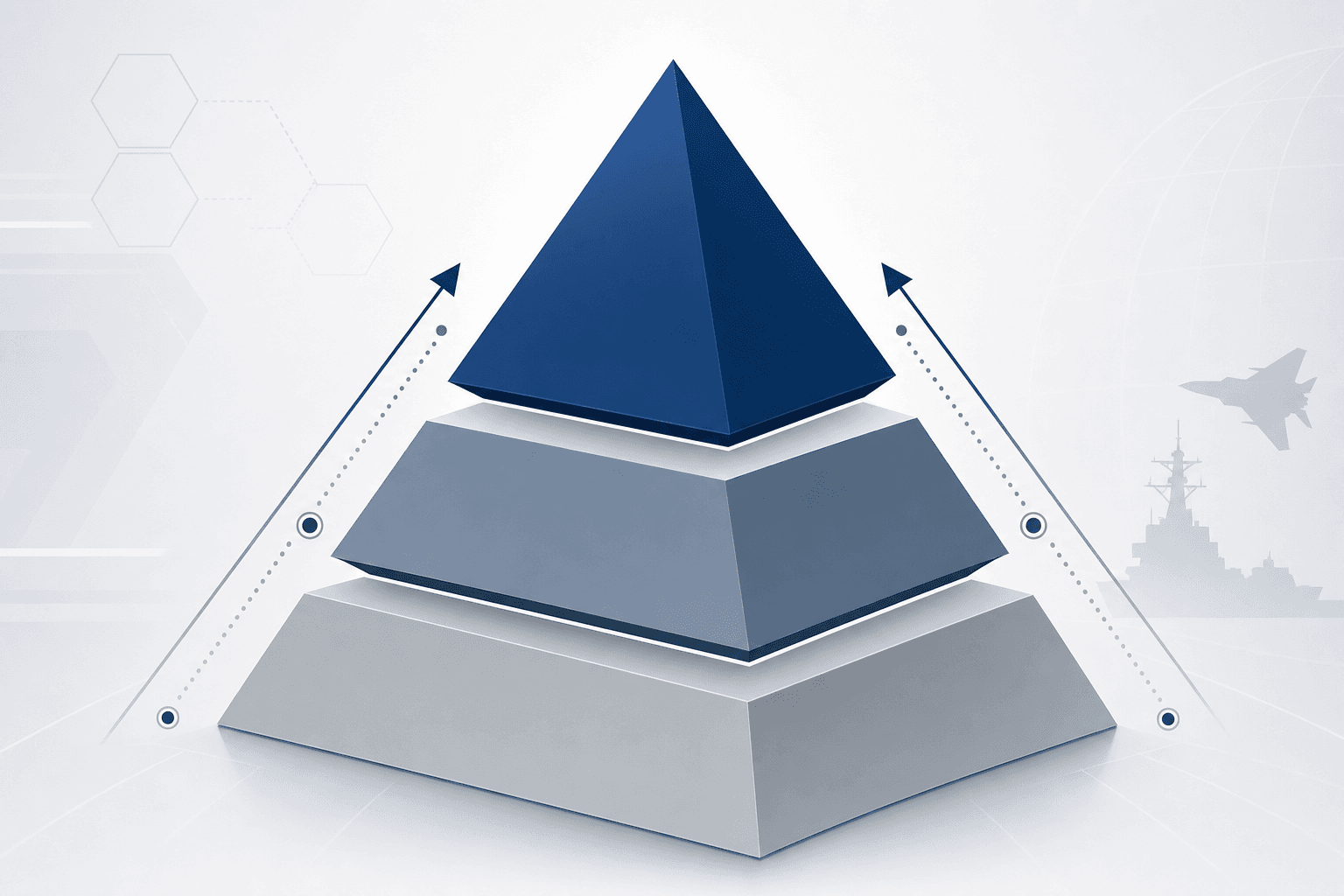
The higher the ACAT level, the more senior the decision authority and the more formal the review requirements. Here is how the tiers break down:
| ACAT Level | Threshold (Rough) | Decision Authority |
|---|---|---|
| ACAT I | Major Defense Acquisition Programs; currently more than $1B in RDT&E or $4.5B in procurement, based on FY2024 constant dollars | Milestone Decision Authority at USD(A&S) or Component level |
| ACAT II | Major systems below ACAT I thresholds | Component Acquisition Executive |
| ACAT III | All other programs not meeting ACAT I or II criteria | Designated Milestone Decision Authority |
ACAT I programs attract the heaviest scrutiny, including mandatory Milestone reviews, Selected Acquisition Reports submitted to Congress, and Independent Cost Estimates. The meaning of ACAT matters most when a pursuit team is sizing up whether a program will face congressional reporting requirements or accelerated review cycles that compress the acquisition timeline a contractor can plan around during bid/no-bid analysis.
Program Executive Officer (PEO)
A Program Executive Officer, or PEO, is a senior acquisition official within a military department or defense agency who holds responsibility for managing a portfolio of related defense programs. PEOs sit in the acquisition chain between the Service Acquisition Executive (SAE) and the individual Program Managers (PMs) who run day-to-day programs.
In practice, a PEO functions as the executive accountable for cost, schedule, and performance across multiple Acquisition Category (ACAT) programs simultaneously. They report directly to the SAE and serve as the decision authority for many milestone approvals within their portfolio.
Where PEOs Fit in the Acquisition Hierarchy
Understanding where a PEO sits helps capture teams target the right stakeholders during pre-RFP engagement.
- The SAE holds department-level acquisition authority and delegates program oversight to PEOs organized by mission area or capability domain (e.g., PEO Aviation, PEO C3T, PEO Ships).
- PEOs oversee Program Managers who run individual ACAT programs and report upward on cost, schedule, and technical performance.
- For ACAT I programs, the Milestone Decision Authority may sit above the PEO at the Defense Acquisition Executive (DAE) level, meaning the PEO coordinates but may not hold final milestone authority.
Knowing which PEO owns a program tells a capture team who shapes requirements, who influences source selection criteria, and whose office is worth engaging well before a solicitation drops.
Initial Operational Capability (IOC)
Initial Operational Capability (IOC) marks the point at which a defense system has been fielded to an initial subset of users and is capable of completing its intended mission in a limited capacity. It is generally declared during production and deployment, before Full Operational Capability (FOC), serving as a key contractual checkpoint where delivery performance is assessed against requirements before the program advances to full production and the follow-on awards that accompany wider fielding.
Where IOC matters most is in how it affects contract milestones, delivery schedules, and performance obligations. Missing an IOC-related delivery or readiness date can affect schedule performance, CPARS/past-performance assessments, or contract remedies if those consequences are built into the contract, all of which can carry weight in future source selections.
System Requirements Review (SRR)
SRR sits between Milestone A and the start of preliminary design. The review board verifies that system performance specifications are complete, internally consistent, and traceable to validated capability needs from earlier in the acquisition lifecycle. If those traceability threads are broken or ambiguous at this stage, they are far cheaper to close before preliminary design locks than after design decisions have hardened at Critical Design Review. For contractors, late-stage requirements gaps translate directly into scope changes, repricing, and contract modifications.
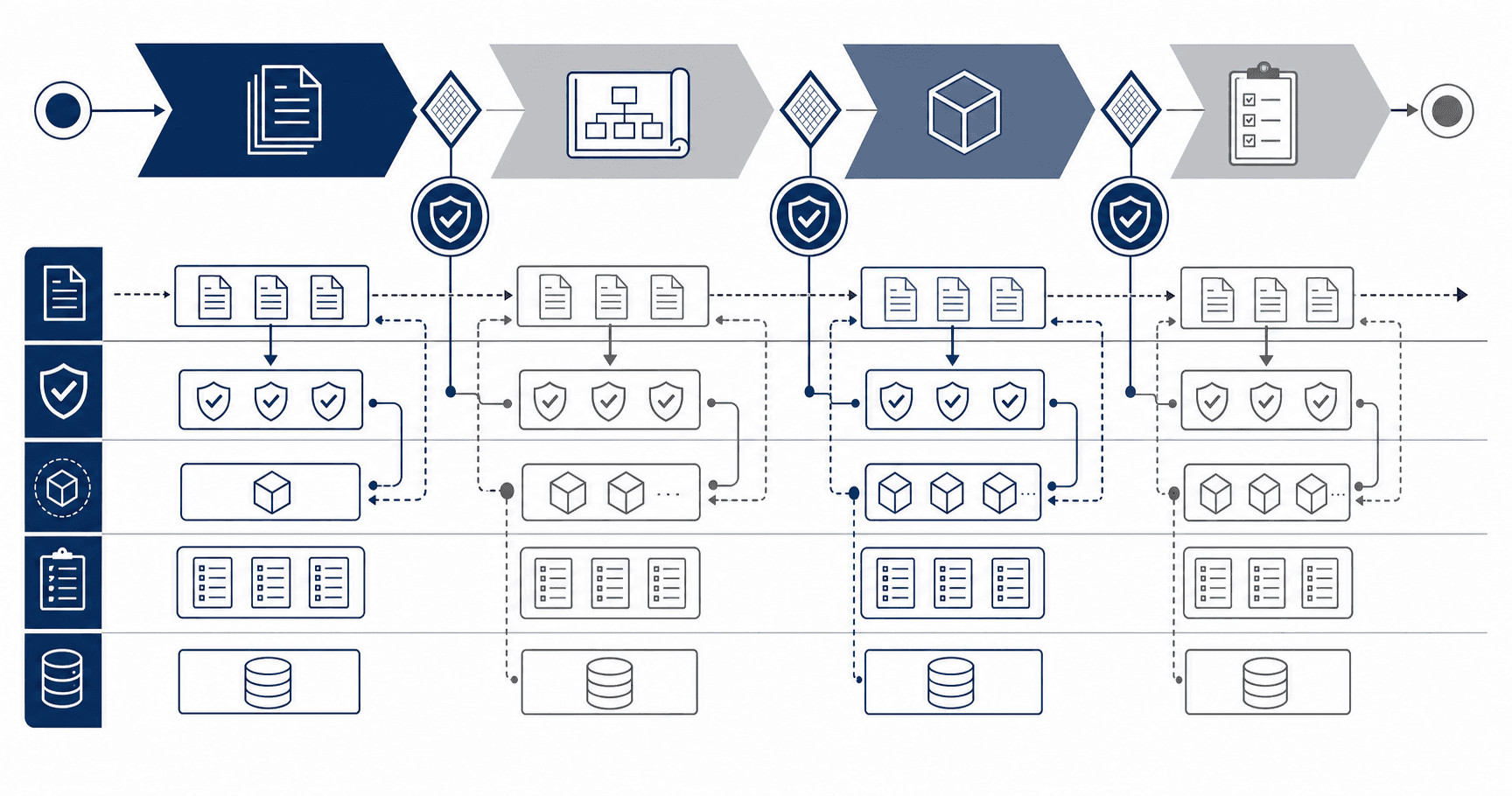
The review typically covers three areas:
- System performance specifications and their traceability to validated user requirements, confirming that each requirement can be traced back to an approved capability need instead of design preference.
- Functional requirements assessed for completeness and testability, since a requirement that cannot be tested is effectively unenforceable against a contractor's delivered system.
- Interface definitions and constraints that will bound the design space going forward, locking the envelope before engineering decisions become structural artifacts.
For contractors on development programs, SRR represents the last structured checkpoint before design assumptions harden. Requirements gaps surfaced here can still be resolved through specification updates. The same gaps identified after CDR trigger engineering change proposals, schedule adjustments, and in some cases contract modifications.
Accelerate Federal Proposal Development with GovEagle

Federal proposal work runs on acronyms, and misreading even one can send a pursuit team in the wrong direction. GovEagle gives capture and proposal teams a single workspace where solicitation intelligence, compliance tracking, and submission workflows connect from pre-RFP through final delivery. If your team is spending cycles manually cross-referencing CLINs, ACAT thresholds, or SAR reporting requirements against Section L, that is a process architecture problem GovEagle is built to fix.
What Teams Use GovEagle For
- Compliance matrix generation tied directly to Section L/M requirements, so nothing gets missed when a solicitation references IOC milestones or LDR constraints buried in a PWS.
- Solicitation parsing that surfaces acquisition-specific language, including PEO structures, SRR gate criteria, and task order structures, without requiring a contracts specialist to flag them first, powered by AI for federal proposal writing.
- Bid/no-bid decision support grounded in program data, so pursuit teams can read ACAT designations and RFP scope accurately before committing resources to a capture.
The glossary terms covered in this post are the same vocabulary embedded in the solicitations GovEagle processes daily. Knowing what a Selected Acquisition Report signals about a program's funding stability, or what an Initial Operational Capability date means for delivery sequencing, changes how a pursuit team reads a requirements document and how they respond to it.
FAQs
What's the difference between a CLIN and a SLIN?
A base CLIN is a four-digit number (0001, 0002) that represents a distinct deliverable, service, or data requirement in a federal contract, while a SLIN extends that number (0001AA, 0001AB) to break down a parent CLIN into subordinate line items that still roll up to the base CLIN for tracking and funding purposes.
What is a PEO in federal acquisition?
A Program Executive Officer (PEO) is a senior acquisition official within a military department or defense agency who manages a portfolio of related defense programs and sits in the acquisition chain between the Service Acquisition Executive and individual Program Managers, serving as the decision authority for many milestone approvals within their portfolio.
When does System Requirements Review happen in the acquisition timeline?
SRR sits between Milestone A and the start of preliminary design, verifying that system performance specifications are complete, internally consistent, and traceable to validated capability needs before design assumptions harden into structural artifacts.
Final Thoughts on Reading Federal Acquisition Vocabulary as a Competitive Signal
The terms covered here, from CLIN structure to Selected Acquisition Report filings, are not background noise in a solicitation. They are signals about program health, oversight intensity, and the competitive window available to a pursuit team. A selected acquisition report showing cost growth near a Nunn-McCurdy threshold tells a different story than a clean baseline, and that distinction shapes how a capture team should position before an RFP drops. GovEagle processes these signals daily, parsing solicitation language for ACAT designations, IOC constraints, and PEO structures so pursuit teams can read program risk accurately and respond with tighter compliance alignment.
