
What Is PWin? The Complete Guide to Probability of Win (September 2026)

GovEagle is not affiliated with, sponsored by, certified by, or otherwise associated with Shipley Associates.
What is PWin? Most teams can answer that question in theory, but when you run your Shipley PWin calculator and get a score, the factors feeding that percentage often come from gut feel and optimism instead of actual intel. You're rating capability fit based on what you hope to prove in the proposal, not on what your past performance already shows. The problem isn't the formula; it's that the data going in reflects how excited your team is about the pursuit instead of how an evaluator will actually see you.
TLDR:
- PWin measures your likelihood of winning a specific government contract as a percentage score.
- Calculate PWin using qualitative scoring, weighted factor models, or AI-assisted analysis.
- Apply thresholds at gate reviews: below 40% means no-bid, above 70% warrants full pursuit.
- AI tools tailored for GovCon assist with analysis of SAM.gov award data, incumbent history, and past performance alignment to accelerate PWin scoring.
- Some modern AI-powered bid analysis tools surface past performance alignment and capability gaps instantly.
What Is PWin (Probability of Win)?
PWin, short for Probability of Win, is a percentage score that capture and proposal teams use to estimate their likelihood of winning a specific government contract. It pulls together competitive positioning, customer relationships, solution fit, and past performance into a single metric that gives BD teams a shared vocabulary for deciding where to invest pursuit resources.
Why PWin Matters for Government Contractors
Without a calculated probability of win, teams chase opportunities on gut feel, spreading resources thin across pursuits they are unlikely to win. PWin gives BD directors a structured way to allocate pursuit budgets, proposal managers a way to focus their workload, and capture managers a clear signal for when to walk away.
How to Calculate PWin: Methods and Formulas
Three main approaches exist, each reflecting a different level of process maturity.
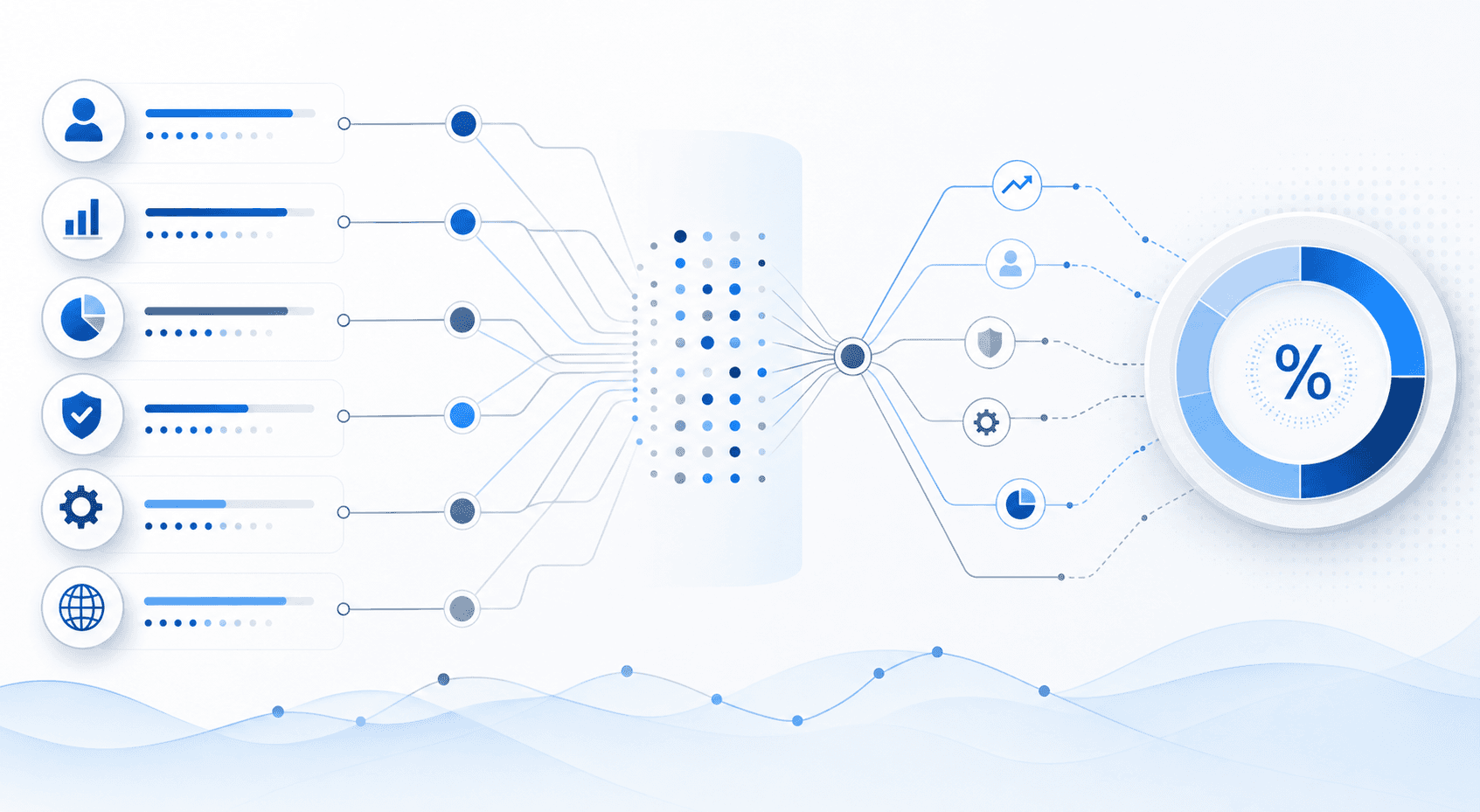
Qualitative Scoring
Capture managers rate factors like incumbent status, customer access, and solution fit on a scale, then aggregate those scores into a single percentage. This works for quick pipeline reviews but introduces inconsistency across scorers.
Weighted Factor Models
More structured organizations build weighted scoring matrices in Excel, where each factor carries a defined percentage of the total score. The Shipley PWin calculator popularized this approach.
Predictive and AI-Assisted Models
The most advanced approach uses historical federal award data, past proposal outcomes, and competitor patterns to produce data-driven PWin estimates, learning from past wins and losses to reduce reliance on gut instinct.
| Method | Effort | Consistency | Best For |
|---|---|---|---|
| Qualitative Scoring | Low | Low | Early pipeline triage |
| Weighted Factor Matrix | Medium | Medium | Formal gate reviews |
| AI-Assisted Modeling | High | High | Large GovCon pipelines with historical federal bid and award data |
PWin Calculator Tools: Excel, Shipley, and Beyond
Most capture teams start with a spreadsheet, scoring factors like customer relationship strength, solution fit, and competitive positioning on a weighted scale. The Shipley PWin calculator follows the same structure, mapped to capture lifecycle gates. Both approaches rely entirely on the quality of the inputs your team provides.
What Is PGo and How Does It Relate to PWin?
PGo, or "Probability of Go," asks whether your company should pursue an opportunity at all. If it scores poorly on strategic fit, past performance relevance, or teaming availability, it may not warrant the investment of a full PWin analysis.
How PGo and PWin Work Together
PGo screens out poor-fit opportunities before BD resources are spent. PWin takes over once pursuit is approved, providing a detailed read on competitive position and win likelihood.
| Stage | Question Asked | When Applied |
|---|---|---|
| PGo | Should we pursue this? | Early pipeline review |
| PWin | Can we win this? | Active capture phase |
Skipping PGo bloats pipelines with low-fit opportunities that consume proposal resources without a realistic path to award.
PWin vs. Price to Win: Understanding the Difference
PWin tells you how likely you are to win. Price to Win (PTW) tells you what you need to charge to stay competitive. PTW pulls together competitor labor rates, historical award data, and market benchmarks to estimate a competitive price range based on expected evaluator and competitor behavior.
The two intersect: a strong technical score can push your PWin higher, but if your price sits above the PTW threshold, evaluators may pass regardless. Run PTW early in capture, then factor those results into your PWin scoring before committing to bid.
The Shipley PWin Methodology
In Shipley-based capture practices, PWin is updated at each capture gate as new intelligence comes in and relationships deepen.
The five core weighted factors are:
- Incumbent status, which often carries the heaviest weight given the statistical advantage incumbents hold in government recompetes.
- Capability alignment, measuring how well your past performance and technical approach match the stated and unstated requirements.
- Competitive positioning, accounting for known competitors and your relative strengths against each.
- Pricing viability, assessing whether your cost structure can produce a competitive bid without sacrificing margin.
- Strategic fit, weighing whether the opportunity aligns with your firm's growth goals and resource availability.
A low PWin early in capture is acceptable. A low PWin at RFP release is a signal to walk away. The gate-based discipline provides structure that a static spreadsheet score cannot.
Common PWin Mistakes That Kill Your Win Rate
The most damaging mistake is treating PWin as a morale exercise. Internal pressure to stay in a pursuit quietly corrupts the math. Common patterns that push scores too high:
- Rating customer access as strong based on one introductory meeting, when a single touchpoint rarely reflects actual relationship depth or access to decision-makers.
- Ignoring incumbent advantage in a recompete because "our solution is better," despite incumbents often having an advantage in recompetes due to existing performance history and customer familiarity.
- Scoring capability fit based on what you hope to prove instead of what past performance already shows on paper.
- Defaulting to "unknown" on competitor research instead of investing in actual intel gathering through sources like SAM.gov, USASpending, or industry contacts.

Most teams score from the inside looking out. A source selection evaluator reviews you from the outside looking in. A PWin calculated without that shift is optimism dressed as analysis.
Using PWin for Bid/No-Bid Decisions and Gate Reviews
Most disciplined BD teams apply a three-band threshold framework at each gate review:
- Below 40%: No-bid. Redirect resources to higher-probability pursuits.
- 40 to 70%: Conditional pursuit. Identify specific gaps and assign owners before the next gate.
- Above 70%: Full pursuit. Commit proposal budget and proposal manager time.
A pursuit sitting at 35% in early capture often struggles to climb above 50% by RFP release without new relationships or stronger intel. Consistent threshold policies remove personal advocacy from bid decisions and channel proposal resources toward opportunities where the math actually supports pursuit.
How AI and Automation Are Changing PWin Analysis
Gathering competitor intel, mapping past performance, and populating a weighted scoring matrix can consume days. AI accelerates analysis of federal award data, incumbent contracts, and past performance records. Award data from SAM.gov and USASpending feeds scoring inputs faster than manual research, with less reliance on internal assumptions that can skew scoring toward favored pursuits. Weights, thresholds, and gate decisions still require human accountability; the inputs just get there faster.
Improving Your PWin: Strategies That Actually Work
Calculating PWin is the starting point. The real work is moving that number before the RFP drops.
Where to Focus Your Capture Efforts
- Build relationships with the customer before the RFP: late-stage engagement rarely moves the needle, and evaluators notice when a vendor shows up only at solicitation time.
- Close technical gaps by teaming with partners who bring capabilities your firm lacks, instead of hoping evaluators overlook weaknesses.
- Counter competitor strengths directly in your win themes, so evaluators see a clear reason to choose you.
- Keep your PWin score updated as new intelligence arrives, because a stale score leads to misallocated BD resources.
Accelerating PWin Analysis with Bid/No-Bid Tools
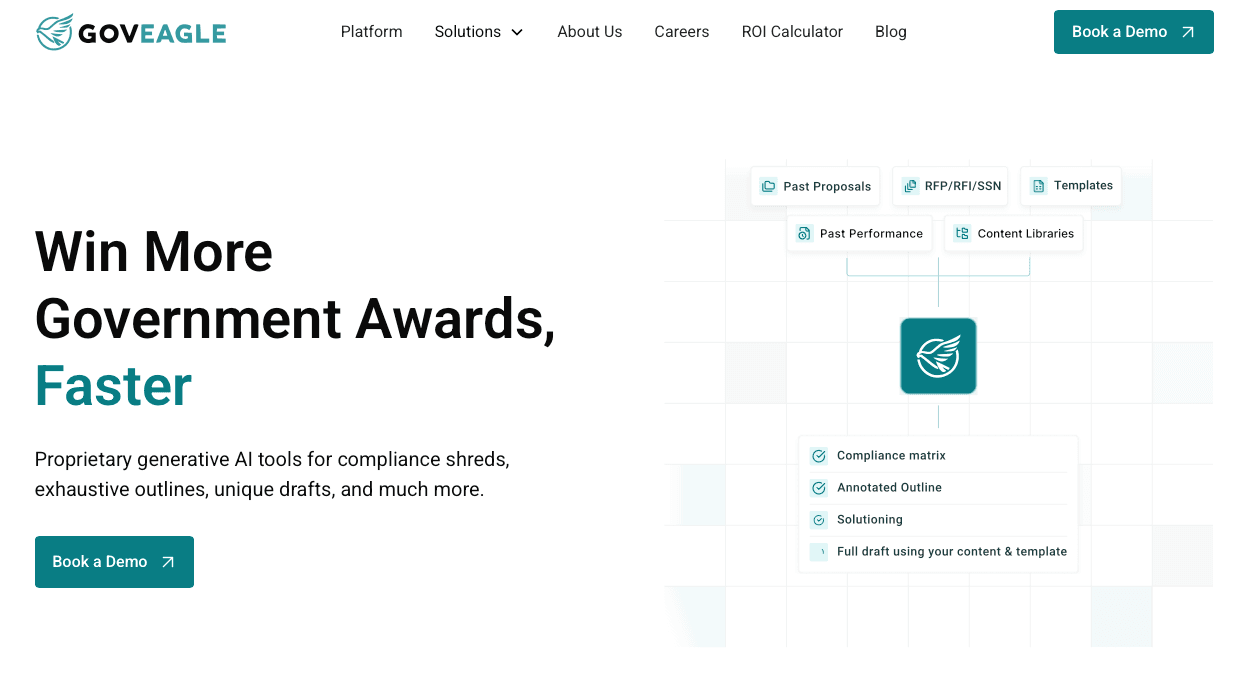
Manual PWin analysis spreads attention thin across research, scoring, and rationale-building. GovEagle's Bid/No-Bid Analysis directly attacks that problem. It extracts and organizes RFP requirements and cross-matches them against your past performance and organizational strengths to produce the grounded inputs your PWin score actually needs.
The built-in capability and gap analysis shows where your experience aligns and where it falls short, so gate reviews reflect reality instead of optimism. Teams get to a defensible PWin faster, without spending days manually pulling data from SAM.gov, USASpending, and past proposal archives.
For BD teams managing a full pipeline, that speed advantage compounds. More opportunities get a rigorous PWin assessment, fewer marginal pursuits slip through, and proposal resources land where the probability of win actually supports the investment.
FAQs
What's the best way to calculate PWin for government contracting opportunities?
Weighted factor models deliver the most consistent results for most GovCon teams. Score factors like incumbent status, customer relationships, capability alignment, and competitive positioning on a defined scale, then apply weights to each factor. The Shipley PWin calculator follows this approach and maps directly to capture lifecycle gates, making it the default methodology for formal pipeline reviews.
Can I run a PWin analysis without formal competitor intelligence?
Not reliably. Defaulting to "unknown" on competitor research weakens your PWin score and leads to weaker bid decisions. Pull award history from SAM.gov and USASpending, talk to industry contacts, and map known competitors against your strengths before scoring. A PWin calculated without actual intel is optimism dressed as analysis, and gate reviews built on that foundation waste pursuit resources.
PWin vs. PGo: which one should I run first?
Run PGo first. PGo answers whether you should pursue an opportunity at all based on strategic fit, past performance relevance, and teaming availability. PWin measures your likelihood of winning once pursuit is approved. Skipping PGo and going straight to PWin bloats your pipeline with low-fit opportunities that consume proposal resources without a realistic path to award.
How does Price to Win factor into my PWin score?
Price to Win feeds into PWin, not the other way around. Run your PTW analysis early in capture by pulling competitor labor rates and historical award data to estimate a competitive price range. If your cost structure can't produce a competitive bid within that range, your PWin drops regardless of technical strength or customer relationships. Factor PTW results into your weighted scoring before committing to bid.
Final Thoughts on PWin for Government Contractors
What is PWin? At its core, it's a discipline, one that separates BD teams who walk away from bad pursuits from those who keep chasing them. High-performing organizations treat PWin as a real filter, not a formality. When the math doesn't support pursuit, they stop, even after relationships have been built and momentum has set in. Your proposal budget goes further when competitive data and past performance alignment drive that call. If you're ready to cut manual research out of your capture process, request a GovEagle demo to see automated bid analysis in practice.