
Can Government Agencies Detect AI in Proposals? What GovCon Teams Need to Know in September 2026
Can government detect AI? Federal agencies are paying closer attention to how AI is used during proposal development, especially as new procurement guidance, disclosure expectations, and agency-level AI governance policies continue to evolve. Some solicitations now include AI-related disclosure language, human review expectations, or additional scrutiny around traceability and compliance. In May 2026, the conversation is less about a universal "AI detector" and more about transparency, documentation, and proposal quality standards across federal contracting.
TLDR:
- Federal agencies are increasing scrutiny around AI-assisted proposal development through policy updates, evaluator guidance, disclosure language, and proposal quality expectations.
- OMB memos M-25-21 and M-25-22 direct agencies to accelerate responsible AI use and improve AI acquisition practices; contractors should expect more scrutiny when they provide AI systems or use AI in ways covered by solicitation requirements.
- You must document AI use by section, store version histories, and align with RFP-specific disclosure rules.
- GSA’s proposed AI clause would impose requirements on contractors providing AI capabilities to the government, including safeguards around AI systems, data, intellectual property, and contract performance.
- Purpose-built GovCon AI tools use zero-retention, citation-based outputs, and FedRAMP controls to meet agency standards.
How Federal Agencies Are Managing AI Use in Proposal Development in 2026
Federal agencies are paying closer attention to AI-assisted proposal development, especially when solicitation instructions, certifications, or acquisition guidance address AI use directly. The focus is increasingly on transparency, traceability, proposal quality, and compliance with solicitation-specific requirements.
Agencies are taking different approaches to AI governance depending on procurement type, mission sensitivity, and internal policy maturity. In practice, evaluators remain focused on whether proposals demonstrate specificity, technical accuracy, quantified experience, and alignment to the actual solicitation requirements.

There are several proposal quality issues evaluators commonly look for when assessing whether responses appear overly generic, templated, or insufficiently tailored to the opportunity:
- Responses that answer every sub-requirement at exactly the same length, without the natural variation a human writer would produce when they know a topic deeply
- Win themes that sound generic across sections instead of tied to specific contract requirements or agency mission context
- Capability descriptions that use broad, sweeping language where evaluators expect quantified past performance and concrete differentiators
| Proposal Quality Concern | What It Tells Evaluators |
|---|---|
| Uniform section lengths | No natural variation; suggests templated output |
| Generic win themes | Not tied to agency mission or RFP requirements |
| Vague capability claims | Lacks quantified past performance |
| Stylometric inconsistency | Section-to-section voice mismatch |
| Low perplexity / low burstiness patterns | Flagged by automated scoring tools |
Some solicitations and funding opportunities have begun including AI-related disclosure, certification, or authorship requirements, but the language remains solicitation-specific instead of government-wide. At least one federal solicitation has included explicit AI disclosure requirements as of early 2026.
New Federal AI Transparency Requirements Affecting Government Contractors
Two OMB memoranda signed in April 2025 reshaped how government contractors may need to disclose AI use in federal work. The first, M-25-21, requires agencies to report AI usage and remove barriers to AI adoption. The second, M-25-22, provides guidance for how agencies acquire AI systems and services, including planning, market research, risk management, and contract terms.
For contractors, this creates AI accountability in federal proposal writing. Agencies are required to maintain and publish AI use case inventories, which can increase visibility into contractor-developed or contractor-supported AI systems included in agency AI use case inventories.
Here is what contractors need to watch for in 2026:
- Agencies are publishing AI use case inventories that could reference contractor-developed or contractor-operated systems, putting your AI workflows on the record.
- Chief AI Officers play a formal role in agency AI governance, and contractor-operated AI systems may receive closer review when they support agency AI use cases or covered procurements.
- Contracts tied to sensitive programs may begin adding AI disclosure clauses as agencies interpret these mandates into acquisition requirements.
The regulatory floor is rising. Capture and proposal teams should treat AI transparency as a compliance question, beyond simply an internal policy decision.
Growing Agency-Level AI Disclosure Requirements
Federal acquisition teams are beginning to include AI-related disclosure language directly into solicitations and evaluation criteria.
Key trends GovCon teams are seeing include:
- Requests to disclose whether AI tools were used during proposal development
- Requirements for human review and validation of AI-assisted responses
- Increased focus on traceability for technical claims, staffing approaches, and past performance narratives
- Additional scrutiny for proposals supporting classified, CUI, or mission-sensitive programs
For capture and proposal leaders, the practical takeaway is clear: AI usage is becoming a procurement compliance issue instead of just a productivity decision.
Impact for Proposal Teams
Some state and federal buyers are developing AI procurement and disclosure requirements, but the rules vary considerably by jurisdiction and by whether the contractor is providing an AI system or merely using AI internally. A proposal manager responding to a multi-state IDIQ or cooperative agreement needs to track which jurisdiction's rules govern each deliverable. Failing to do so can trigger a non-responsive determination at the state level even when federal requirements are fully met.
The fragmentation across state laws means there is no single watermarking or disclosure standard yet. Tracking these requirements individually, per opportunity, is now a standard part of capture and proposal workflows.
What Federal Agencies Are Reviewing When AI Is Used in Proposal Workflows
Federal agencies reviewing proposals are primarily evaluating responsiveness, specificity, substantiation, and compliance with solicitation requirements. As AI adoption increases across the industry, agencies are also paying closer attention to disclosure practices, human review procedures, and documentation standards tied to AI-assisted workflows.
Here's what evaluators can realistically catch:
- Repetitive sentence structures and generic phrasing that reads as filler instead of substantive technical response to the SOW or PWS.
- Overuse of vague superlatives without quantitative backing, a pattern AI writing tends to reproduce at scale.
- Text that fails to reference agency-specific context, incumbent contractors, or evaluation criteria from the actual RFP sections.
- Stylometric inconsistency, where one section reads like a subject matter expert wrote it and another reads like no one did.
The larger risk for proposal teams is submitting content that feels generic, lacks agency-specific context, or fails to show measurable past performance and technical differentiation. Regardless of how content is produced, evaluators still expect proposals to directly cover the agency mission, evaluation criteria, and statement of work requirements.
Get GovCon capture and proposal insights in your inbox.
GSA's Proposed AI Contract Clause and Contractor Compliance Obligations
GSA’s proposed AI contract clause would apply to solicitations and contracts for AI capabilities and would create new obligations for contractors providing AI systems to the government. While still in draft form as of May 2026, the clause signals a clear regulatory direction that capture managers and proposal teams should prepare for now.
The proposed requirements generally include:
- Contractors offering AI capabilities may need to provide additional information about the AI system, related data rights, safeguards, and performance obligations required by the solicitation or contract.
- Proposal teams should still use qualified human review for AI-assisted content, because some solicitations may include original-writing, certification, format, or disclosure requirements that conflict with careless AI use.
- Contractors should maintain audit trails for AI-assisted proposal work as a best practice, including prompts, sources, and human revisions, especially when solicitation language requires disclosure or certification.
For proposal managers, the practical implication is straightforward: if your team uses AI in the proposal process, you need documented workflows that can withstand scrutiny. Informal or undisclosed AI use carries growing compliance risk as federal acquisition policy catches up to the tech.
How Government Contractors Should Document AI Use for Compliance and Transparency
As federal AI governance and disclosure expectations continue evolving, GovCon firms need a clear documentation strategy before they submit proposals.
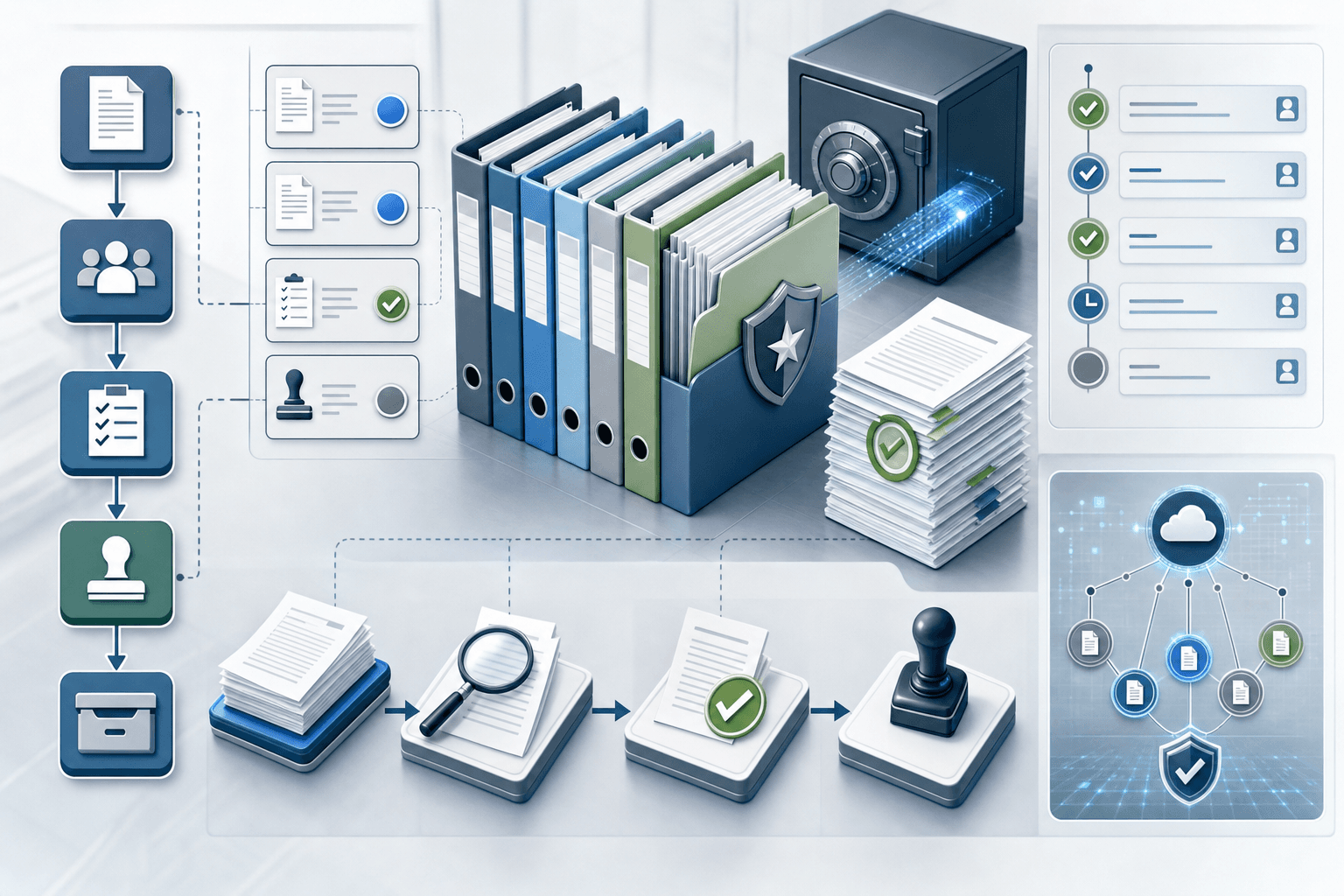
A few practices that hold up under scrutiny:
- Keep a written AI use policy that names which tools your team uses, what tasks they support, and who is responsible for reviewing AI-generated content before submission.
- Log AI involvement at the section level, so reviewers can trace which parts of a proposal had AI assistance and what human review occurred afterward.
- Store version histories that show how AI-drafted content was edited, so there is a clear record of human judgment applied to the final output.
- Align your documentation approach with any solicitation-specific instructions, since some agencies are now including explicit AI disclosure requirements in their RFPs.
Why This Matters for Compliance
A firm that cannot explain or document its AI-assisted workflows risks a deficiency finding and may create unnecessary compliance risk if disclosure, certification, or traceability requirements are included in the solicitation. Building internal governance now helps proposal teams stay aligned as procurement expectations evolve.
Why GovEagle's Approach Meets Government AI Detection Concerns
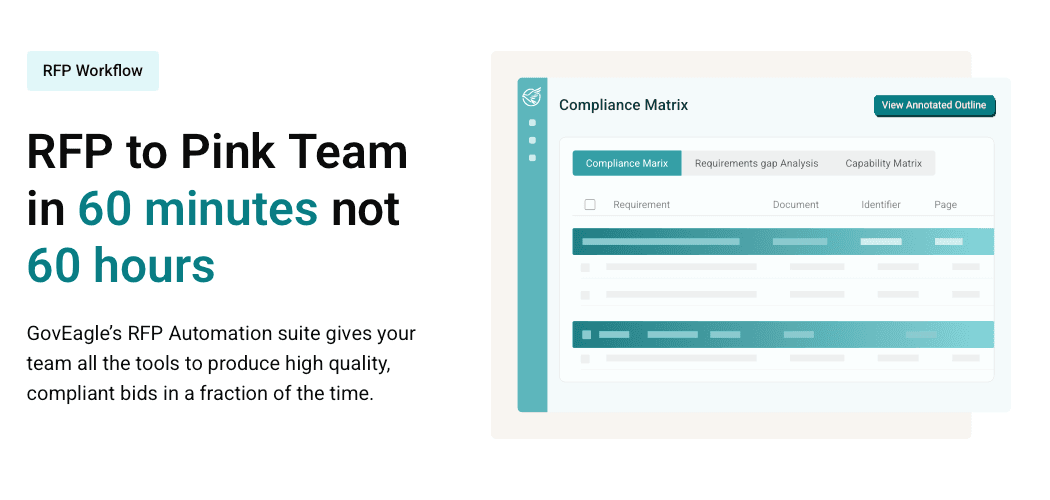
Not every AI tool meets the federal scrutiny standards agencies are now applying to contractor workflows. GovEagle's design aligns directly with what agencies are checking for.
The zero-retention policy means your proposal data is never used to train shared models, a critical distinction when agency oversight teams start asking how your AI tools handle procurement data. Citation-based outputs keep every AI-assisted response traceable to a source document from your own knowledge base, giving contracting officers a verifiable paper trail. FedRAMP Moderate-equivalent controls on AWS GovCloud can help support the security expectations often associated with CUI-sensitive federal work.
Being purpose-built for government contracting also means outputs are structured around RFP compliance, not generic text generation. That difference is what separates a documentable, defensible AI workflow from one that creates compliance risk.
FAQs
How are federal agencies addressing AI use in proposal development?
Federal agencies are increasingly focused on AI governance, disclosure expectations, proposal quality, and human review processes. The biggest risk for contractors is submitting generic or insufficiently tailored responses that fail to cover the agency's actual requirements, regardless of whether AI assisted in drafting the content.
How do I document AI use to meet federal transparency requirements?
Keep a written AI use policy naming which tools you use, log AI involvement at the section level, and store version histories showing how content was edited after AI generation. This creates an audit trail if contracting officers request documentation of your proposal development process.
What AI disclosure clauses should I watch for in 2026 RFPs?
Look for requirements to identify which proposal sections used AI assistance, certifications that AI content has been reviewed by qualified humans, and requests to retain AI usage logs. Civilian and defense agencies are beginning to assess whether AI-assisted proposal content aligns with solicitation instructions, disclosure requirements, and source selection expectations. Contractors supporting highly compliance-intensive or mission-sensitive programs should expect tighter review standards over time.
Final Thoughts on Federal AI Detection and Contractor Compliance
Can government detect AI? Federal agencies are continuing to expand AI governance, acquisition guidance, and solicitation-specific disclosure expectations across the procurement landscape. For GovCon teams, the priority is not avoiding a mythical “AI scanner,” but building proposal workflows that remain compliant, well-documented, and tightly aligned to solicitation requirements. Agencies still expect specificity, quantified proof, and clear alignment to the SOW regardless of how proposals are drafted. Building a defensible AI workflow now positions your team for evolving federal procurement standards as AI-related requirements become more common in future solicitations. Book a demo to see how GovEagle helps your team stay compliant while using AI in proposal development.