OASIS+ Phase II RFP: September 2026 Updates and What Contractors Must Know

Your firm might already hold an OASIS+ award, or you could be tracking the vehicle for the first time because of the five new domains GSA added under Phase II. Either way, understanding what the OASIS 2 RFP demands for past performance verification, self-scoring, and continuous submissions matters more than knowing when the first awards drop. GSA's rolling evaluation model gives you time, but it also means your competition isn't waiting.
TLDR:
- GSA posted the first OASIS+ Phase II rolling apparent awardee announcements on May 12, 2026, and planned to issue formal awards and notices to proceed on or about May 22, 2026, after final legal reviews. Submissions remain open on a rolling basis.
- Phase II expands from 8 to 13 domains. Existing OASIS+ holders must compete separately for new domains.
- GSA recommends performing a self-scoring exercise against Attachment JP-1, the OASIS+ Domain Qualifications Matrix and Scorecards, using qualifying projects, federal experience projects, systems, and certifications. Misalignment costs points at verification.
- Current OASIS+ holders must execute bilateral modification PSA908 before GSA accepts domain addition submissions.
- Proposal automation software can cut the time spent on first drafts, compliance matrices, and past performance matching for OASIS+ submissions.
May 2026 Phase II Award Status and Timeline
On May 12, 2026, GSA posted its first OASIS+ Phase II rolling apparent awardee announcements on SAM.gov. Formal awards and notices to proceed were planned for on or about May 22, 2026, following final legal reviews for qualified contractors.
For teams still preparing submissions, this is not a closing window. OASIS+ Phase II operates on a continuously open solicitation model, so evaluations proceed on a rolling basis as packages come in. The May announcements confirm GSA is actively processing submissions, not wrapping up the competition.
If your package is still in progress, you have time, but the process is clearly moving.
Understanding OASIS+ Phase II: Expansion from 8 to 13 Domains
OASIS+ Phase II expands from 8 to 13 functional domains, opening pursuit opportunities for contractors previously locked out of the original awards. Each domain carries its own NAICS codes, experience requirements, and evaluation criteria. Firms holding existing OASIS+ awards are not automatically included in the new domains and must compete separately.
The Five New Service Domains and What They Cover
OASIS+ Phase II adds five new service domains to the existing OASIS+ structure, expanding the program to 13 total domains. Understanding what falls under each helps you decide where to compete and how to position your firm.

The Five New Phase II Domains at a Glance
The five new Phase II domains are Business Administration, Financial Services, Human Capital, Marketing and Public Relations, and Social Services.
| Domain | Service Category | Core Service Areas | Qualification Considerations |
|---|---|---|---|
| Domain 1 | Business Administration | Federal acquisition support, administrative support, and program management services aligned to the Business Administration domain. | Qualification should be based on the applicable Business Administration scorecard requirements, qualifying projects, federal experience projects, systems, and certifications. |
| Domain 2 | Financial Services | Federal financial management support, audit support, budget support, and financial systems services aligned to the Financial Services domain. | NAICS codes and project evidence should align with the Financial Services domain’s approved scope and scorecard requirements. |
| Domain 3 | Human Capital | Federal workforce support, training support, organizational support, and related human capital services aligned to the Human Capital domain. | Past performance should align with the Human Capital domain’s scope, NAICS codes, and scorecard requirements. |
| Domain 4 | Marketing and Public Relations | Federal communications support, public affairs support, outreach support, and related mission support services aligned to the Marketing and Public Relations domain. | Past performance should align with the Marketing and Public Relations domain’s scope, NAICS codes, and scorecard requirements. |
| Domain 5 | Social Services | Federal social services support, grants support, case management support, and related mission support services aligned to the Social Services domain. | Projects should align with the Social Services domain’s approved scope, NAICS codes, and scorecard requirements. |
Each domain has its own qualification requirements and scorecard, so firms must qualify within the domains that match their capabilities and past performance history.
How Continuous On-Ramping Changes the Submission Model
Per GSA's December 4 announcement, all OASIS+ solicitations moved to continuous proposal submissions starting on or about January 12, 2026. GSA processes packages on a rolling basis as they arrive, so your submission timeline is tied to when your evidence is ready. For firms that missed earlier OASIS submission windows, this creates a materially different pursuit model that should be included in the BD planning.
Self-Scoring Requirements: The Evidence-Based Evaluation Model
The OASIS+ Phase II RFP uses a self-scoring model where offerors calculate and document their own scores and GSA verifies them. Your proposal team needs to understand exactly how points are allocated before writing begins.
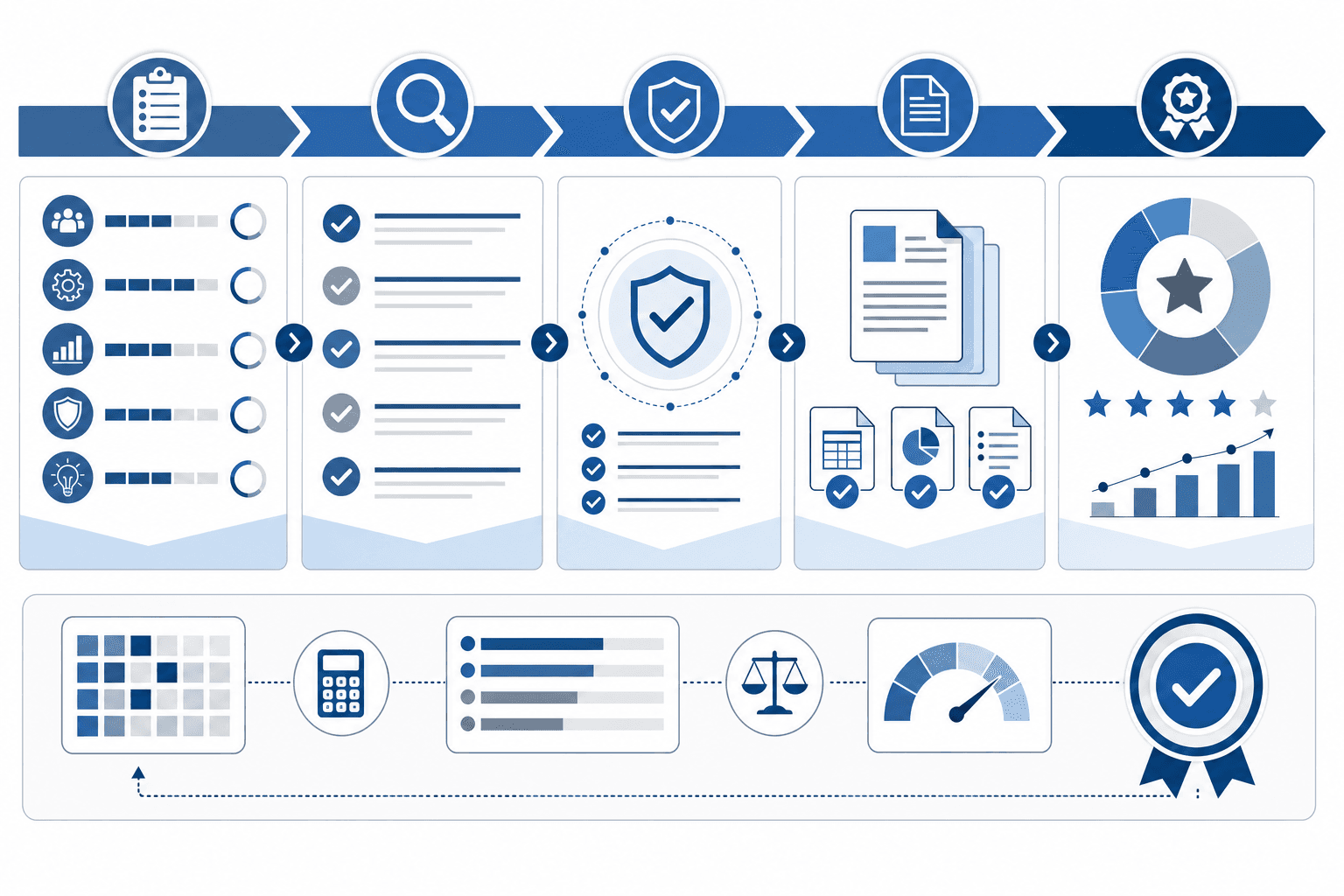
Key scoring areas include:
- Relevant experience must be supported by qualifying project documentation and reviewed against the applicable domain qualification matrix and scorecard.
- Certifications and socioeconomic status can add scored points, so confirming current registration accuracy in SAM.gov before submission is worth the time.
- Each scoring element ties directly to a domain qualification threshold, so misalignment between claimed experience and the targeted domain is one of the fastest ways to lose points during verification.
Domain Mapping and Qualification Threshold Analysis
Domain mapping is an eligibility confirmation, not a positioning decision. Pull your most relevant projects per target domain and verify two things: the average annual value clears the minimum threshold in the solicitation, and the NAICS codes match the domain's approved code list. Projects that miss either test won't count toward your score. If a domain comes up short, you have three options:
- Find additional past performance you may have overlooked in your records or teaming history.
- Reassess which domain better fits your existing contract record.
- Fill the shortfall through a teaming arrangement with a partner whose past performance covers the gap.
Get GovCon capture and proposal insights in your inbox.
Building a Defensible Evidence Package
GSA evaluators focus on documented evidence tied directly to solicitation requirements. Tie each capability claim to a past performance example with clear callouts for contract value, period of performance, and scope alignment. Maintain a live repository of relevant project summaries, past performance questionnaires, and CPARS ratings organized by NAICS code and service area.
Teaming and Joint Venture Strategies to Close Score Gaps
Teaming with small businesses, 8(a) firms, HUBZone companies, or SDVOSBs can close socioeconomic score gaps a prime cannot fill alone. Joint ventures let two firms combine past performance and qualifications into a single entity for evaluation. Map your scoring weaknesses against potential partners' strengths before committing to any structure.
- SBA mentor-protégé arrangements formalize the relationship and unlock joint venture eligibility.
- Populated joint ventures allow both firms to staff the contract directly, satisfying personnel requirements neither meets alone.
- Unpopulated joint ventures work when one partner staffs the contract but needs the other's past performance or socioeconomic status for scoring.
Whichever structure you select, the teaming agreement should define work share percentages, key personnel commitments, and management responsibilities before submission.
Managing the Proposal Timeline in a Continuously Open Environment
OASIS+ operates as a continuously open solicitation, so your team needs a repeatable process for assessing when to submit and keeping compliance documentation current. Build your calendar around GSA's amendment schedule, assign one owner to monitor SAM.gov for updates, and check every draft against the latest PWS version before submission. Submitting against a stale set of requirements costs points during verification.
Required Actions for Current OASIS+ Contract Holders
If your firm holds an existing OASIS+ award and wants to compete for the new domains, you must first execute bilateral modification PSA908, which GSA issued on December 17, 2025.
Accelerating OASIS+ Proposal Development with AI Automation
Winning a task order under OASIS+ requires more than understanding the vehicle's structure. Proposal teams face tight turnaround windows, complex technical evaluation factors, and the pressure to produce compliant, compelling responses across multiple functional areas simultaneously.
AI-powered proposal tools can cut the time spent on first drafts, compliance matrix generation, and past performance matching. For GovCon proposal teams managing high submission volume, faster compliance workflows can increase pursuit capacity across multiple opportunities.
GovEagle is built especially for government contractors preparing responses to vehicles like OASIS+.
How GovEagle Supports OASIS+ Phase II Submissions
OASIS+ Phase II's self-scoring model puts the documentation burden squarely on your proposal team. Matching past performance across 13 domains, verifying NAICS alignment, calculating scores, and keeping your package current as GSA processes rolling submissions is a real coordination load on top of an already full pipeline.
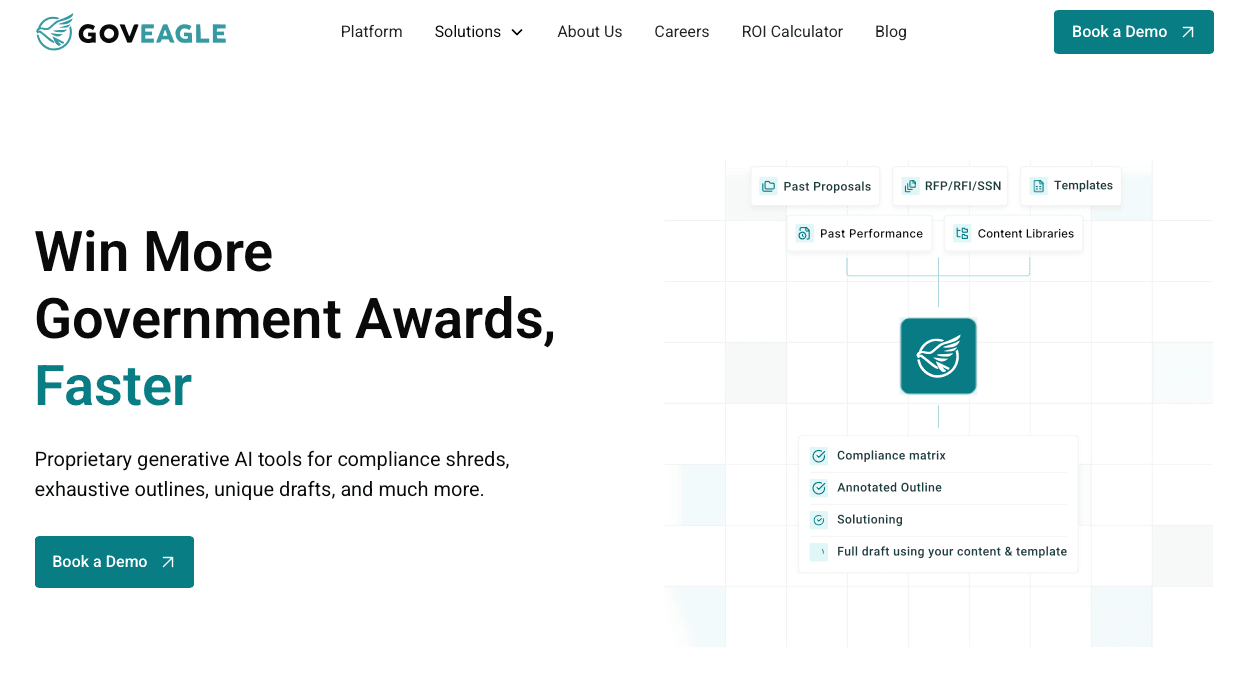
GovEagle is built for compliance-intensive, evidence-heavy pursuits like this one. The platform analyzes solicitation documents to extract domain requirements, cross-matches your contract history against PWS task areas, and generates compliance matrices in Excel that hold up under GSA's verification review. Built-in amendment tracking keeps your package aligned to the latest solicitation version, so you are not submitting against a stale PWS.
BD directors managing high-volume pipelines use GovEagle to pursue more opportunities with the same team. If OASIS+ Phase II is in your plan, request a demo to see how the platform supports domain mapping, self-scoring documentation, and task order responses under the vehicle.
FAQs
Can I still submit an OASIS+ Phase II proposal after the May 2026 awards?
Yes. OASIS+ Phase II operates on a continuously open solicitation model where GSA assesses submissions on a rolling basis as they arrive. The May 2026 awards represent the first batch of processed packages, not a closing window for new submissions.
How do I know if my past performance qualifies for a specific domain?
Pull your most relevant contracts per target domain and verify them against the applicable OASIS+ domain qualification matrix, scorecard requirements, average annual value thresholds, and approved NAICS code list.
Should I use a joint venture or mentor-protégé arrangement to close score gaps?
Joint ventures work best when you need to combine past performance or socioeconomic status for evaluation scoring, while mentor-protégé arrangements formalize relationships and unlock joint venture eligibility through the SBA. Choose based on whether you need populated (both firms staff the contract) or unpopulated (one firm staffs but needs the other's credentials) structures.
Final Thoughts on the OASIS+ Phase II Opportunity
The shift to continuous submissions under the OASIS 2 RFP changes how you time your package, but the fundamentals still matter more than speed. Match your past performance to the right domains, calculate your self-scores with documentation that holds up under GSA review, and close any gaps through teaming before you submit. The continuously open submission model gives contractors more flexibility to strengthen compliance documentation before submission. GovEagle supports compliance-intensive proposal efforts like OASIS+ Phase II submissions, shredding solicitation documents, cross-matching your contract history against PWS task areas, and keeping your package current as GSA processes rolling submissions. If OASIS+ Phase II is in your pipeline, request a demo to see how the platform supports domain mapping, self-scoring documentation, and task order responses under the vehicle.